You can add lithium batteries to your solar system. But you need to check some things first. Many people have problems if they skip these steps. They might use parts that do not work well together. They could also have safety problems. Here are some common issues you might see:
Compatibility Issue
Explanation
Mismatched Components
Different lithium batteries have their own BMS. This can cause problems with inverters. The parts may not talk to each other right.
Voltage and Current Limits
Batteries and inverters must match in how they charge and discharge. If not, the system can waste energy or get damaged.
BMS Communication Protocols
If the inverter does not support the battery’s BMS, it can give wrong readings. The system might even stop working.
Pick good equipment and plan your upgrade. This will help you avoid these problems. If you want the safest setup, you should hire a professional to install it.
Key Takeaways
Check if your system works with lithium batteries first. Make sure your inverter and solar system match the new batteries. This helps you avoid problems.
Pick the right battery type and size for your needs. Think about how much energy you use. Look at battery capacity, efficiency, and how long it lasts. This helps your system work better.
Always follow safety rules when you install batteries. Use the right wires and follow safety steps. This stops accidents and keeps your system safe.
Test and watch your system often after you set it up. This helps you find problems early. It keeps your energy storage working well.
You will get better energy use and longer battery life. Lithium batteries make your solar system work better. They help you use less power from the grid.
Check Compatibility with Existing Solar System
You need to check if your solar system can use lithium batteries. This step helps you stop problems and keeps everything safe.
Review Current Setup
First, look at your solar panel system. Use this easy checklist:
Look at your solar system.
Find out what kind of inverter you have and how old it is.
Check how big your solar array is.
See if you have space for new batteries.
You want to know if your system can use new batteries. Check your inverter. Is it a string inverter or does it use microinverters? Some inverters work better with batteries. Also, see how many kilowatts your solar array makes. Make sure you have enough room for the battery.
Assess Inverter and Charge Controller
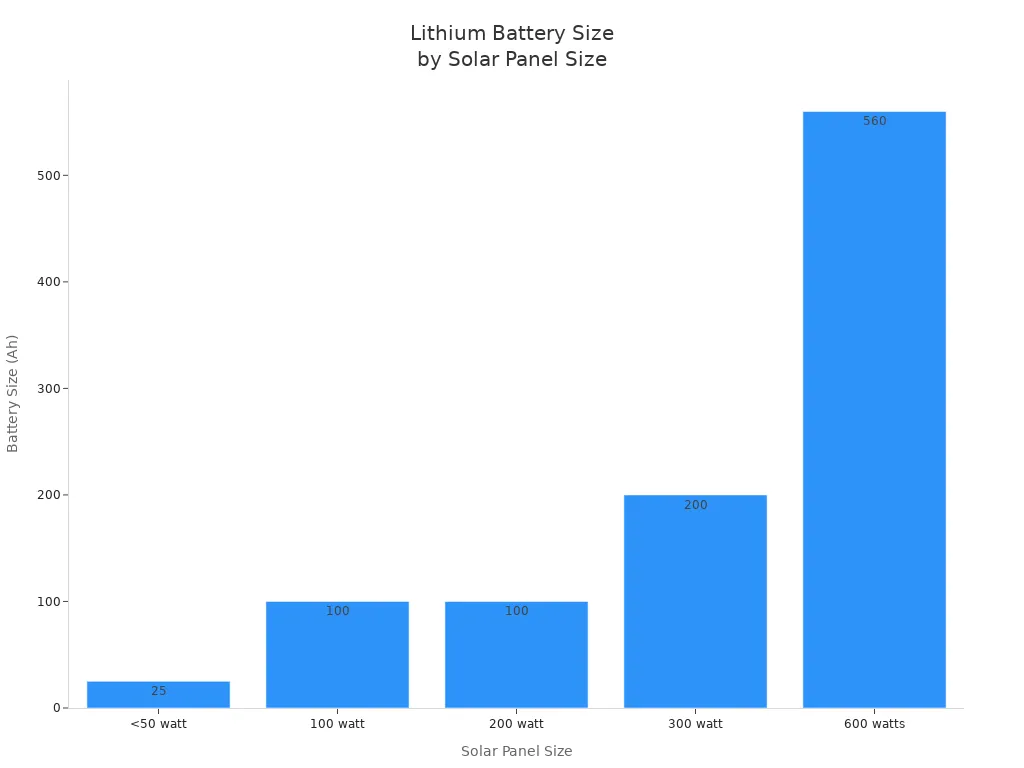
Your inverter and charge controller must work with the lithium batteries you want. This is very important for off-grid solar power systems. The table below shows how your solar panel size, charge controller, and battery size should match:
Solar Panel Size
Solar Charge Controller Size (A)
Recommended Lithium Battery Size
<50 watt
No controller needed
12V 25Ah battery
100 watt
12V 15A Controller
12V 100Ah Dakota Lithium Battery
200 watt
12V 15A Controller
12V 100Ah Dakota Lithium Battery
300 watt
12V 15A Controller
12V 200Ah Dakota Lithium Battery
600 watts
12V 15A Controller x 2 or 12V 30A Controller
12V 560Ah Dakota Lithium Battery
If you use off-grid solar power, make sure your inverter can talk to the battery’s BMS. Some inverters need a smart controller or a special battery management interface.
Evaluate Wiring and Safety
Wiring and safety are very important when you upgrade. Off-grid solar power systems must follow strict safety rules. Here is what you should check:
Tests for thermal runaway, fire suppression, toxic gas, and spacing between batteries.
Tip: Never mix different lithium battery chemistries or brands. Mixing can cause problems, errors, overheating, and can cancel your warranty.
If you do these steps, your solar system will be ready for a safe upgrade.
Choose and Size Lithium Batteries
Select Battery Type and Model
You want a lithium battery that fits your solar system and your needs. Picking the right battery can feel tricky, but you can break it down into simple steps:
Capacity and Scalability: Think about how much energy you use. If you have a small setup, one battery might work. For bigger homes, you may want batteries you can add to later.
Efficiency and Performance: Look for batteries that charge and discharge well. Some batteries work better in hot or cold weather.
Lifespan and Durability: Choose a battery that lasts a long time. This saves you money because you won’t need to replace it often.
Safety and Thermal Management: Good batteries handle heat well. This keeps your home safe.
Cost-effectiveness: Don’t just look at the price tag. Think about how long the battery will last and how much it will cost to keep it running.
Tip: Lithium batteries last longer and weigh less than old AGM batteries. You can also use more of their stored energy.
Calculate Capacity Needs
You need to know how much energy you use before you buy a battery. Start by looking at your electricity bills for the past year. Write down your average monthly use. Next, decide which appliances you want to keep running if the power goes out. Add up their daily energy use. You can use this formula:
If your system needs 110Ah, it’s smart to get a battery with at least 137.5Ah. This gives you a buffer so you don’t run out of power.
Consider Battery Management System
A battery management system (BMS) keeps your lithium battery safe and healthy. The BMS checks the battery’s voltage and temperature all the time. It warns you if something goes wrong, like overheating or too much current. The BMS also talks to your inverter, so your whole system stays safe. With a good BMS, your battery lasts longer and works better every day.
Installation Process for Lithium Batteries
You want to add lithium batteries to your solar system. The steps are not hard if you follow them. You can get more storage and backup power for your home. Let’s go through the steps together.
Prepare Installation Area
Before you install lithium batteries, pick a good spot. Here’s what you should do:
Pick a place that is cool and dry. Do not use spots with extreme heat or cold.
Make sure you can reach the batteries easily. This helps with checking and fixing them.
Keep the batteries safe and hidden. This stops accidents and theft.
Try to use a room with steady temperature. Batteries work best when they are not too hot or cold.
Clean the area and remove loose items. You do not want anything to harm your batteries.
Check how tight all connections are. Loose wires can cause problems.
Protect wires from getting scraped or broken.
Tip: If you are unsure about installing, ask a professional for help. They know how to install lithium batteries safely and follow rules.
Connect Batteries and Wiring
Now you can connect your batteries. You want your storage to work well and last longer. Here are some best practices:
Put batteries in a place with steady temperature.
Keep cables short. Short cables help reduce voltage drop.
Make sure wires can handle the power from your battery bank.
Set up your charging equipment for lithium batteries. This helps your storage work better.
Charge each battery to the same voltage before connecting. Use cables that are the same length and thickness. This keeps the current balanced. Connect positive terminals together and negative terminals together. If you wire batteries in series, you get more voltage but the same ampere capacity. Always check that all batteries have similar capacity and voltage before connecting them in series.
Safety Note: Follow the manufacturer’s rules and check your connections often. This keeps your storage safe and stops accidents.
Configure Inverter Settings
You need to set up your inverter for lithium batteries. This step helps you get the most from your storage and backup power. Here’s what you should do:
Use a hybrid inverter made for lithium batteries. This makes sure everything works well and stays safe.
Set the battery type to lithium in the inverter settings.
Set charge and discharge limits. This protects your batteries and helps them last longer.
Turn on communication with the battery management system (BMS). The BMS checks and balances your batteries.
Think about time-of-use settings. These settings help you use more solar energy and less grid power.
If you want backup power without changing your whole system, use an ac coupled battery system. This lets you add lithium batteries for backup without replacing your inverter or charge controller.
Metric
Solar System without Battery
Solar System with AC Coupled Battery
Solar Self-Consumption
~30-40%
~70-90%
Grid Reliance
High
Low
Backup Power
None
Available for critical loads
TOU Savings Potential
Limited
High
A report from the U.S. Department of Energy says power outages are happening more often. An ac coupled battery system gives you backup power. You can keep your fridge, lights, and medical devices running during an outage. Battery storage costs are lower now, so adding lithium batteries is a smart choice.
Test System Functionality
After you install lithium batteries, test your system. You want to make sure your storage and backup power work right. Here’s how you can do it:
Do benchtop checks. Look at each battery and check the voltage.
Run tests like drop testing, vibration testing, and electrical safety checks.
Watch your battery management system. The BMS will warn you if there is a problem.
Test your inverter and charge controller. Make sure they talk to your batteries.
Callout: Regular checks help you find problems early. You can make your storage last longer and keep your backup power ready.
Safety Consideration
Description
Thermal Management
Pick batteries with good thermal management to stop overheating.
Regular Monitoring
Use a battery management system (BMS) to check performance and get alerts.
Environmental Conditions
Install batteries in controlled rooms to make them last longer.
Professional Installation and Upkeep
Ask professionals for help to follow rules and connect everything right.
Safety Protocols
Follow manufacturer rules and check your system often.
If you follow these steps, you can add lithium batteries to your solar system with confidence. You will get more storage, backup power, and peace of mind.
Benefits of Adding Lithium Batteries
Improved Efficiency and Storage
When you add lithium batteries to your solar panel system, you boost how much energy you can keep and use. Lithium-ion batteries work best for home energy storage. They help you save more of the solar power you make during the day. You can use this stored energy at night or when the sun hides behind clouds. Here are some ways lithium batteries improve your storage:
You get flexible use of energy. Store power when you make extra and use it when you need it.
Your system matches your energy needs better. This means less waste and more savings.
You lower your energy bills and shrink your carbon footprint.
If you want a smart energy storage solution, lithium batteries give you the best results for solar power storage.
Longer Battery Life
Lithium batteries last much longer than old lead-acid batteries. You do not have to replace them as often. This saves you money and time. Take a look at this table to see the difference:
Battery Type
Lifespan
Lithium-Ion (LFP)
15-20 years
Lithium-Ion (NMC)
10-12 years
Lead-Acid
3-7 years
You can use up to 80% or even 100% of the battery’s energy each cycle. Lithium batteries handle thousands of cycles, so your home energy storage system stays strong for many years.
Enhanced Energy Independence
With lithium batteries, you gain more control over your power. You can store extra solar energy for later. This means you do not have to rely on the grid as much. If the power goes out, your storage keeps your lights and fridge running. Here is how lithium batteries help you become more energy independent:
Store extra solar energy for use at night or during outages.
Reduce your need for grid electricity.
Keep your home running during blackouts.
Control your energy costs and usage.
Tip: Many homeowners see a payback in about five years. You get peace of mind and save money with a reliable home energy storage system.
A good energy storage solution makes your solar power system work better and gives you more freedom.
You can add lithium batteries to your solar system by following a few easy steps. First, figure out how big your system is and choose the best battery for it. Next, connect the battery inverter to your main panel. Always remember to follow safety rules when you do this.
Experts say adding lithium batteries is simple, especially if you use AC coupling. You will get more backup power, save money, and use less grid energy.
You do not have to worry about parts not working together or stopping your system. If you plan well, your solar system will work better and last longer.
FAQ
Can I mix lithium batteries with my old lead-acid batteries?
No, you should not mix lithium and lead-acid batteries. They charge and discharge differently. Mixing them can damage your system and lower performance. Stick with one battery type for safety and best results.
Do I need a new inverter for lithium batteries?
You might need a new inverter if your current one does not support lithium batteries. Check your inverter’s manual. Some inverters let you change settings for lithium. If not, consider upgrading for better performance.
How long do lithium batteries last in a solar system?
Most lithium batteries last 10 to 20 years. You can expect thousands of charge cycles. They last much longer than lead-acid batteries. You save money over time because you replace them less often.
Is it safe to install lithium batteries myself?
You can install them if you have experience with electrical work. If you feel unsure, hire a professional. Safety comes first. A pro will follow all codes and make sure your system works right.