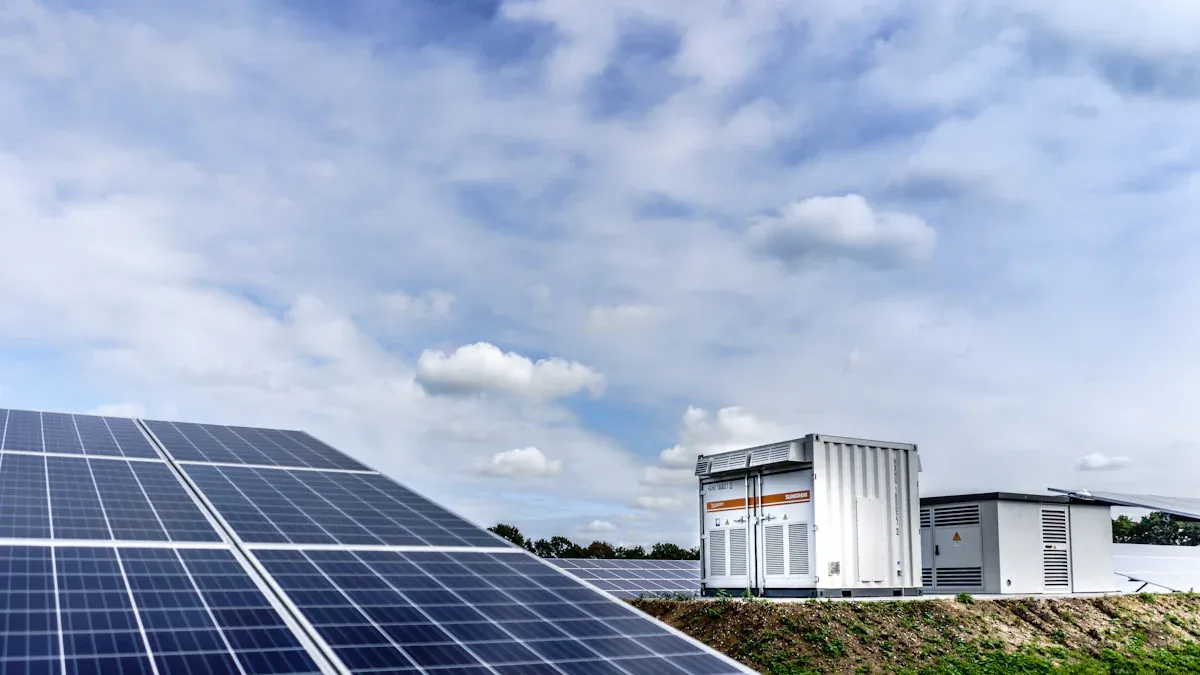
You use a powerwall as a battery for your home. It stores energy for your house. Many people pick a powerwall to keep lights on when the power goes out. It helps save money and gives you more control over your energy. You can connect a powerwall to solar panels. You can also charge it from the grid. People put in a powerwall for backup power. They want to pay less for energy. They want to be more independent with their energy. They want to use more solar power. You may see more powerwalls as the weather changes. More blackouts happen and new programs give rewards.
The powerwall has smart technology. You can check and control your energy with an app. This makes it simple to save money.
Putting in a powerwall can help you use more of your own energy. Some people get up to 80% free from the grid.
Look for local rebates and tax credits when you buy a powerwall. These can make the total price much lower.
powerwall: what it does
main functions
A powerwall helps you control how your home uses energy. The tesla powerwall is a smart battery for solar panels. It lets you save extra solar energy during the day. You can use this energy at night or when it is cloudy. This way, you do not waste any solar power. You get to use more clean energy and need the grid less.
The tesla powerwall does more than just store energy. It helps you save money by using stored energy when power costs more. You can set it to run your home during busy hours. This lowers your electric bills. You also help the earth by using less fossil fuel energy.
The tesla powerwall lets you control your energy use. You can check your solar energy with an app. The tesla powerwall gets new software updates by itself. You get new features and better performance without changing the device.
Lowers your bills by using stored energy when power is expensive.
Sustainable Living
Helps you use more renewable energy and less fossil fuel.
Enhanced Power Reliability
Gives backup power during outages so your home keeps working.
Seamless Integration
Works with your home energy system for easy control.
Intelligent Software
Updates make it work better and add new features.
Grid Independence
Lets you store energy so you do not need the grid as much.
Balancing Supply and Demand
Helps the grid by giving back stored energy when needed.
Support for Renewable Integration
Helps manage changes in solar or wind energy.
You can see the tesla powerwall is more than a battery. It helps you live greener, save money, and keep your home running well.
backup power during outages
You want your home to have power during blackouts. The tesla powerwall gives backup power when the grid fails. You do not have to worry about losing lights or your fridge. The tesla powerwall switches to backup mode very fast. You might not even notice when the power goes out.
The tesla powerwall can hold up to 13.5 kWh of energy. This can power a normal home for about 11 hours and 10 minutes. If you only use important devices, it can last up to 2.5 days. With smart use, you can keep key appliances running for 24 to 48 hours.
Here is a table that shows how the tesla powerwall compares to regular generators:
Feature
Tesla Powerwall
Traditional Generators
Backup Activation Time
Switches to backup in milliseconds
Takes 10-30 seconds to start
Fuel Dependency
Can use solar for endless power
Needs fuel to work
Maintenance Needs
Needs very little care
Needs regular care
You do not need to buy fuel or start a loud generator. The tesla powerwall is quiet and needs little care. You can connect it to solar panels. This lets you keep charging it during long blackouts.
Tip: To make your tesla powerwall last longer in an outage, use only the most important devices. Turn off extra lights and unplug things you do not need.
The tesla powerwall helps you feel safe. You know your home will have backup power when you need it. You can keep your family safe and comfortable during storms or emergencies.
powerwall: how it works
lithium-ion battery technology
A powerwall stores electricity for your house. The tesla powerwall uses special lithium-ion battery technology. This technology gives you lots of good things. You can store a lot of energy in a small space. You do not need a big area for your tesla powerwall. It can fit on your garage wall or outside your home.
You want your battery to last many years. The tesla powerwall can be charged and used again and again. You can use it every day for a long time. Most tesla powerwall units have a 10-year warranty. Many people say their powerwall lasts 15 years or more if they care for it. You can see how long it lasts in the table below:
Warranty Duration
Capacity Guarantee
Expected Lifespan
10 years
70% of rated capacity
15 years or more with care
You also want your powerwall to work well with solar panels. The lithium-ion batteries help keep your electricity steady. They can handle changes in solar energy. You do not need to worry about clouds or nighttime. Your powerwall keeps your house running well.
Here are some important facts about the tesla powerwall’s lithium-ion battery technology:
You get more storage in less space.
You can use it for many years.
It helps balance your home’s electricity, even when solar energy changes.
storing solar and grid energy
You can use your powerwall to store energy from different places. The tesla powerwall works with solar panels and the electric grid. During the day, your solar panels make electricity. Sometimes, you make more solar energy than you need. The tesla powerwall saves this extra energy. You can use it later when the sun is not out.
You do not have to waste any solar energy. The tesla powerwall lets you use your own solar power at night. You do not need to buy as much electricity from the grid. If you do not have solar panels, you can still use a powerwall. The tesla powerwall can charge from the grid when prices are low. You can use this stored energy when electricity costs more.
The tesla powerwall uses smart technology to manage energy. You can set what you want with an app. The tesla powerwall learns your habits and helps you save money. It makes sure you always have power when you need it.
Here is how the tesla powerwall stores and gives energy:
Solar panels send extra electricity to the powerwall during the day.
The powerwall saves this energy for later.
You use stored energy at night or during a blackout.
The powerwall can also charge from the grid when rates are low.
You get backup power if the grid goes down.
The tesla powerwall works with new or old solar systems. You can add it to your home if you already have solar panels. You can also get it with a new solar setup. The tesla powerwall gives you more choices and control.
You want your powerwall to work well. The tesla powerwall has a round-trip efficiency of about 90%. This means you keep most of the energy you store. You do not lose much energy when you charge and use your powerwall.
Model
Round-trip Efficiency (AC)
Powerwall 2
90%
Powerwall 3
89–90%
Tip: You can use your tesla powerwall to lower your electric bills. Store solar energy during the day and use it at night. You can also charge your powerwall from the grid when prices are low.
The tesla powerwall is a solar battery and a smart energy storage system. You get backup power, lower costs, and more control over your home’s energy. You help the earth by using more solar and less fossil fuel energy.
powerwall features
storage capacity
You want your powerwall to hold enough energy for your needs. Storage capacity means how much electricity your battery can keep. Most powerwall models, like Tesla Powerwall 2 and Powerwall 3, can store 13.5 kWh. This is good for backup and daily solar use. If you want to power your whole house or live off-grid, you might need more than one powerwall. Some homes use 30-50 kWh for full backup or high energy needs.
You can pick the battery size that fits your home best. This helps you use your solar panels and energy storage system well.
smart controls
Modern powerwalls have smart controls for your energy. You can use an app to see how much solar energy you make and use. The powerwall keeps track of your energy use and saves extra solar power for later. It can also charge from the grid when prices are low. Smart controls help you save money and use more clean energy.
The powerwall manages energy, tracks use, and stores power.
Seamless integration
Works with solar systems and the Tesla app for easy setup and real-time monitoring.
Smart controls let you change how you use energy. You can lower your bills and use more solar power. Real-time monitoring helps you see your energy habits and make better choices.
Tip: Use the app to check your powerwall and solar system. You can find ways to save even more energy.
instant switchover
You want your home to stay on during a power outage. The powerwall switches to backup modein milliseconds. Your lights and important devices keep working right away. You do not need to start a generator or wait for power to come back.
The powerwall switches to backup mode almost instantly.
Traditional generators can take 10-30 seconds to start.
You do not need fuel or manual action for your powerwall.
Power Solution
Reliability
Key Features
Automatic Transfer Switch (ATS)
High
Near-instant power transfer, no human action needed
You feel safe knowing your powerwall will keep your home running during storms or outages. You do not have to worry about losing power to your fridge, lights, or internet.
benefits and uses
savings and energy independence
You can save money every year with a powerwall and solar panels. Many people make $1,000 to $2,500 each year. They let the utility use their stored energy when lots of people need power. Most people save about $1,700 each year. These savings come from using your own solar energy. You can also sell extra power back to the grid.
A powerwall helps you become more energy independent. It takes extra electricity from your solar panels and saves it. You use this stored energy at night or when power costs more. This means you do not need the grid as much. Some people get up to 80% grid independence with a powerwall and solar panels.
You get more control over your energy use. The powerwall lets you see your energy in real time. You can check how much solar energy you make and use. The system works with your solar panels to save extra power. You help the planet by using more solar and less fossil fuel. You also help make your community greener.
Tip: Use the Tesla app to watch your energy use. You can find new ways to save even more.
typical applications
You can use a powerwall in many ways at home or work. Here are some common uses:
Store solar energy during the day and use it at night.
Keep your lights and fridge on during a power outage.
Lower your electric bills by using stored energy when prices are high.
Help the grid by sharing stored energy during busy times.
Connect with smart home systems for better energy management.
Charge your electric car with solar energy and stored power.
The powerwall works with your home energy system. It uses AC-coupled or DC-coupled methods to manage energy well. You can set your powerwall to save money or use more solar energy. The Tesla app lets you check your battery, solar power, and energy use any time.
A powerwall gives you backup power, lower costs, and more control over your energy. You can have a safer, greener, and more reliable home.
important considerations
installation needs
You should plan before you get a powerwall. Make sure you have enough space at home. The battery storage unit needs room. Most homes need a space that is at least 5.25 feet wide, 5.25 feet deep, and 8 feet tall. You also need at least 32 inches of wall space. Keep space around the powerwall for safety and to reach it. Look at the table below for the main things you need:
Requirement
Measurement
Minimum room size
5.25 x 5.25 x 8 ft
Minimum lateral wall space
32 inches
Clearance from left/right sides
4 inches
Clearance above Powerwall
2 inches
Clearance below Powerwall
0.8 inches
Clearance between units
4 inches
Clearance in front
12 inches
Maximum height above ground
45 inches
Maximum slope
+/- 2° side-to-side
Clearance for wiring
6 inches
Clearance for access
36 inches
You also need to check your electrical panel. The powerwall connects to your home’s electric system. Most models need a 30A double-pole breaker. Ask a certified installer to look at your panel and wiring.
cost factors
Think about the cost before you get a powerwall. The price covers the battery, installation, and permits. The average cost in the U.S. is $21,200. Most people pay between $12,850 and $29,550. Some homes pay as low as $11,500 or as high as $91,000. The table below shows the usual price ranges:
Cost Type
Amount
National Average Cost
$21,200
Typical Price Range
$12,850–$29,550
Extreme Low-End Cost
$11,500
Extreme High-End Cost
$91,000
You can save money with rebates and incentives. Many states have programs for solar and batteries. You might get a 30% federal tax credit if you use solar to charge your powerwall. Some states, like Arizona and California, give extra rebates. Utility companies may reward you for using your powerwall for backup or shifting energy use.
Tip: Ask your installer about local rebates and tax credits. You could save a lot on your powerwall and solar system.
compatibility
Check if your powerwall will work with your system before you buy. Most powerwall models work with big solar inverter brands. You can connect it to your current solar system. Powerwall 2 uses an AC-coupled design. It connects to regular home electric systems. Powerwall 3 can be a solar inverter for new systems or connect to old ones. You do not have to replace your solar panels or inverters.
Think about your electrical panel’s size. The powerwall works with many system sizes. It works with brands like Enphase, SolarEdge, SMA, and Fronius. You can add more units if you need more battery storage. The powerwall gives backup power and fits most homes.
Note: Always ask your installer to check your solar system and panel. This helps you avoid problems and get the best results.
You can use a powerwall to store energy, keep your home running during outages, and lower your bills. Many users say it gives peace of mind, keeps appliances on, and works quietly. You do not need much maintenance. Before you buy, check how many units you need, your home’s setup, and if you want to add solar panels. Review these points to make the best choice for your energy needs.
FAQ
What is net metering and how does it work with a powerwall?
Net metering lets you send extra solar energy to the grid. You get credits for this energy. You can use these credits when you need power. With a powerwall, you store energy first. You use net metering for extra energy.
How does a powerwall help with net metering?
A powerwall saves solar energy for you. You can use this energy at night or if the power goes out. Net metering gives you credits for any extra energy you do not use. You can look at your savings with and without net metering. This helps you find the best way to use your powerwall.
Can you use net metering and a powerwall together?
Yes, you can use both at the same time. You store energy in your powerwall for later. You send extra energy to the grid with net metering. You get credits for this extra energy. You can check your energy use and savings. This helps you control your power better.
What is the comparison between net metering and using only a powerwall?
Net metering gives you credits for extra energy you send to the grid. A powerwall lets you keep energy to use later. Net metering gives you credits, but a powerwall gives you backup power. Using both can help you save more money.
How does net metering affect your electric bill with a powerwall?
Net metering lowers your bill by giving you credits for extra solar energy. A powerwall stores energy so you can use it when prices are high. You can compare your bill with and without net metering. This helps you see how much you save.
Tip: Always check your local net metering rules. You can compare your choices and pick what works best for your home.