If you want to enhance the solar panel longevity, it's essential to understand the factors that influence their lifespan. These factors include material quality, installation, environment, maintenance, and the natural aging of the panels. Studies indicate that extending the lifespan of solar panels by just 10% can significantly reduce waste by more than half. Most solar panels are designed to last 30 years or more. If your system achieves greater longevity, you could save approximately $700 each year.
Key Factors
Description
Quality Materials
Strong materials contribute to solar panel longevity.
Professional Installation
Proper installation prevents issues and ensures panels function effectively for years.
Climate Considerations
The local weather conditions impact how long panels last.
Consistent Maintenance
Regular maintenance helps maintain the solar panel longevity and keeps them operating efficiently.
By making informed decisions, you can protect your panels and ensure a reliable energy supply for many years to come.
Key Takeaways
Pick good materials and trusted brands so your solar panels last longer and work well. - Get trained experts to install your panels to stop mistakes and keep your money safe. - Clean and check your panels often to stop dirt and find problems early. - Think about things like heat, wetness, and weather when picking and caring for your solar panels. - Watch how your system works to spot energy drops and fix problems fast so your panels last longer.
Solar Panel Materials And Manufacturing
Material Quality And Longevity
It is important to check the quality of solar panel materials. The materials in your panels decide how long they last and how well they work. Monocrystalline panels last the longest. They can work for 25 years or more. Each year, they lose only a small amount of power, about 0.3% to 0.5%. After 25 years, they still give 80% to 92% of their original power. Polycrystalline panels also last a long time, usually 25 to 30 years. Their power drops a bit faster than monocrystalline panels. Thin-film solar panels do not last as long. They work for only 10 to 20 years. They are more likely to get damaged by bad weather.
Tip: Pick panels with strong layers and good materials. This helps your panels last longer and keeps their power high.
Manufacturing Standards
How solar panels are made affects how long they last. You should look for panels made by companies that follow strict rules. Here are some things to check:
Choose top manufacturers who control their work and study new ideas.
Make sure the panels have tempered glass for extra strength.
Look for UV-resistant encapsulants like EVA to protect the panels.
Pick silicon-based edge seals instead of tape to stop cracks.
Choose backsheets with UV-blocking film for better safety.
Check that the junction box uses strong glue to keep water out.
Use connectors made for outdoor use that last a long time.
Panels that meet international standards, like those from the International Electrotechnical Commission (IEC), are more reliable and last longer.
Choosing Reliable Brands
Always check brands before you buy panels. Some brands are known for lasting a long time. REC Alpha Pure-R panels lose only 0.25% of power each year. Maxeon panels keep 92% of their power after 25 years. They also have a 40-year warranty. Q CELLS panels are a good deal and lose power at a rate of 0.54%. When picking a brand, look for strong panels, a long warranty, and certifications. These steps help you get the most from your solar panels.
Installation And System Design
Professional Installation
It is smart to pick trained installers for your solar panels. Good installers help your system last longer and work better. Experts make sure the racking system is straight and the mounting is tight. This keeps your panels safe when there are storms or strong winds. Electricians connect the wires the right way and keep them neat. This stops problems like short circuits or loose wires. These problems can make your solar panels not last as long. Checking for rust, shade, or dirt helps your panels work well. Fixing small problems early stops them from getting worse.
Tip: Get certified installers who follow the rules. This keeps your money safe and helps your solar panels last longer.
Common Installation Mistakes
Many people make mistakes when putting in solar panels. These mistakes can make the panels not last as long. Some common mistakes are:
Putting panels at the wrong angle or facing the wrong way. This means they get less sunlight and make less energy.
Leaving wires out in the open or not tying them down. This can be dangerous and make the system stop working.
Not getting the right permits or not following local rules. This can lead to fines or having to fix things later.
Picking the wrong size system. This makes the system not work as well.
Not doing regular maintenance. This lets dirt and leaves pile up.
You can stop these mistakes by using good design tools and making sure installers are trained. Always check that the work follows local rules. Plan for how much energy you will need later and set up regular checks.
Site Assessment
A good site check helps your solar panels last longer. You need to look at your roof’s direction and how steep it is. Roofs that face south are best if you live in the north. Check for shade from trees or buildings that can block the sun. Make sure your roof is strong enough for the panels. Use tools to see how much sun your roof gets every day. You can also map shadows to find the best place for your panels. The weather in your area matters too. Some places need extra care to keep panels safe from storms or snow.
Note: Cleaning and checking your panels often helps them work better and last longer.
Environmental And Climate Factors
Temperature Dependence
It is important to know how temperature changes affect solar panels. When it gets hot, panels do not work as well. High heat can also make them wear out faster. During the day, panels get warm. At night, they cool down. This makes the materials inside stretch and shrink. This is called thermal cycling. Tiny cracks can form in the cells over time. These cracks make the panels give less energy. Humidity can also cause trouble. Even with special coatings, water can get inside. This is a bigger problem in places with lots of rain or fog.
Environmental Factor
Impact on Panels
Effect on Performance and Longevity
High Temperature
Thermal cycling, microcracks
Lower efficiency, faster degradation
Humidity
Moisture ingress
Reduced output, possible conductivity loss
UV Exposure
Material breakdown
Lower performance, faster aging
Tip: Pick panels that are tested for very hot and wet places. Make sure there is space under the panels for air to move. This helps keep them cool.
Weather And Solar Irradiance
Weather can change how much energy your panels make. Clouds, fog, and storms block sunlight. This makes the panels work less well. Some years, you might get 10% less energy if the weather is bad. Over time, panels slowly lose power. But big weather changes can make the power drop a lot for a short time.
Risk Factor
Nature of Risk
Impact on Output and Performance
PV Degradation
Slow, steady loss of efficiency
10-20% over 25-30 years
Weather Variability
Fast, unpredictable drops in sunlight
Output can drop by 80-90% in minutes
Soiling
Dirt and debris block sunlight
Lower performance until cleaned
You should look at your panels after storms. Keep track of how much energy they make. This helps you find problems early and keep them working well.
Dealing With Debris And Wildlife
Things like dust, leaves, and bird droppings can block sunlight. This makes your panels give less energy. Animals like squirrels or birds can chew wires or build nests under the panels. This can cause bigger problems and make the panels wear out faster.
Clean your panels often to get rid of dust and dirt.
Check for bird droppings and other stuff on the panels.
Put up guards or mesh to keep animals away.
Use panels that are strong against hail and heavy snow.
Remove snow quickly so your panels work better.
Note: Cleaning and checking your panels often helps them last longer and work better.
Maintenance And Cleaning
Taking care of your solar panels helps them last longer. If you do regular maintenance, your panels can work for 25 to 30 years or more. If you skip maintenance, your panels will not work as well over time. Checking your system often protects your money and gives you more energy. Making maintenance a habit is important.
Regular Inspections
You should check your panels often to find problems early. Inspections help you see dirt, cracks, or bad wires before they get worse. Most experts say you should do simple checks two times a year. You should also do a full check once a year. After storms or strong winds, look for damage right away. Inspections keep your panels working well and help you save money on repairs.
Maintenance Activity
Frequency
Basic Inspections
Biannually
Comprehensive Evaluation
Annually
Seasonal Maintenance
As needed by location
Look for broken glass, loose wires, or lots of dirt.
Check if new trees are making shade.
Inspect after bad weather.
Cleaning Best Practices
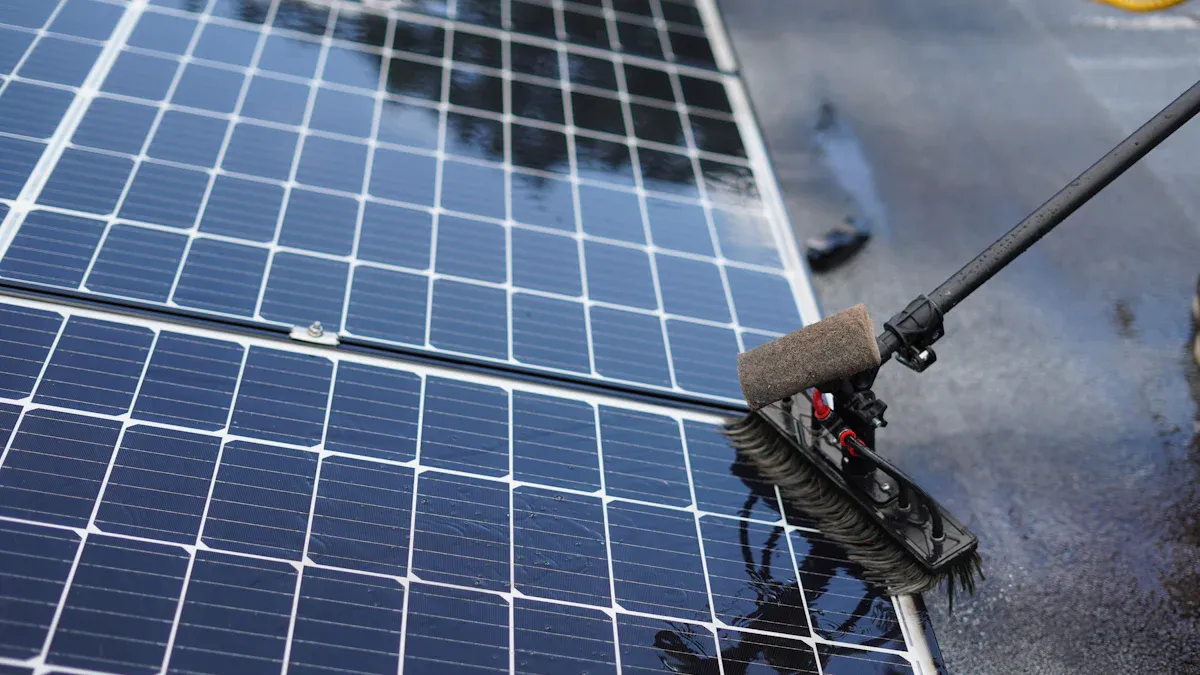
Clean panels give you more energy from your solar panels. Dirt, dust, and bird droppings can lower power by over 20%. Clean your panels at least two times a year. If you live where it is dusty, clean them more often. Use a soft brush or squeegee with water in the morning or evening. Do not use high-pressure water or strong cleaners. These can hurt the panels and make them not last as long. Take off leaves and dirt in winter and pollen in summer.
Use soft brushes or microfiber cloths.
Rinse with water, not strong cleaners.
Clean when it is cool outside.
Monitoring Performance
You should watch your solar panels to see if energy drops. Solar monitoring systems like SolarEdge or Enphase Enlighten help you find problems fast. If you see a big change, check your panels right away. Fixing problems early stops bigger issues and helps your panels last longer. Watching your system all the time keeps it working well and makes it last longer.
Tip: Make a checklist for cleaning and maintenance. This helps your panels last longer and keeps away surprises.
Degradation And Aging
Understanding Degradation Rates
Solar panels do not work as well forever. Over time, they lose some power. This is called degradation. The degradation rate shows how fast panels lose power each year. Most panels lose less than 0.8% of power every year. The biggest loss happens in the first hours of sunlight. Experts call this light-induced degradation. After that, the loss slows down and follows a steady curve.
Manufacturers say panels will give at least 80% of their first power after 25 years. Some premium panels do even better. You can see how different panels compare in the table below:
Type of Solar Panel
Annual Degradation Rate
Output After 25 Years
Premium Panels
0.25%
94%
Standard Panels
0.7%
82.5%
Modern Monocrystalline
0.4%
Not specified
General Panels
<0.8%
80%
If you want your system to last longer, pick panels with a lower degradation rate. This helps your panels work well for many years.
Signs Of Aging And Replacement
Watch for signs that your solar panels are getting old. Old panels may not work as well or may look different. Here are some things to check for:
Lower energy or sudden drops in power
Cracks, color changes, or other damage you can see
Weird noises or smells from the system
Inverter that does not work well or stops a lot
Monitoring data that changes a lot or does not update
If you see these signs, your panels may need fixing or replacing. Regular checks help you find problems early. Acting fast keeps your system safe and working well.
Tip: Use a monitoring system to watch your solar panel degradation. This helps you see changes and know when to replace old panels.
Common Mistakes To Avoid
If you have solar panels, you want them to last. Many people make mistakes that can make their solar panels wear out faster. You can stop these problems if you know what to look for and take easy steps to keep your panels safe.
Ignoring Maintenance
Not doing regular maintenance is a big mistake. If you do not clean your panels, dirt will pile up. This stops sunlight from reaching the panels. Your system makes less energy when this happens. Studies show dust can lower efficiency by 20%. In dusty places, it can drop by 30%. Without maintenance, your panels may break sooner. You should check your panels two times a year. After storms or strong winds, look for damage. Most panels that fail early did not get enough care.
Tip: Clean your panels every 6 to 12 months. Plan yearly checks and extra checks after storms.
Overlooking Warranty
Many people forget to check the warranty when buying panels. If you do not know your warranty, you might miss important coverage. Most companies give a performance warranty for 25 to 30 years. Product warranties last 5 to 12 years. Some installers offer an installation warranty. Not all warranties pay for labor or shipping. Many do not cover storm damage. You should know what your warranty covers before you need it.
Manufacturer
Performance Warranty
Product Warranty
Installation Warranty
Maxeon
40 years
N/A
N/A
Canadian Solar
30 years
N/A
N/A
General Manufacturers
25-30 years
5-12 years
1-25 years
Note: Keep your warranty papers safe. Ask your installer to explain what is included.
Delaying Repairs
If you see a problem with your panels, fix it fast. Waiting to repair can cause more damage. Your system will make less energy. Broken panels or loose wires can be unsafe. Quick repairs keep your system working well. Acting fast saves money and protects your panels. Regular checks help you find problems early, so you can fix them before they get worse.
Watch for drops in energy.
Look for cracks, loose wires, or weird noises.
Call a professional if you see any problems.
Remember: Doing maintenance, checking often, and knowing your warranty helps your panels last longer and work better.
You can help your solar panels last longer by using good materials. Make sure the panels are installed carefully. Check your panels often to find problems early. Clean your panels every 6 to 12 months so they work well. Plan yearly checks to spot damage or signs of aging. Use apps to watch how much energy your panels make. This helps you see if something is wrong. Keep your panels safe from bad weather and animals. If you take care of your panels, you get more energy and better efficiency. Experts say a well-cared-for system can last about 40 years.
Research shows dirty panels can lose up to 7% efficiency in one month. Doing regular maintenance and inspections are important tips to help pv panels last longer and keep solar panel lifespan high.
FAQ
How often should you clean your solar panels?
You should clean your solar panels at least twice a year. If you live in a dusty area, clean them more often. Clean panels work better and last longer.
What is the average lifespan of a solar panel?
Most solar panels last 25 to 30 years. Some high-quality panels can last up to 40 years. Regular care helps you reach the longest lifespan.
Can bad weather damage your solar panels?
Hail, heavy snow, or strong winds can damage panels.
Choose panels tested for harsh weather.
Inspect your system after storms to catch problems early.
Do you need a professional to install solar panels?
Yes, you should hire a certified installer. Professionals make sure your panels are safe and work well. Good installation helps your panels last longer.