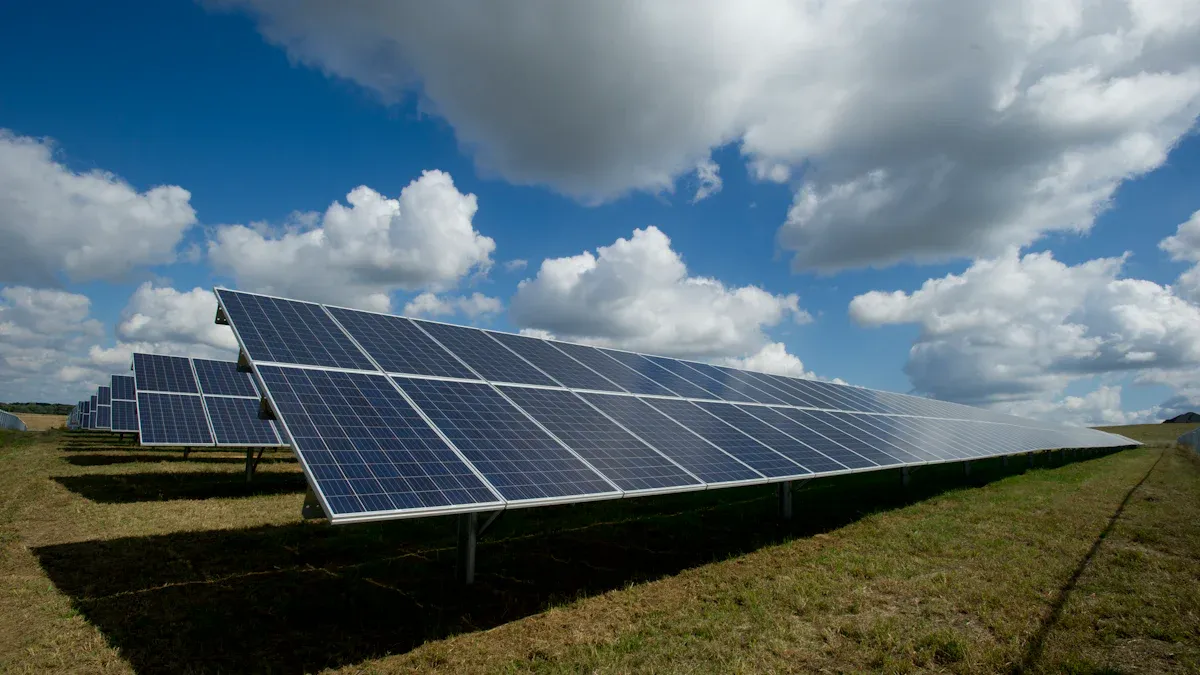
You can do well with solar panels TEAS passages by using good strategies. Begin by finding the main ideas. These are usually at the start or end of the passage. Look for supporting details like examples and numbers. Watch for important keywords that show how ideas link together. Practice making guesses by reading between the lines. Take notes or highlight facts to help you understand solar topics. By following these steps, you gain confidence and get more answers right.
Key Takeaways
Find the main idea by reading the first and last sentences.
Skim and scan to quickly spot important facts.
Practice guessing hidden meanings by reading between the lines.
Highlight or write down key facts and details to help you understand.
Use your time wisely during the test to answer more questions.
Solar Panels TEAS Passage Overview
What Is a Solar Panels TEAS Passage
On the TEAS exam, you will read a solar panels TEAS passage. This passage explains what solar panels are and how they work. You do not need to know about solar panels before you take the test. The passage uses simple words, so you can understand it. The main reason for this passage is to see how well you read and understand information about solar energy. You might read about how sunlight changes into electricity or see a chart that compares solar panels. The questions will check if you learned from the passage.
To check if you understand renewable energy ideas without needing to know about solar panels first.
Content Examples
Could talk about how sunlight becomes electricity or compare different solar panels.
Question Types
Questions check if you understand what you read in the passage.
Why Solar Panels Are Featured
You might wonder why there is a solar panels TEAS passage on the test. Solar panels are important today. Many people use solar energy to help the Earth and save money. The TEAS exam wants to see if you can read about real science topics. Solar panels show how science can fix problems. You will read about renewable energy and how it helps people and the planet. This topic also lets you practice reading about new things.
When you read a solar panels TEAS passage, you will answer many kinds of questions. Some questions ask about the main idea. Others want you to find facts or details. You may need to guess what the author means, even if it is not written. You will also answer questions about words in the passage and why the author wrote it.
Questions that check if you understand science ideas.
Questions that ask you to find details.
Questions that test if you can make guesses.
You might also get questions that compare different solar panels. These questions show if you can find facts, understand the passage, and make good guesses. You will get better at these skills if you practice more solar panels TEAS passages.
Key Solar Panels Concepts
How Solar Panels Work
Sunlight Conversion
Solar panels are found on roofs and fields. They use sunlight to make energy. Sunlight hits the solar cells and brings photons. Photons knock electrons out of atoms in the semiconductor. This makes an electric current. You can use this current to power homes and devices. The cells are made of silicon, which helps turn sunlight into electricity. When sunlight hits the cells, photons give energy to atoms. This makes electrons move and create electricity. Solar panels use the photovoltaic effect. Sunlight makes electrons move in semiconductors, and this creates electrical flow.
Tip: Solar panels do not store energy. They only make electricity when sunlight shines on them.
Main Components
Solar panels have a few main parts. Solar cells do most of the work. The cells sit inside a frame. The frame keeps the cells safe from weather. There is a glass cover on top. The cover lets sunlight in and protects the cells. Wires connect the cells to your home or battery. The wires carry electricity from the panels. There is a junction box on the back. The box helps control the flow of solar energy. All parts work together to turn sunlight into electricity.
Types of Solar Panels
Monocrystalline
Monocrystalline panels use pure silicon. They are dark and have rounded edges. These panels are more efficient, even in low light. They cost more, but work well in small spaces. Monocrystalline panels last longer and make more energy per sunlight.
Polycrystalline
Polycrystalline panels use silicon crystals. They are blue and have square edges. These panels have moderate efficiency. They cost less than monocrystalline panels. Polycrystalline panels are good for big spaces. They balance cost and performance.
Thin-Film
Thin-film panels use layers of materials like cadmium telluride or amorphous silicon. These panels are light and flexible. Thin-film panels are less efficient than other types. They cost less and work well for special uses. You can use them for portable devices or big areas. Some thin-film solar cells reached up to 29.1% efficiency in 2023.
Type
Efficiency
Cost Comparison
Applications
Monocrystalline
Higher efficiency, especially in low-light conditions
More expensive than polycrystalline
Great for small spaces and low-light areas
Polycrystalline
Lower efficiency than monocrystalline
Cheaper to make
Good for big spaces
Thin-film
Less efficient
Cheapest
Useful for special uses because they are light and flexible
Note: Pick solar panels based on your needs, space, and cost.
Benefits and Challenges
Environmental Impact
Solar energy has many environmental benefits. Solar panels use sunlight, which is renewable. Using solar power helps lower carbon emissions. Solar panels do not make greenhouse gases. You avoid damage from fossil fuels. Solar panels help keep the planet clean and fight climate change.
The first cost to install panels is high, so it is better for property owners who plan for the long term.
Cost and Efficiency
You need to think about solar cost and efficiency. Monocrystalline panels are most efficient and last longer. They cost more but work well in small spaces. Polycrystalline panels are moderately efficient and cost less. Thin-film panels are less efficient and do not last as long, but they are cheaper. Thin-film panels are good for portable devices or big areas. Efficiency affects how much electricity you get from sunlight. You save money over time with solar energy, but the first cost is high.
Type of Solar Panel
Efficiency Rate
Lifespan
Cost
Suitability
Monocrystalline
High
Longer lifespan
More expensive
Good for small rooftop space
Polycrystalline
Moderate
Moderate lifespan
Cost-effective
Good for big installations
Thin-Film
Lower
Shorter lifespan
Cheaper
Used in portable devices or big areas
Monocrystalline panels are most efficient and make more electricity per sunlight.
Polycrystalline panels are moderately efficient and cost less for big spaces.
Thin-film solar cells reached up to 29.1% efficiency for some types in 2023.
Solar panels help you use renewable energy and save money, but you need to plan for the first cost and pick panels with the right efficiency.
Going Solar: Installation and Maintenance
Roof Assessment
When you want solar panels, you start with a roof check. An installer comes to your house to see if your roof is ready. The installer looks at the shape, size, and which way the roof faces. They also look for shade from trees or chimneys. Shade can move during the day, so the installer watches how sunlight moves. Even if there is some shade, your roof might still work for solar panels.
The installer checks what your roof is made of. Asphalt shingles, metal, and tiles are easier for solar panels. Other roof types can make it harder or cost more money. The installer makes sure your roof can hold the weight of the solar panels. They might use rail mounts that attach to the roof. Or they might use ballasted mounts that use weight to hold the panels. Ballasted mounts do not need holes in the roof. You can move or take off the panels later without hurting the roof.
Tip: A good roof check helps you get more energy from your solar panels and keeps your money safe.
Solar Panel Positioning
Optimal Tilt and Azimuth
The installer puts the panels at the best angle and direction. Tilt means the angle between the panel and the ground. Azimuth means which way the panels face. Most homes get the most sun if the panels face south. This gives your solar panels the most sunlight each day. The installer sets the tilt to match where you live. This helps your panels make more electricity all year.
South-facing panels are best for most homes.
The installer changes the tilt for your area.
Good placement gives you more energy and saves money.
Illinois Placement Example
If you live in Illinois, the installer points the panels to true south. The best tilt is close to your home’s latitude, about 40 degrees in Illinois. This setup gives your panels the most sunlight in every season. The installer checks for shade and roof space to make sure your solar panels work well.
Cleaning and Monitoring
Cleaning your solar panels and checking them often helps them last longer. The installer will show you how to clean and check your panels. You should look at your panels at least two times a year. Check for cracks, scratches, or loose wires. Clean the panels once or twice a year with a soft brush or gentle water. Do not use rough tools. The installer also checks the electrical parts and makes sure the inverter and wires work. You can use a monitor to watch your energy and find problems early.
Look for cracks, scratches, color changes, loose parts, and cable damage.
Cleaning
1–2 times per year
Use a soft brush or gentle water; do not use rough tools.
Electrical System Checks
Regularly
Check the inverter for errors and make sure wires are safe.
Performance Monitoring
Daily/Weekly
Use a monitor to track energy and find problems fast.
Note: Cleaning and checking your solar panels often keeps them working well. You get more electricity and save more money over time.
Winter Performance Strategies
Winter makes things harder for your solar panels. There is less sunlight because the sun is lower and days are shorter. Snow can cover your panels and block the sun. Cold weather can help your panels work better, but frost or heavy snow can make them less efficient for a short time.
You can do a few things to help your solar panels in winter:
Check and clean your panels often. Take off dust, dirt, and snow so sunlight can get to the cells.
Change the tilt of your panels. A steeper tilt helps snow slide off and lets your panels get more sunlight in winter.
Use tools to remove snow or ask experts for help. Clearing snow fast stops your panels from losing power for a long time.
Use batteries with your panels. Save extra energy on sunny days to use when there is not much sunlight.
Add heating parts to your panels. These can melt snow and keep your panels clear so they make energy all the time.
Here is a table that shows how winter can affect your panels and what you can do:
Winter Challenge
Impact on Panels
Strategy to Mitigate
Reduced Sunlight
Less electricity produced
Adjust tilt angle, use batteries
Snow Obstruction
Sunlight blocked by snow
Clean panels, install heating elements
Cold Temperatures
Efficiency may improve
Monitor panels, check for frost
Extreme Cold or Frost
Temporary drops in efficiency
Inspect panels, remove frost
Tip: Check your panels after every snowfall. Acting fast helps your panels keep making energy.
You can also put your panels at an angle that matches the winter sun in your area. In places with lots of snow, a steeper tilt helps snow fall off. Heating parts work well if you get many snowstorms. Batteries give you backup power when there is not much sun.
Solar panels work best between 68°F and 77°F. Cold air can help them work better, but very cold weather or snow can cause problems. You should watch your panels and fix problems quickly.
You can keep your panels working all winter if you use these tips. Taking care of your panels and putting them in the right spot helps you get more energy, even when days are short and snowy.
Common Questions in Solar Panels TEAS Passage
Main Idea
You will often see questions about the main idea in a solar passage. These questions ask you to find the most important point the author wants you to remember. To answer, look at the first and last sentences of the passage. The main idea usually tells you what the whole passage is about. If you read a passage about how sunlight turns into electricity, the main idea might be that solar energy can power homes and help the environment. Always ask yourself, “What is the author trying to teach me?” This helps you focus on the big picture, not just small details.
Tip: The main idea is the “big message” of the passage. Try to say it in your own words.
Details and Facts
Some questions will ask you to find specific facts or details in the passage. These questions check if you can remember and understand important information. You need to look for numbers, names, or steps that the author gives. Here are some details you may see in solar passages:
Types of solar panels: You may read about monocrystalline, polycrystalline, and thin-film panels. Each type has its own features.
Benefits of solar: These include using a renewable energy source, saving money on energy bills, and protecting the environment.
Challenges of solar: You might see facts about high starting costs, how weather affects energy, or the need for cleaning and repairs.
When you answer detail questions, scan the passage for key words or numbers. Underline or highlight facts as you read. This makes it easier to find answers quickly.
Inference
Some questions do not give you the answer directly. Instead, you need to make an inference. This means you use clues from the passage to figure out something the author does not say outright. For example, if the passage says solar panels work best on sunny days, you can infer that cloudy weather lowers their energy output. Look for hints, examples, or words that suggest more than what is written.
Some solar passages require you to infer information that is not directly stated. Pay attention to hints, implications, and subtle clues within the text.
To get better at inference questions, practice thinking about what the author means, not just what is written. Ask yourself, “What does this sentence suggest?” or “What can I guess from these facts?” This skill helps you answer more questions right on the TEAS exam.
Vocabulary in Context
When you read a solar panels TEAS passage, you will see vocabulary questions. These questions ask what certain words mean in the passage. You do not need to remember every science term. Use clues from the sentences around the word to help you. Look for hints like definitions, examples, or comparisons. Sometimes the author explains the word right after using it. Other times, you must guess the meaning by reading carefully.
Here are some hard vocabulary words you may see in solar panels passages:
Photovoltaic: This word means turning sunlight into electricity.
Inverter: This device changes electricity from direct current (DC) to alternating current (AC).
Efficiency: This term shows how well something turns energy into useful power.
Renewable: This means energy comes from sources that never run out, like sunlight.
Subsidy / Incentive: These words mean money help or rewards to get people to use solar panels.
You can use clues in the passage to understand these words. For example, if the passage says, "The inverter changes the electricity so it can power your home," you know the inverter helps make the electricity usable. If you see "solar panels are efficient because they turn most sunlight into power," you learn that efficiency means getting the most energy possible.
Tip: If you do not know a word, look at the sentence before and after it. Ask yourself, "What is the author showing or explaining?"
Underline or highlight new words as you read. Write a quick note or definition in your own words. This helps you remember and understand the vocabulary. Practice using clues so you can answer vocabulary questions with confidence.
Author’s Purpose
You will also see questions about the author’s purpose. These questions ask why the author wrote the passage. The author’s purpose shows what the writer wants you to learn or think about solar panels. You can find clues in the introduction, conclusion, and the way facts are given.
Common purposes in solar panels TEAS passages include:
Comparing different types of solar panels and their uses.
Talking about the benefits and challenges of using solar energy.
To find the author’s purpose, ask yourself, "What does the author want me to know?" Look for statements that explain, describe, or compare. If the passage gives facts and explains how solar panels help the environment, the purpose is to inform. If the author talks about different panel types, the purpose may be to compare.
Note: The author’s purpose helps you understand the main goal of the passage. Always check the introduction and summary for clues.
Practice finding the author’s purpose in each passage. This skill helps you answer questions and see the big picture.
Essential Solar Vocabulary
Knowing important vocabulary helps you read about solar panels. You will see scientific and technical words. You can use clues in the text to learn new words.
Scientific Terms
You will often find these scientific words in solar passages:
Photovoltaic (PV) cells: These cells take in sunlight and make direct current (DC) electricity.
Direct current (DC) electricity: This kind of electricity comes right from solar panels.
Alternating current (AC) electricity: Most homes and businesses use this kind of electricity.
Inverter: This device turns DC electricity into AC electricity so you can use it in your house.
Renewable energy technology: Solar panels use energy sources that never run out, like sunlight.
You should learn these words because they show how solar panels work and why they are important.
Technical Terms
Some words in solar passages are more technical. These words help you understand how the system works and why people use it.
Efficiency: This word tells you how well a solar panel turns sunlight into electricity.
Subsidy or Incentive: These words mean money help or rewards that make it easier for people to buy solar panels.
Array: This means a group of solar panels working together.
Grid: This is the system that brings electricity to homes and businesses.
Installation: This word means putting solar panels on a roof or in a field.
You will see these words when you read about solar energy systems and how people use them.
Context Clues
You do not need to know every word before you read a solar passage. You can use clues in the sentences to help you. Look at the words and sentences around a new word. Ask yourself what the author is showing or explaining.
Here are some tips for using context clues:
Read the sentence before and after the new word.
Look for examples or definitions in the passage.
Notice if the author compares the new word to something you know.
Try to guess the meaning and check if it makes sense.
For example, if you read, "The inverter changes the electricity so it can power your home," you can guess that an inverter helps make the electricity usable. If you see, "Solar panels are efficient because they turn most sunlight into power," you learn that efficiency means getting the most energy possible.
Tip: Use context clues every time you see a new word. This skill helps you answer vocabulary questions and understand the passage better.
Reading Strategies for Solar Panels Passages
Skimming and Scanning
You can use skimming and scanning to read solar passages faster and more effectively. Skimming means you look over the passage quickly to find the main idea. You do not read every word. Instead, you focus on the first and last sentences of each paragraph. This helps you understand what the passage is about before you read the questions.
Scanning is different. You use scanning to find specific facts or details. When you scan, you move your eyes quickly over the text to look for numbers, names, or special words. This helps you answer questions faster because you know where to look.
Read the questions before you read deeply. This helps you know what to look for.
Highlight important information, such as definitions, causes and effects, and comparisons.
Break down each paragraph and focus on one idea at a time.
Eliminate wrong answers to improve your accuracy.
Tip: Skimming and scanning help you save time and find answers quickly on the TEAS exam.
Identifying Main Ideas
Finding the main idea is a key skill when you read about solar topics. The main idea tells you what the whole passage is about. You can usually find it in the first or last sentence of a paragraph. Sometimes, the author repeats the main idea in different words.
To identify the main idea, ask yourself, “What is the author trying to teach me?” Look for sentences that sum up the passage. If you read about how solar panels work, the main idea might be that solar energy can power homes and help the environment.
You can also underline or highlight the main idea as you read. This makes it easier to answer questions later.
Remember: The main idea is the big message. Try to say it in your own words.
Spotting Keywords
Keywords help you find important information in a solar passage. These words often tell you about the topic, such as “photovoltaic,” “efficiency,” or “renewable.” When you spot keywords, you can understand what the passage is focusing on.
Look for words that are repeated or explained in detail. Sometimes, keywords are bold or italic in textbooks, but on the TEAS exam, you need to find them yourself. Pay attention to words that show cause and effect, comparisons, or steps in a process.
You can circle or underline keywords as you read. This helps you remember them and find answers faster. When you see a question about a detail, scan the passage for the keyword to find the answer quickly.
Tip: Spotting keywords makes it easier to understand and remember facts about solar energy.
Making Inferences
You often need to make inferences when you read solar panel passages. Inference means you use clues from the text to figure out something the author does not say directly. You read between the lines. This skill helps you answer questions that do not have obvious answers.
To make good inferences, follow these steps:
Read the passage carefully. Pay attention to facts and details.
Look for clues. Notice words or phrases that hint at something not stated.
Think about what you know. Use your own knowledge to help you understand.
Ask yourself questions. What does the author want you to guess? What is not said but suggested?
Check your answer. Make sure your inference matches the information in the passage.
Tip: If the passage says, "Solar panels work best on sunny days," you can infer that they do not work as well on cloudy days.
You can practice making inferences by reading short passages and asking, "What can I learn that is not written?" This skill helps you on the TEAS exam and in real life.
Here are some phrases that often signal you need to make an inference:
"It can be assumed that..."
"The author suggests..."
"Based on the passage, what can you conclude?"
Annotating
Annotating means you add notes or marks to the passage as you read. This helps you remember important points and find answers faster. You can underline, circle, or highlight key words. You can also write short notes in the margin.
Here are some ways to annotate a solar panel passage:
Underline main ideas or topic sentences.
Circle new vocabulary words.
Highlight facts, numbers, or steps in a process.
Write a question mark (?) next to confusing parts.
Add a star (*) next to important details.
Note: Annotating keeps you active while you read. You stay focused and understand more.
Try this simple code for annotating:
Underline = Main idea
Circle = New word
Highlight = Fact or number
? = Confusing part
* = Important detail
You do not need to mark every sentence. Focus on the most important parts. When you answer questions, look back at your notes. This saves time and helps you feel confident.
Annotating is a skill you can use in all reading, not just on the TEAS exam. Practice this strategy to improve your reading and test scores.
Test-Taking Tips for Solar Panels TEAS Passage
Time Management
You need to manage your time well when you take the test of essential academic skills. You will have a set amount of time to read the passage and answer questions. Start by looking at how many questions you have for the solar passage. Divide your time so you do not spend too long on one question. If you get stuck, move on and come back later. This helps you answer more questions and not run out of time.
Try these steps for better time management:
Read the solar passage quickly to get the main idea.
Spend about one minute on each question.
Mark hard questions and return to them if you have time.
Use the last few minutes to check your answers.
Tip: Practice with a timer before the test. This helps you feel comfortable working under time limits.
Eliminating Wrong Answers
You can improve your score by removing wrong answers first. Many questions on the test of essential academic skills have four choices. Usually, one or two answers are clearly wrong. Cross these out. This makes it easier to pick the right answer.
Here is how you can eliminate wrong answers:
Look for answers that do not match the solar passage.
Remove choices that use words like “always” or “never.” These are often wrong.
Watch for answers that repeat words from the question but do not fit the passage.
If two answers seem correct, look for small details that make one better.
Note: If you are not sure, guess from the remaining choices. You have a better chance of getting it right.
Double-Checking
You should always double-check your answers if you have time. Go back to the solar passage and read the question again. Make sure your answer matches what the passage says. Check for small mistakes, like picking the wrong letter or missing a detail.
Follow these steps to double-check:
Reread the question and your answer.
Look back at the part of the passage that talks about the question.
Make sure your answer uses facts from the passage.
Change your answer if you find a better one.
Tip: Double-checking helps you catch mistakes and improve your score.
You can use these tips for improving teas reading score. Good time management, removing wrong answers, and checking your work help you do your best on solar panels passages. These strategies also help you on other science topics about energy.
Staying Focused
You need to stay focused when you read and answer questions about solar panels on the TEAS exam. Distractions can make you miss important details or forget what you just read. You can use simple strategies to keep your mind on the passage and do your best.
Start by finding a quiet place to practice. Turn off your phone and close other tabs on your computer. If you practice in a calm space, you will train your brain to focus better during the real test. When you take the TEAS exam, try to block out noises and ignore what other people are doing.
Before you read the passage, take a deep breath. This helps you relax and get ready to pay attention. Read the title and look at any pictures or charts. These can give you clues about what the passage will cover. As you read, move your finger or a pencil under each line. This keeps your eyes from jumping around and helps you stay on track.
If you feel your mind wandering, stop and bring your attention back to the passage. You can reread the last sentence or say the main idea to yourself. This helps you remember what you just read. If you get stuck on a hard word or sentence, do not worry. Skip it and keep reading. You can come back to it later.
Here are some tips to help you stay focused:
Set a goal for each passage. For example, tell yourself, “I will find the main idea and three facts.”
Take short breaks if you practice for a long time. Stand up, stretch, or get a drink of water.
Use a piece of paper to cover the answers until you finish reading the question. This keeps you from guessing too soon.
Write down quick notes or underline key words. This keeps your mind active and helps you remember details.
Remind yourself why you are reading. You want to learn about solar panels and get a good score.
Tip: If you lose focus, close your eyes for a few seconds and take a slow breath. Open your eyes and start again.
You can also use positive self-talk. Tell yourself, “I can do this,” or “I am ready for this test.” This boosts your confidence and helps you stay calm. If you feel nervous, remember that everyone gets distracted sometimes. The important thing is to notice it and bring your mind back to the passage.
Practice staying focused every time you read. The more you practice, the easier it gets. You will find that you can read faster, remember more, and answer questions with confidence.
Practice with Solar Panels TEAS Passage
Sample Passage
You can find solar panels on many rooftops and fields. These panels use sunlight to make electricity. When sunlight hits the panels, the cells inside change the energy into power you can use at home. Solar panels help people save money and protect the environment. Some panels work better than others. Monocrystalline panels make more electricity but cost more. Polycrystalline panels are cheaper and good for big spaces. Thin-film panels are light and flexible. You need to clean panels and check them often to keep them working well. In winter, snow can cover panels and block sunlight. You can tilt panels to help snow slide off. Solar energy is a smart choice for people who want to use clean power.
Example Questions
What is the main idea of the passage?
A. Solar panels cost a lot of money
B. Solar panels help people use clean energy
C. Monocrystalline panels are the best
D. Solar panels only work in summer
Answer: B. Solar panels help people use clean energy You can see that the passage talks about how solar panels use sunlight and help the environment.
Which type of panel is best for small spaces?
A. Polycrystalline
B. Thin-film
C. Monocrystalline
D. None of the above
Answer: C. Monocrystalline The passage says monocrystalline panels make more electricity and work well in small spaces.
Why do you need to clean solar panels?
A. To make them look nice
B. To keep them working well
C. To change their color
D. To lower their cost
Answer: B. To keep them working well Cleaning helps panels get more sunlight and make more power.
What can you do to help panels in winter?
A. Paint them black
B. Tilt them so snow slides off
C. Cover them with plastic
D. Move them indoors
Answer: B. Tilt them so snow slides off The passage explains that tilting panels helps snow slide off and keeps them working.
What is one benefit of using solar energy?
A. It never works at night
B. It helps protect the environment
C. It costs more than other energy
D. It uses fossil fuels
Answer: B. It helps protect the environment Solar energy is clean and does not harm the planet.
Try to answer each question before you check the explanation. This practice helps you get ready for the TEAS exam and builds your confidence.
Building Solar Reading Skills
Practice Resources
You can improve your reading skills by using practice resources. Many websites offer free passages about solar energy. You can find sample questions that help you understand how solar works. Try reading articles from science magazines or school textbooks. You can use flashcards to learn new words. Some apps let you answer questions and check your score. You can join study groups and share tips with friends. Practice often to build confidence and speed.
Tip: Use online quizzes to test your knowledge about solar topics. You can track your progress and see which areas need more practice.
Here is a table with helpful resources:
Resource Type
Example
How It Helps
Online Passages
TEAS practice sites
Gives you real test examples
Science Articles
Kids’ science magazines
Teaches you about solar facts
Flashcards
Vocabulary apps
Builds your word knowledge
Study Groups
School clubs
Lets you learn with others
Tracking Progress
You need to track your progress as you practice reading about solar. You can keep a notebook and write down your scores. Mark which questions you got right and which ones you missed. You can use charts to see how you improve over time. Try setting goals for each week. For example, aim to answer five more questions correctly than last week. You can reward yourself when you reach your goals.
Write your scores after each practice session.
Use a chart or graph to see your improvement.
Set small goals and celebrate when you reach them.
Note: Tracking progress helps you stay motivated. You can see how much you learn about solar and feel proud of your hard work.
Reviewing Mistakes
You will make mistakes as you practice reading about solar panels. You need to review your errors to learn from them. Look at each question you missed and read the passage again. Try to find why you chose the wrong answer. Write down the correct answer and explain it in your own words. Ask yourself what clues you missed. You can talk to a teacher or friend if you need help.
Review each mistake after practice.
Write the correct answer and why it is right.
Look for patterns in your errors. For example, do you miss vocabulary questions or main idea questions?
Ask for help if you do not understand a passage.
Callout: Reviewing mistakes helps you avoid them next time. You can become a stronger reader and do better on the TEAS exam.
You can master solar panels TEAS passages by using smart reading strategies. Focus on finding the main idea, spotting key facts, and making inferences. Practice often and use the tips you learned. Each time you read, you build your skills and confidence. Stay positive and keep working. You will see your progress and reach your goals.
FAQ
What are solar panels?
You use solar panels to turn sunlight into electricity. The panels sit on roofs or fields. They help you power homes and devices with clean energy.
How do you clean solar panels?
You clean solar panels with a soft brush and water. Avoid rough tools. Check panels twice a year for dirt, leaves, or snow.
Do solar panels work in winter?
Solar panels work in winter. Cold air can help them. Snow may block sunlight. You can tilt panels to help snow slide off.
What is the best direction for solar panels?
You get the most sunlight when panels face south. The installer checks your roof and sets the tilt for your area.
How long do solar panels last?
Most panels last 20 to 25 years. You can keep them working longer with regular cleaning and checks.
Can you use solar panels at night?
Solar panels do not make electricity at night. You can use batteries to store extra energy for nighttime use.
Are solar panels expensive?
Solar panels cost more at first. You save money over time by lowering your energy bills.
What is the difference between monocrystalline and polycrystalline panels?
Monocrystalline panels work better in small spaces and low light. Polycrystalline panels cost less and suit big areas.