You may see damage on your solar panels, like weird error messages or cracked glass. Inverter faults and wiring problems can cause trouble quickly. Did you know wiring and connectors cause problems in 83% of checked solar projects? Solar Panel Damage needs fast action to help you save money.
Key Takeaways
Check your solar panels every three to six months. This helps you find damage early. Look for cracks, chips, or loose frames. Finding these problems early stops bigger issues later.
Watch how your system works with apps or displays. If power drops suddenly, there may be a problem. Error messages can also mean electrical trouble. These need quick attention.
Think about getting a professional inspection once a year. Experts can find hidden problems. They can give advice to keep your solar system working well.
Common Causes Of Solar Panel Damage
Weather And Environmental Impact
Bad weather can hurt solar panels a lot. Hail, strong winds, and heavy snow are the main problems. Check this table to see when damage can start:
You might see cracks, chips, or bent frames on your panels. These things usually happen from falling branches, rocks, or animals. If you notice broken glass or loose panels, your system can lose power quickly.
Cracked glass lets water get inside and cause more problems.
Bent frames make panels sit wrong and work less well.
Bad wiring can stop electricity from moving through the system. You might see error messages or notice power drops.
Aging And Wear
Solar panels can last 25 to 30 years, but they lose power slowly. Better panels lose less energy as they get older. This table shows how much power you keep after 25 years:
Panel Type
Amount of original output after 25 years
Tier 1
93.04%
Tier 2
88.67%
Tier 3
82.47%
Old panels can get more damage and not work as well.
Identifying Solar Panel Damage
Finding solar panel damage early can help you avoid bigger problems later. You do not have to be an expert to spot warning signs. You can check your panels by looking at them, watching how much power they make, and noticing electrical problems before they get worse.
Visual Inspection For Physical Damage
Walk around your solar panels and look closely. Try to find cracks, chips, or bent frames. Sometimes, you might see cloudy spots, bubbles, or thin lines on the glass. These things can mean your panels have more serious problems.
Faded or dark spots can mean damage or lost power.
Delamination
Cloudy, bubbly, or blistered spots show the layers are coming apart.
Hotspots
Warm areas can mean hidden problems or diode failure.
Microcracks
Tiny lines let water in and cause more trouble later.
Snail trails
Thin, dark lines in sunlight often mean deeper defects.
Tip: Check your panels on a sunny day. Some problems, like snail trails, are easier to see in bright light.
If you see any of these signs, you should act fast. Even small cracks can let water in and cause more solar panel damage.
Monitoring Output And Error Messages
You can also find problems by watching your system’s power. Most solar systems have a display or app. Look for sudden drops in power or strange error messages. These can be early signs of electrical trouble.
The numbers are too high or too low. This can mean inverter trouble.
String Underperformance
One part is not working well. Dirt, shade, or damage could be why.
Sudden Loss of Production
If your panels stop making power, you might have equipment or electrical problems.
Gradual Performance Degradation
If your power drops more than 0.8% each year, your panels may be failing early.
Note: Compare your power now to past months. If you see a big change, check for solar panel damage.
Signs Of Inverter And Wiring Problems
Sometimes, problems are in the wires or inverter. These electrical issues can be hard to see, but your system will warn you with error messages. Here are some common ones:
Error Message
What’s Happening?
Over-voltage
The voltage is too high. This can hurt your inverter and stop power.
Under-voltage
The voltage is too low. Your inverter might turn off to stay safe.
Mismatched Inverter and Energy Storage
The inverter and battery do not match. This can waste energy or hurt your battery.
Improper Grid Code and Parameter Settings
The settings are wrong. Your system might disconnect from the grid.
Grounding and Bonding Faults
Bad grounding can cause unsafe voltages and safety risks.
If you see these messages, you probably have electrical problems. You might also see lights flicker or breakers trip in your house. These are clues that something is wrong with your solar system.
Callout: Always take electrical problems seriously. If you do not know what the error means, call a professional for help.
Checking your panels often and watching your system helps you find solar panel damage before it gets worse. By staying alert to damage and electrical problems, you can keep your solar system working well.
Solar Panel Damage Assessment
You want your solar panels to work their best, right? Figuring out how much damage your panels have is a big step. You can do some checks yourself, but sometimes you need a professional to dig deeper. Let’s walk through both options so you know what to expect.
Professional Inspection Steps
If you notice strange drops in power or see cracks, calling a solar expert makes sense. Professionals follow a clear process to make sure nothing gets missed. Here’s what happens during a full solar panel damage assessment:
Step
Description
1
Initial Consultation and Data Gathering: You talk about your energy goals and share details about your property.
2
Site Visit and Physical Inspection: The expert checks your roof, looks for shade problems, and reviews your electrical system.
3
Technical Measurements and Analysis: They measure and analyze how your panels are working and where they sit.
4
System Design and Sizing: You get advice on the best system size and how much power you can expect.
5
Financial Modeling and Projections: The expert gives you cost estimates and shows you possible savings.
6
Report Preparation and Recommendations: You receive a report with all the findings and clear next steps.
Tip: Experts recommend scheduling a professional inspection once a year. Some people check their panels every six months to catch problems early and keep everything running smoothly.
You should call a professional if you see broken glass, big drops in power, or error messages you don’t understand. If you ever feel unsure about electrical safety, let an expert handle it.
DIY Assessment Tips
You can do a basic solar panel damage assessment on your own. You don’t need fancy skills, but you do need the right tools. Here’s a quick guide to what helps:
Tool
Purpose
Digital Multimeter
Checks voltage and resistance so you can spot electrical issues.
Clamp Meter
Measures high DC amperage without taking wires apart, great for quick checks.
Thermal Camera/IR Gun
Finds hot spots that show up before panels fail, helping you catch trouble early.
Check for error messages on your system’s display.
Compare your power output to last month’s numbers.
Alert: If you find anything that looks dangerous or confusing, stop right away and call a professional. Safety comes first!
Doing your own checks helps you catch small problems before they get worse. You can keep your system working well and avoid big repair bills. If you want your panels to last, make these checks part of your routine.
Prevention And Maintenance
Taking care of your solar panels is important. Good habits help your panels work well. Regular solar panel maintenance stops small problems from getting worse. You save money and get more energy. Your panels last longer if you follow easy steps.
Regular Cleaning And Inspection
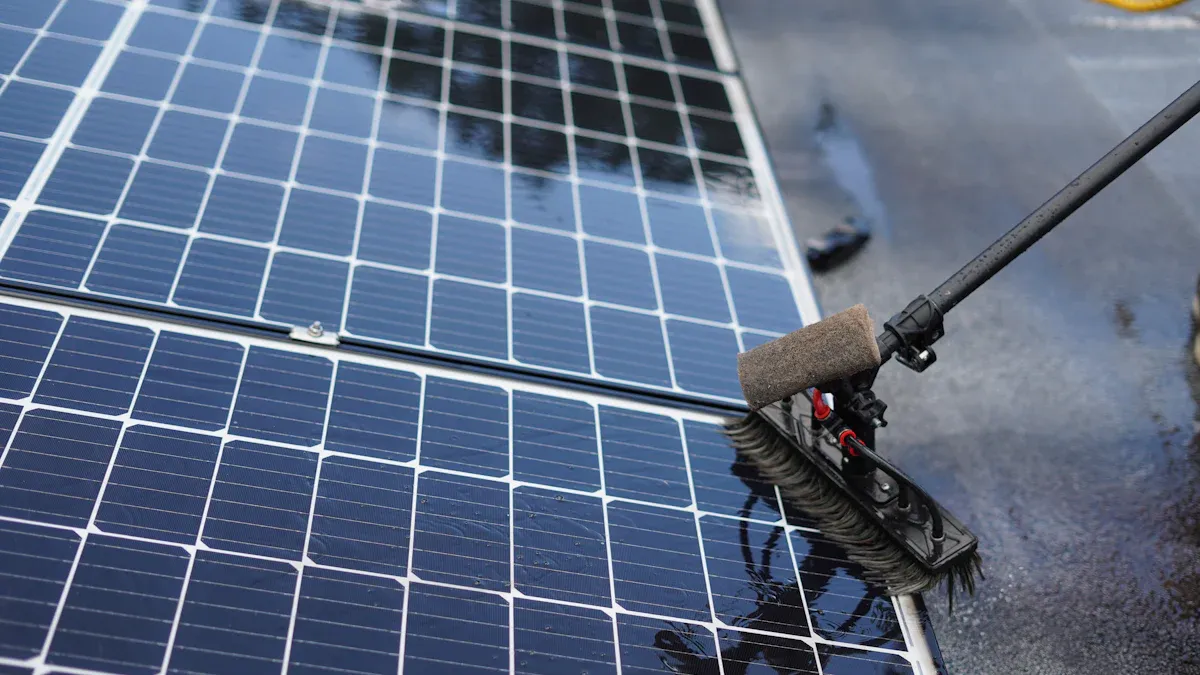
Dust and pollen can block sunlight. Bird droppings also lower power. Clean your panels every six months if dust is low. If you live near a busy road, clean them every month. Use a soft brush and a garden hose with low pressure. Do not use strong chemicals or high-pressure washers. These can hurt your panels. Clean early in the morning or late in the day. This helps avoid heat stress.
Clean every three months if dust or pollen is high.
Clean every month near construction or pollution.
Always look for cracks or loose frames when cleaning.
Checking your panels often helps you find problems early. This keeps your system working well. It also stops energy loss. If you take care of your panels, they can work at 80% efficiency after 25 years.
Monitoring System Performance
You can use smart tools to watch your solar panel maintenance. Many systems have apps that show live data. These apps help you see if your panels work right. Microinverters let you check each panel. Power optimizers also show panel data. String inverters track groups of panels. Wireless connections make updates easy on your phone or computer.
Technology Type
Description
Microinverters
Watch each panel for detailed performance data.
Power optimizers
Give panel-level data with a central inverter.
String inverters
Track groups of panels together.
Monitoring Apps
Show real-time data from your system.
Connectivity
Wireless or wired options for stable data.
Protective Measures Against Weather
Storms and hail can damage your panels. You can protect your panels with simple steps. Use tempered glass panels for better hail safety. Thicker glass is stronger. Some people put wire mesh around their panels. This blocks hail but lets sunlight in. Protective covers can help during storms. Take covers off when the sun comes out. Changing the angle of your panels can also help stop hail damage.
Use covers to protect panels during storms.
Add a methacrylate layer for extra safety.
Put wire mesh around panels to block hail.
Change panel angles to lower damage.
Preventive maintenance means you plan ahead. You set times for checks and cleaning. This helps you avoid sudden problems. It also keeps your solar panel maintenance easy. When you care for your system, you need fewer repairs. Your energy keeps flowing well.
Solar Panel Repair And Replacement Options
When To Repair Or Replace
You might not know if you should fix your panels or get new ones. Here are some things to think about: Check how bad the damage is. Small cracks or loose wires can be fixed easily. Think about how old your panels are. If they are almost worn out, getting new ones might be better. Compare the price of fixing your panels to buying new ones. Sometimes, repairs cost almost as much as new panels. Look at how well your system works. If you see big drops in power, you may need more than a simple repair. Make sure your roof is strong and not broken. Roof problems can hurt your panels. Watch for animals that chew wires or break panels. Follow your local rules for solar panel safety and installation. If you have many problems or your panels are very old, getting new panels might be the best idea.
Inverter And Wiring Repair
Inverter and wiring problems happen a lot with solar systems. Some problems can be fixed with a software update. Other times, you need a professional to check the wiring or change parts. Here is a table that shows what repairs can cost:
Repair Type
Cost Range
Annual professional inspection
$150 - $200
Simple fixes/software updates
Minimal or $0
Wiring repair visit
$150 - $300
Electrician hourly rate
$75 - $125
Annual wiring maintenance budget
$200 - $400
On-site solar panel repair
$400 - $1,000
Technician visit fee
$200 - $300
Additional labor per hour
$150+
Wiring issue repair
$1,000+
Tip: Always hire licensed professionals for solar panel repair. This keeps your warranty safe and helps protect solar panel safety.
Cost And Warranty Considerations
You want to save money and keep your solar system working. Warranties help you pay for repairs and protect your money. Here are some things to check: Performance warranties promise your panels will make a certain amount of energy. Product warranties cover problems with the panels. Installation warranties protect you from mistakes during setup. Check how long your warranty lasts and if you can give it to someone else. Look at what is not covered, like normal wear or cleaning. Make sure you know how to ask for help if something breaks. Insurance can also help pay for solar panel repair. Homeowners insurance often pays for damage from storms or fire. Some insurance does not pay for normal wear or electrical problems. You might need extra insurance for full protection. If you need help paying for repairs, you can look for programs like Solar for All or the Rural Energy Savings Program. These programs give grants or loans for solar panel safety and upgrades.
You can help your solar panels last longer by using a simple checklist. First, look at your panels when it is bright outside. Next, check the wiring and mounts to see if they look old or worn. Make sure you test your system often to catch problems early. Finding issues soon can stop bigger problems later. Getting repairs from a professional keeps your warranty safe. Doing regular checks saves you work and money.
Benefit
Why It Matters
Minimal Upkeep
You spend less time and money
Warranty Protection
Repairs cost less for you
Performance Monitoring
Your panels make more energy
FAQ
How often should you check your solar panels for damage?
You should check your panels every three to six months. Regular checks help you spot problems early.
Tip: Set a reminder on your phone!
Can you fix a cracked solar panel yourself?
No, you should call a professional. Cracked panels need expert repair. Trying to fix them yourself can void your warranty. ️
What does an error message on your inverter mean?
An error message means something is wrong with your system. Check your manual for details. If you feel unsure, call a solar technician.