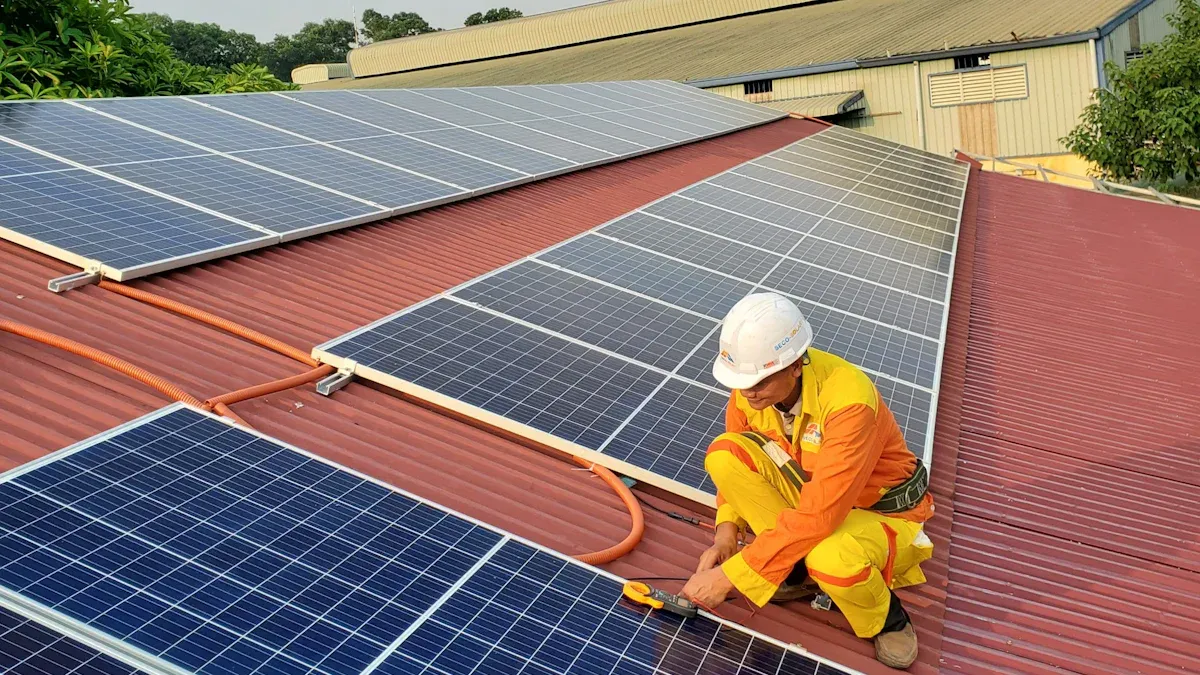
You can test solar panels at home with just a few simple tools. Regular testing solar panels keeps your solar system efficient and safe. Most homeowners use tools such as a multimeter, clamp meter, or solar power meter. Cleaning supplies help you keep your panels clear for accurate results. You do not need special skills for this process. With careful steps, you can check your panels and protect your solar investment.
Key Takeaways
Test your solar panels often to keep them working well and safe. Clean them two to four times each year. This can make them give 15-25% more energy.
Use important tools like a multimeter and clamp meter. These tools measure voltage and current. They help you find problems before they get expensive.
Look at your solar panels for damage, dirt, or trash. Checking with your eyes can show problems like color changes or tiny cracks that need fixing.
Be careful when testing. Always wear safety gear. Make sure the system is off before you start any work.
If you see big drops in energy or notice damage, call an expert. Getting help fast can stop more problems and keep your system working well.
Testing Solar Panels: Why It Matters
Efficiency Benefits
You want your solar system to work well every day. Testing solar panels helps you find problems early. This keeps your system working smoothly. Clean panels let more sunlight reach the cells. This gives your home more power. If you clean and check your panels often, they work better. Many people see their panels work 15-25% better after regular testing and cleaning. Sometimes, dirty panels can lose half their energy compared to clean ones. You can stop this by cleaning your panels two to four times each year.
Cleaning often stops dirt and debris from blocking sunlight.
Checking your panels helps you find damage before it gets worse.
Getting a professional to check once a year makes sure wires work well.
Doing these things helps your panels make more energy. Good care gives you more power and saves you money over time.
Risks of Poor Maintenance
If you do not test your solar panels, you can have more problems. Dirt, leaves, and snow can pile up and cause trouble. Pests might live under your panels and chew on wires. This can be dangerous. Dry leaves and debris can get hot and start fires. Heavy stuff on your panels can also break them.
Weather and sun can wear out your panels and make them work less.
Wiring Damage
Pests or weather can break wires and make things unsafe.
Circuit Breaker Issues
Problems with breakers can stop your system from working right.
Mechanical Panel Damage
Storms or hits can crack or break panels and make them work less.
Inverter Malfunctions
Inverter problems can stop your system or lower energy output.
Solar panel fires do not happen often, but they are possible if you skip maintenance. Most fires come from bad installation or broken wires. You can stop these risks by checking your system often and fixing problems fast.
Solar Panel Testing Tools
You need the right tools to test solar panels well. Each tool helps you check how your solar system is working. Here are the main tools you should use:
Multimeter and Clamp Meter
A multimeter or clamp meter is very important for testing solar panels. These tools measure voltage, current, and sometimes temperature. You can use them to see if your solar panels make enough electricity. When you pick a meter, look for these things:
Meters with True-RMS measurement give you the best results. A built-in thermometer helps you find temperature problems in your solar system. Safety ratings like CAT III 600 V help keep you safe when you test.
IV Curve Tracer
An IV curve tracer lets you learn more about your solar panels. This tool checks how your panels work in real sunlight and when they are being used. An IV curve tracer can find hidden problems that a normal multimeter cannot. It looks for things like low current, low voltage, or changes in how the panel works. You can use this tool to see if your panels work well in real life. This helps you find problems early and stop big repairs.
Clean panels give you the most solar power. You need the right cleaning supplies so you do not hurt your panels. Use a non-abrasive solar panel cleaner or mild soap. Soft-bristled brushes are good for cleaning dirt without scratching. Some brushes have water flow to help clean better. Many cleaning kits have extension poles, brushes, and hose parts. Clean your panels at least two times each year. If you live where it is dusty, clean them more often. Never use strong chemicals or rough tools.
Cleaning Supply
Description
Non-Abrasive Solar Panel Cleaner
Removes dirt without harming the surface
Soft-Bristled Cleaning Brushes
Cleans panels gently without scratches
Washing Brush with Water Flow
Combines water and brushing for better results
Cleaning Kits
Includes all tools needed for safe and easy cleaning
Tip: Clean your panels on a cool, cloudy day or early morning. This helps you avoid streaks and water spots.
With these tools, you can keep your solar system working well and get the most energy from your panels.
Preparation and Safety
You should get ready and stay safe before testing your solar system. Taking careful steps keeps you and your equipment safe.
Safety Precautions
You need to follow safety rules when working with solar electricity. Always wear gloves, arc-rated clothes, and safety glasses. Use insulated gloves and a hard hat for extra safety. Treat all wires from solar systems like they are live. Use probes with covers to stop short circuits. Cover the solar array with a dark sheet to block sunlight if you can. Always check circuits with a meter before touching them. Follow safety standards and lockout/tagout steps to keep circuits safe.
Tip: Always use safety gear. Small mistakes can hurt you.
Preparing the Area
Get the area ready before testing your solar panels. Look at the panels and wires for cracks or rust. Make sure cables are tight and insulation is not broken. Take away leaves, dirt, or trash from the panels. Clean panels help you get better readings. Watch how your solar system works over time. Use data logs to find drops in power or odd results. Test your solar panels in real conditions. Shade and heat can change how your system works.
Turn off the inverter with the main switch. Then turn off the AC circuit.
Turn off the DC circuit and unplug all outside wires. Make sure panels do not get sunlight.
Lock doors and put up warning signs to keep people safe.
Doing these steps keeps you and your solar system safe. Good preparation helps you get the best results from your solar panels.
Test Solar Panels: Step-by-Step
Visual Inspection
Start with a careful look at your solar panels. You can spot many problems just by checking the surface and frame. Use the table below to help you find common signs of damage or malfunction:
Defect Type
Description
Discoloration
Long-term sun exposure can cause fading. This may mean UV damage or issues inside the panel.
Delamination
Layers inside the panel can separate. This lets water in and lowers efficiency.
Microcracks
Tiny cracks can grow and block electricity flow. These often lead to bigger problems.
Hotspots
Small areas get very hot. You might see burn marks. Hotspots can even start fires.
Snail Trails
Dark lines or streaks show up. These come from chemical changes and can lower output.
Check for broken glass, loose frames, or anything that looks out of place. If you see any of these signs, you may need to call a professional.
Tip: Try to do your inspection on a sunny day around noon. Good light helps you see defects better.
Cleaning Panels
Clean panels work better and give you more power. Dirt, dust, and leaves can block sunlight. This lowers the current your system makes. Even a little dirt can cause a big drop in performance. You should clean your panels before testing solar panels to get the best results.
Dirty panels reduce light absorption and lower current output.
Current changes a lot with light. Small amounts of dirt can make a big difference.
Cleaning removes grime and helps your panels make more energy.
A clean surface lets in more sunlight and stops power loss.
Use a soft brush and mild soap. Do not use harsh chemicals or rough tools. Clean your panels early in the morning or on a cloudy day to avoid streaks.
Measure Open Circuit Voltage (Voc)
Now you can measure the open circuit voltage. This tells you the maximum voltage your solar panel can make with no load attached. You need a digital multimeter for this step.
Set your multimeter to DC voltage.
Disconnect the panel from any load or inverter.
Touch the red probe to the positive terminal and the black probe to the negative terminal.
If your voltage is much lower than these numbers, your panel may have damage or dirt. Make sure you test solar panels in full sunlight for the most accurate results.
Measure Short Circuit Current (Isc)
Next, you will measure the short circuit current. This shows the highest current your panel can make when the terminals are connected directly. Use a clamp meter or a multimeter with an amp setting.
Set your meter to measure DC current.
Connect the meter leads to the positive and negative terminals.
Make sure the panel is in full sunlight.
Read the current value.
Short circuit current depends on the type of solar cell, the size of the panel, and how much sunlight hits it. For silicon panels, commercial cells usually give between 28 mA/cm² and 35 mA/cm². If your reading is much lower, check for shade, dirt, or damage.
Note: Always follow safety steps. Never touch bare wires with your hands.
Test Under Load Conditions
You should also test under load conditions. This means you connect your panel to a real device or a resistor. This test shows how your panel works in real life.
Connect a known load, like a resistor or small appliance, to the panel.
Use your multimeter to measure voltage and current while the load is running.
Compare these numbers to the panel’s rated output.
Testing solar panels under load helps you see if your system can power your home as expected. If the numbers are much lower than the panel’s rating, you may need to clean or repair your system.
Inspect Wiring and Connections
Finish by checking all wires and connections. Problems here can stop your system from working well. Look for these common issues:
Missing fuses or breakers can let too much current flow and damage your system.
Not following local electrical codes can lead to failed inspections.
Poor labeling makes repairs and emergencies harder.
You should inspect panel and wiring for loose, corroded, or broken parts. Tighten any loose connections and replace damaged wires. Good wiring keeps your solar system safe and efficient.
Tip: Write down your results and check them every few months. This helps you spot problems early.
By following these steps, you can test solar panels at home and keep your system running strong.
Troubleshooting
Low Output
Sometimes your solar system does not make as much energy as before. Many things can make your solar panels work less well. Dust, dirt, and pollen can pile up on your panels. These things block sunlight and make your panels weaker. Cloudy days also lower how much energy you get, but your panels still work. Shade from trees or new buildings can block the sun and lower power. Sometimes a part comes loose or stops working. This can make your system lose power fast. Over time, panels slowly lose power, usually less than 0.5% each year. In 2021, a report said most homes lose about 1.09% each year, which is more than what many warranties say. You might also see mistakes in your monitoring system. This can make it look like your panels are not working right.
Common reasons for low output are:
Dust, dirt, or pollen on panels
Shade from trees or buildings
Cloudy weather
Broken or loose parts
Changes in seasons
Slow loss of power over time
Mistakes in monitoring
You should clean your panels and check for shade or broken parts if you see low power.
Hot Spots or Damage
Hot spots happen when one part of a panel gets much hotter than the rest. You can use a thermal camera to find these hot spots. Hot spots usually mean a cell or module is not working right. You should fix or change broken parts to stop overheating and help your panels work better. Good installation and regular checks help stop hot spots. Always use good panels and leave space between them.
Wiring Issues
Wiring problems can make your system lose power or stop working. You might see no power, some panels not working, or error codes on your inverter. Sometimes you might smell something burning near the wires. Animals like squirrels can chew on wires. Loose cables, rusty connectors, or green stuff near the electric box can also cause problems. Wires that are not connected to the ground are also a risk. You should check all wires and connections if you see these signs.
The inverter is a very important part of your solar system. If there are problems here, you might get no power even if your panels are fine. You may see error codes, strange lights, or hear weird sounds. Sometimes you get no power even on sunny days. Too much heat, strong electric surges, or old parts can cause these problems. You should look at the inverter screen and listen for odd sounds. If you see warning lights or error codes, call a professional for help.
Tip: Write down any error messages or warning lights. This helps when you talk to a technician.
By checking these common problems, you can keep your solar system working its best.
Efficiency and Results
Interpreting Readings
You need to understand what your test results mean to keep your solar system working well. When you measure voltage and current, compare your numbers to the benchmarks in the table below. This helps you see if your panels work as they should.
Benchmark
Description
Open Circuit Voltage (VOC)
The voltage when the circuit is open, showing the highest voltage your panel can make.
Maximum Power Voltage (VPM)
The voltage where your panel gives the most power under load.
Maximum Current
The highest current your panel can make in standard conditions.
Short Circuit Current (Isc)
The current when the output terminals are shorted.
Nominal Operating Cell Temp (NOCT)
The usual temperature of a solar cell during use.
Temperature Coefficient
Shows how much the output changes when the temperature changes.
System Voltage Ratings
Tells you the safe voltage limits for your solar system.
Note: Colder days can help your solar panels make more voltage. If you see current above the maximum, your panels could get damaged. Always make sure your system does not go over the voltage rating, like 600 volts per string.
You should monitor performance over time. Write down your readings each time you test. This helps you spot changes early and fix problems before they get worse.
When to Retest or Replace
You should retest your solar panels if you see a drop in energy output or if your utility bills go up after years of low costs. Most solar panel makers give a 25-year performance warranty. You do not need to replace panels unless you see a big drop in how much energy they make. If your solar installation paid for itself in less than five years, you should only replace modules if they stop working well.
Retest if you notice less energy or higher bills.
Replace panels if they no longer cover your energy needs.
Most panels last for decades with good care.
Tip: Keep a log of your test results. This record helps you decide when to retest or replace your panels.
Professional Help
Signs You Need an Expert
You can do simple checks and cleaning yourself. But some problems need a certified solar technician. If you see warning signs, do not try to fix them alone. Calling an expert at the right time keeps your home and solar panels safe.
Treat electrical problems as very serious. Turn off your system and get help.
Do not ignore these warning signs. Acting fast keeps your solar system safe and working well.
Safety Concerns
Testing and fixing solar panels can be dangerous. You could fall, get shocked, or damage your property. Professionals have the right tools, training, and insurance to stay safe.
Safety Concern
Description
Fall hazards
Working on roofs is risky without safety gear.
Electrical shock
Solar panels make electricity even when it is not sunny.
Warranty voiding
Fixing things yourself can cancel your warranty.
Property damage
Using the wrong cleaning tools can break panels or seals.
Professional safety advantages
Experts have the right equipment and insurance.
Electrical issues
Problems with the inverter or wires need an expert to repair them.
Performance problems
If energy drops for no reason, a professional should check it.
Physical damage
Cracked panels or loose mounts need trained repair.
Warranty compliance
Regular expert checks keep your warranty good.
Note: Always call a professional if you feel unsure or unsafe. This keeps you and your solar panels protected.
You can help your solar panels work well by doing easy things. Use a multimeter, clamp meter, and cleaning tools to test solar panels. Look for cracks, color changes, or rust on your panels. Clean them often so they stay clear. Use smart tools to watch how much energy you get. Testing often helps you find problems before they get worse. This can stop big repair bills. If you see something wrong, call a professional for help. Taking care of your solar system saves you money. You also get steady energy for a long time.
Keeping up with care keeps your solar system safe.
If you take care of your panels, they will last longer and work better.
FAQ
How often should you test your solar panels?
You should test your solar panels at least twice a year. If you live in a dusty or snowy area, check them more often. Regular testing helps you catch problems early.
What tools do you need to test solar panels at home?
You need a digital multimeter, a clamp meter, and cleaning supplies. These tools help you measure voltage, current, and keep your panels clean for accurate results.
Can you test solar panels on a cloudy day?
You can test on a cloudy day, but sunlight gives the best results. Full sun helps you see the highest voltage and current your panels can make.
What should you do if you find a crack in your solar panel?
Call a professional if you see a crack. Cracks can let water in and lower your panel’s power. Do not try to fix it yourself.
Is it safe to clean solar panels with tap water?
Yes, you can use tap water. Use a soft brush and mild soap. Avoid harsh chemicals. Clean gently to protect the glass and cells.