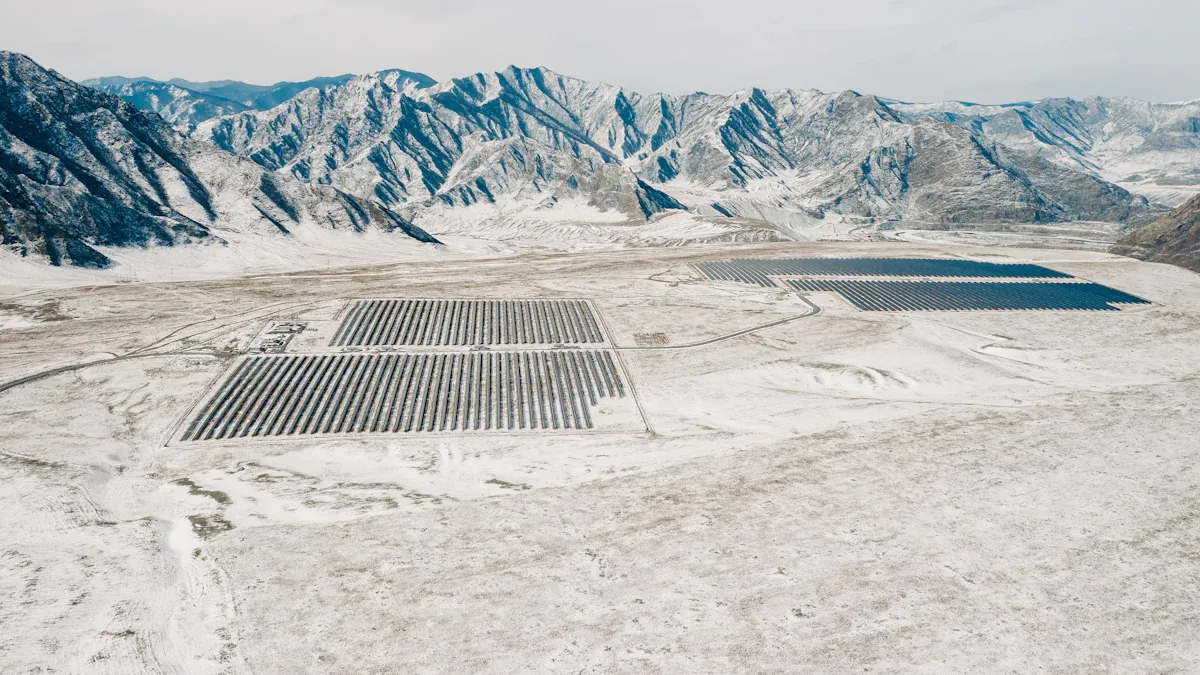
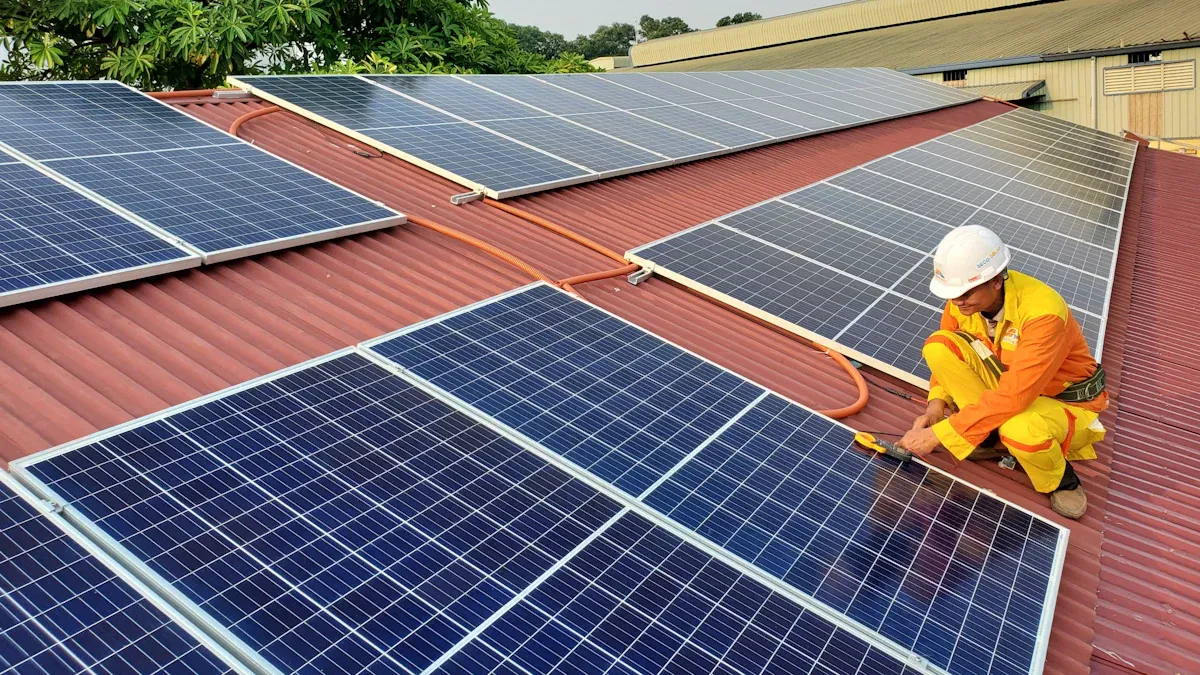
You might ask how hot solar panels get on sunny days. In real life, solar panel temperatures often go from 15°C to 65°C (59°F to 149°F). They can get even hotter in very extreme places. Look at the table below for a quick view of these Solar Panel Temperature Ranges:
Temperature Range (°C)
Temperature Range (°F)
Efficiency Description
15–25
59–77
Better efficiency than normal
25–35
77–95
Efficiency drops a little
35–65
95–149
Efficiency drops a lot
Above 65
Above 149
Needs close watching
Solar panels work less well when they get hotter than 25°C (77°F). On really hot days, power can drop by 10–15%. Knowing how heat changes your panels within these Solar Panel Temperature Ranges helps you keep your system working well.
Key Takeaways
Solar panels work best at 25°C (77°F). They lose power if they get hotter.
For each degree above 25°C, panels lose 0.3% to 0.5% power. On very hot days, this can mean a 10-15% drop.
Airflow is very important. Leave space between panels and roofs. This lets air move and keeps panels cool.
Maintenance matters a lot. Clean panels every season. This helps them get more sunlight and work better.
Solar Panel Temperature Ranges
How Hot Do Solar Panels Get?
You may wonder how hot solar panels get in the sun. The answer depends on many things. Solar panels often get much hotter than the air. On sunny days, panels can reach 55°C to 85°C (120°F to 185°F) in some places. This means panels can be much hotter than the outside air.
Manufacturers test solar panels at 25°C (77°F). This is called the standard test condition. But in real life, panels usually get much hotter. Look at this table to see the difference:
Condition
Temperature (°C)
Temperature (°F)
Standard Test Condition (STC)
25
77
Actual Operating Temperature
45
113
How hot solar panels get depends on where you live and the season. In deserts, panels can reach the highest solar panel temperature ranges. In cooler places, they stay closer to the lower end. The operating temperature range is important. It changes how much electricity your panels make. For every degree above 25°C, most panels lose about 0.5% of their power. So, on very hot days, you may see a drop in solar panel efficiency.
Factors Affecting Panel Temperature
Many things change how hot solar panels get. You can control some things, but others depend on weather and location. Here are the main things that change the solar panel temperature ranges:
Weather Conditions
Temperature: Hotter days make panels hotter. For every degree above 25°C, you lose 0.5% to 0.7% of power. Cooler days help, but less sunlight in winter means less power.
Sunlight Intensity: Strong sunlight in summer makes panels hotter and gives more energy. In winter, less sunlight means cooler panels and less power.
Ground-mounted panels stay cooler than roof-mounted ones. Air can move under ground-mounted panels and cool them down. Roof-mounted panels get hotter because less air moves underneath.
You can put ground-mounted systems in the best spot for sunlight and airflow. This helps keep the operating temperature range lower.
Airflow and Ventilation
Good airflow keeps panels cool. If you mount panels a few inches above the roof, air can move under them and take heat away.
A gap of 4-6 inches between the roof and panels acts like a chimney. Hot air rises and leaves, while cool air comes in. This setup stops overheating and keeps solar panel efficiency higher.
Tip: If you live in a hot place, ask your installer about ways to improve airflow under your panels. This can help control how hot solar panels get and how well they work.
Solar panel makers know heat can lower performance. Some add holes or slits in the frame for airflow. Others use hybrid panels that cool with water and use the heat for your home. These designs help keep the solar panel temperature ranges safe and protect your investment.
When you know what changes the operating temperature range, you can make better choices for your solar setup. You can pick the right spot, choose the best mounting method, and keep your panels working well.
How Does Temperature Affect Solar Panels?
Temperature Coefficient and Efficiency Loss
When you ask how hot solar panels get, you should also know how heat changes their performance. The temperature coefficient is an important number. It shows how much efficiency drops when solar panels get hotter. Most crystalline silicon solar panels have a temperature coefficient between -0.3% and -0.5% for each degree Celsius. This means every degree above 25°C (77°F) makes your solar panels lose a little power.
If your panel has a temperature coefficient of -0.4% per °C and the temperature goes up by 10°C, you will lose 4% of the power.
Some panels have a coefficient of -0.38% per °C, so a 10°C rise means a 3.8% loss in maximum power.
This happens because higher temperatures make more electrical resistance inside the solar cells. When resistance goes up, voltage and power go down. For example, a 550-watt panel can lose about 15.8% of its power at 70°C compared to its output at 25°C. You can see that temperature efficiency is very important, especially in hot places.
Note: A lower temperature coefficient means better performance in hot weather. If you live where summers are very hot, ask your installer about panels with a lower temperature coefficient.
The table below shows how temperature compares to other things that affect solar panel efficiency:
Factor
Effect on Efficiency
Notes
Temperature
Significant decline
Efficiency stays stable up to 30°C; drops more after 45°C, with big losses above 60°C.
Soiling
Performance degradation
Dust and dirt build-up causes more loss as it gets thicker.
Output Drop in Hot Weather
You may wonder how hot solar panels get on a summer day. In many places, the surface temperature can reach 60°C (140°F) or even higher. When this happens, you will notice your system makes less electricity. For every degree above 25°C, most panels lose 0.3% to 0.5% of their power. This means on a very hot day, you could see a power drop of 10% to 15% compared to cooler days.
Here is what happens as the temperature goes up:
Solar panel efficiency drops by 0.3% to 0.5% for each degree Celsius above 25°C.
During heatwaves, your panels may still work at about 92% of their normal output, but you will see a power drop.
The question "how hot do solar panels get" matters because high heat does not just cause short-term losses. Over time, high temperatures can make your panels age faster. The National Renewable Energy Laboratory (NREL) found that for every degree above 25°C, the yearly degradation rate can go up by 0.03% to 0.05%. In extreme heat, the yearly loss could reach 1.45%. This means temperature efficiency affects both daily output and how long your solar panels last.
Tip: You can help your panels last longer by keeping them cool. Good airflow and regular cleaning can lower the risk of power loss.
When you know how temperature efficiency works, you can make better choices for your solar system. You will understand why it is important to ask, "how hot do solar panels get," and how temperature affects solar panels in your area.
Best Temperature for Solar Panels
Ideal Operating Range
You want your solar panels to work well every day. The best temperature for solar panels is about 77°F (25°C). At this temperature, you get the most power from your system. Manufacturers test and rate solar panels at this temperature. This helps you know how much energy you can expect.
Most panels work best near 77°F (25°C).
You get the most power when panels stay close to this range.
If it gets hotter, your power starts to drop.
If it gets colder, panels still work, but snow or ice can block sunlight.
Try to keep your panels close to these best temperatures. This helps you get the most energy from your solar system.
Performance in Extreme Temperatures
Solar panels must handle hot summers and cold winters. You might wonder how panels work in very hot or cold weather. The table below shows what happens to power in different conditions:
Generally do not harm panels, but snow can block sunlight
Steeper angles help snow slide off; panels can operate down to -40°C.
Solar panels are made to survive both heat and cold. High temperatures can lower power by 0.35-0.5% for each degree above the best temperature for solar panels. On very hot days, panels may still work at 90-95% of their normal power. Cold weather does not usually hurt panels. Heavy snow can block sunlight, but panels can work even at -40°C.
You can help your panels in extreme weather. Use steeper panel angles or self-cleaning technology. These steps keep your panels clear and working well. When you know the best temperatures, you can make smart choices and keep your power high all year.
Minimizing Heat Impact on Solar Panels
Improve Airflow and Ventilation
You can help solar panels stay cooler by letting air move around them. Natural ventilation is a good way to cool panels. If you leave a gap of about 10 to 12.5 centimeters between the panels and the roof, air can flow easily. This moving air takes heat away from the panels. It helps keep them close to their best temperature. Here are some ways to make cooling better:
Make sure there is space between the panels and the roof so air can move.
Put panels far enough apart so wind can go through.
Pick mounting systems that lift panels above the roof.
Good airflow cools your panels. It also helps them work better and saves you more energy.
Choose the Right Panel Type
Choosing the right solar panel is important in hot places. Some panels do not lose as much power when it is hot. You can look at the table below to see how different panels work in high heat:
Solar Panel Type
Efficiency Loss at High Temperatures
Thin-Film
Minimal decrease
Monocrystalline
Moderate decrease
Polycrystalline
Significant decrease
Thin-film panels lose less power when it is hot. They keep working well even in high heat. Monocrystalline panels are better than polycrystalline panels, but thin-film panels are best for hot weather. If you live somewhere very hot, thin-film panels can help your system stay efficient and close to the best temperature.
Maintenance Tips for Hot Climates
Taking care of your panels helps them last longer and work better in the heat. You should check your panels every season and keep them clean. Here is an easy guide:
Season
Maintenance Practice
Purpose
Spring
Clear debris and check for winter damage
Keep panels in top shape
Summer
Remove dust often
Let panels absorb the most sunlight
Autumn
Remove leaves and check mounting hardware
Prevent shading and prepare for winter
Winter
Clear snow and ice
Make sure sunlight reaches the panels
You can also talk to your installer about new technology. Some panels have special coatings that reflect heat or clean themselves. These features help keep your panels cool and clear. This protects how well your panels work and helps you save more energy.
You have learned that temperature changes how well solar panels work. When it gets hotter, the maximum power temperature coefficient shows that efficiency goes down. The table below shows what research found:
Key Finding
Description
Efficiency and Temperature
Efficiency gets lower when temperature goes up.
Thermal Management
Good cooling helps panels work well in hot weather.
To stop problems from heat, you should clean your panels often. You should also check how much power they make and pick smart ways to install them. These steps help your solar panels work their best all year.
FAQ
How hot do solar panels get on a typical summer day?
You can expect your solar panels to reach 120°F to 150°F (49°C to 66°C) on a sunny summer day. This temperature is much higher than the air around them.
Does high heat damage solar panels?
High heat does not usually damage your panels right away. Over many years, very high temperatures can make them age faster. Good airflow and regular cleaning help protect your panels.
Can solar panels work in cold weather?
Yes, your solar panels work well in cold weather. Cold temperatures can even help them make more electricity. Snow can block sunlight, but panels keep working as long as they stay clear.
What is the temperature coefficient on a solar panel?
The temperature coefficient tells you how much power your panel loses when it gets hotter than 77°F (25°C). A lower number means your panel keeps more power in hot weather.