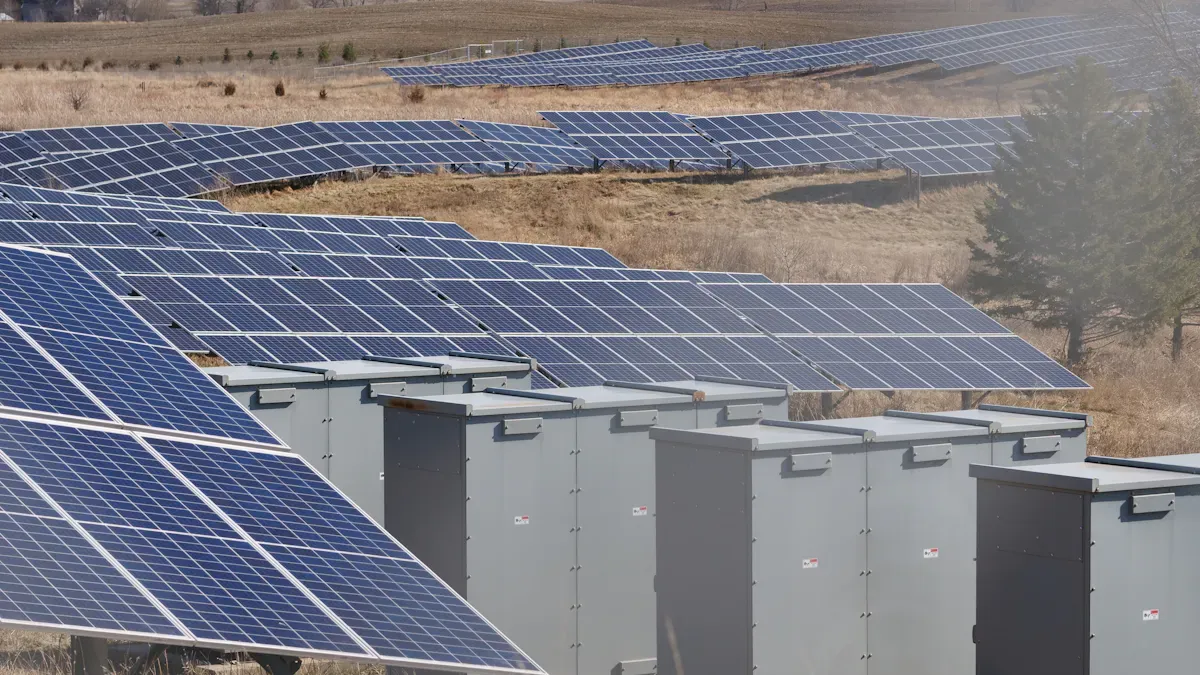
The main difference between BESS and high-voltage battery cabinets is that BESS gives you a full energy storage system with smart controls, but high-voltage battery cabinets only give simple storage. You need to know this difference so you can make good energy choices for your business. With BESS, you can control how you use energy, save money, and even sell extra power back to the grid.
You can pick when to use stored energy or get it from the grid.
Knowing about these choices helps you turn energy from a cost into something good for you.
Key Takeaways
BESS gives a full energy storage system with smart controls. High-voltage battery cabinets only give simple energy storage. Choosing BESS helps you manage energy better. It can save money. You can also sell extra power back to the grid. High-voltage battery cabinets are good for fast energy release. But they do not have the smart features and control that BESS has. BESS systems can be made bigger or smaller. This makes them good for many uses, like small businesses or big grids. When picking a system, think about how much energy you need. Also think about safety and if you want to use renewable energy.
What Is a High-Voltage Battery Cabinet?
Definition and Main Features
A high-voltage battery cabinet is a big box that stores a lot of electricity at high voltage. Inside, there are many battery cells joined together. People use it to keep and release energy fast and safely. High-voltage battery cabinets have more energy in a small space. They can charge and discharge faster than low-voltage ones. These cabinets also work better and last longer. You can use thinner wires with them, so you spend less money on wiring.
These cabinets are good for saving extra energy from solar or wind. They help when renewable energy changes a lot. They keep the grid steady when many people use power. You can count on these cabinets for a long time. They can handle charging and discharging often. They also work well for grid peak shaving and demand response.
What Are Battery Energy Storage Systems (BESS)?
BESS Definition and Key Components
Battery energy storage systems are smart ways to store power. They help you use electricity when you need it most. BESS has many parts that work together for steady power. These systems do more than just keep energy. They also control, protect, and manage how you use it.
Here are the main parts you will find in a battery energy storage system:
Battery modules or cells: These hold the energy.
Battery Management System (BMS): This keeps the battery safe and working well.
Power Conversion System (PCS) or inverter: This changes energy from DC to AC so you can use it.
Energy Management System (EMS): This decides when and how you use stored energy.
Thermal Management System: This keeps batteries cool and stops them from getting too hot.
System enclosure or rack structure: This keeps all the parts safe and neat.
Fire suppression systems: These help keep everything safer.
Balance of Plant (BoP): This is extra equipment that helps everything run smoothly.
When you look at all these parts, you can see how BESS is different from simple battery cabinets. BESS gives you better safety and more control for storing energy.
Advanced Features of BESS
Modern battery energy storage systems have special features to help you use power better. These features can save you money and keep your equipment safe. They also help keep the grid steady.
Feature
Description
Advanced Battery Management
Makes the system safer and faster to respond.
Grid-Forming Control
Helps connect with renewables and keeps the grid steady.
Peak Load Shaving
Lets you use stored energy when many people need power.
Grid Voltage Control
Keeps voltage levels steady.
Power Frequency Response
Reacts quickly to changes in grid frequency.
Active Power Reserve
Gives backup power when lots of people need it.
Enhanced Frequency Response
Responds fast to keep the grid steady.
Frequency Containment Reserve
Keeps frequency safe.
Plant Level Inertia
Makes the whole system more stable.
You can also find things like checking the state of charge and health, active balancing, and stopping thermal runaway. These features make battery energy storage systems smarter and safer than basic battery cabinets. You get more choices and better safety for your energy.
Difference Between BESS and High-Voltage Battery Cabinets
When you think about storing energy, it is important to know how BESS and high-voltage battery cabinets are not the same. They look alike, but they work in different ways. BESS is a smart system that does many things. High-voltage battery cabinets are simple and just store energy.
System Architecture Comparison
These systems are built in different ways. BESS has many parts that work together. You get battery cells, a battery management system, a power conversion system, and an energy management system. These parts help you use energy better.
A high-voltage battery cabinet is just for storing energy. It does not have smart controls. It works alone. You can add more cabinets, but you do not get as much control or safety as with BESS.
BESS can grow fast. If one part breaks, you only fix that part. With high-voltage battery cabinets, one problem can hurt the whole system.
Power Conversion and Control
You need to control how energy moves in and out. BESS uses a power conversion system. This changes energy from DC to AC and back. You can use stored energy for your building or send it to the grid. The energy management system helps you decide when to use energy.
High-voltage battery cabinets do not have smart controls. They just store and release energy. You cannot control the flow as much. You do not get advanced monitoring or safety.
Here is a table to show how power conversion and control work:
Feature
BESS
Traditional Battery
Power Conversion
Includes PCS for AC/DC conversion
Directly stores/releases electrical energy
Control Mechanism
Advanced control systems (BMS, EMS)
Limited control and monitoring
Control Integration
Integrates advanced control systems
Operates as a standalone unit
Performance Optimization
Ensures optimal performance and safety
Limited optimization capabilities
BESS gives you more control. You can manage power flow, voltage, and frequency. You can also work with the grid and help renewable energy.
Tip: If you want your energy system to do more than backup, pick BESS. It gives you more choices and keeps you safer.
Efficiency and Response Time
Efficiency is important if you want to save money and energy. BESS uses smart controls to get the most from stored energy. It can react fast to changes in demand. This helps you use energy when prices are low and save it for later.
High-voltage battery cabinets are not as efficient. They cannot react as quickly. You may lose more energy when charging and discharging. You also do not get good monitoring, so you cannot see how well your system works.
Precisely controls power flow, voltage, and frequency
Grid Interaction
Manages interaction with the grid
BESS can help the grid, balance renewable energy, and improve efficiency. High-voltage battery cabinets are best for simple storage.
Note: If you want fast response and high efficiency, choose BESS. It helps you get the most from your energy.
The main difference between BESS and high-voltage battery cabinets is control, safety, and flexibility. BESS gives you more features and better performance. If you only need simple storage, a high-voltage battery cabinet is enough. If you want smart energy management, pick BESS.
Scalability and Flexibility in Energy Storage
Modular Design in BESS
If you need more energy, your system can grow. BESS uses a modular design to help with this. You can add or take away units as you need. This makes it good for both small and big projects. BESS works for one building or a whole grid.
You can put units together for more storage or use fewer for smaller needs.
The system works well on land and on ships, so it fits many places.
You can change the enclosures to fit your site, which keeps batteries safe.
The design helps you build faster, so you get results sooner.
Some systems, like Envision’s GEN 8, let you pick what setup you want.
It is easy to move and set up, so you can use it in many projects.
BESS can grow tosupport big systems. This helps you use more renewable energy and keep the grid balanced. The modular design also makes the system safer and work better. Your battery system can change as your needs change.
Expansion Options for Battery Cabinets
High-voltage battery cabinets can also grow with your needs. You can connect cabinets in a row to get more power. This is good for businesses or big buildings that need more energy. You can add more cabinets to reach up to 12MW.
Here is a table that shows how high-voltage and low-voltage systems are different:
High-voltage battery cabinets take up less space and work better. This makes them good for bigger projects. The main difference is how you can grow and control your system. BESS gives you more choices and smart controls. Battery cabinets are simple and focus on safe, steady storage.
Applications and Use Cases
Where BESS Excels
BESS can be used in many places. It helps you control energy in a smart way. BESS lowers the grid load by up to 30%. This means you do not need to pay for big upgrades. You can use more renewable energy with BESS. It can raise your usage rate by 40% with smart planning. BESS is good for places that grow fast, like factories or business parks. You can add more storage quickly when you need it. BESS gives you better efficiency and more control.
Save money by lowering peak grid load
Use more renewable energy with smart planning
Add storage fast for growing businesses
Tip: If you want to manage energy well and help the grid, BESS gives you what you need.
Common Uses for High-Voltage Battery Cabinets
High-voltage battery cabinets are used in many important places. These cabinets store energy and give it when needed. Here are some common uses:
Google uses CO2 batteries for backup. Utilities build BESS to keep data centers stable.
Steel Manufacturing
Schnitzer Steel uses BESS to lower peak power costs at their Oakland plant.
Oil & Gas
Echandia uses a hybrid battery system on a drilling rig to work better and use fewer generators.
Cement & Concrete
Holcim and TotalEnergies use solar and battery storage at a cement plant to cover 40% of energy needs and lower grid use during busy times.
Mining
BHP and TransAlta built a solar farm with BESS to cut emissions and give steady power for mining, replacing diesel generators.
Both BESS and high-voltage battery cabinets help many industries reach their energy goals. You get better efficiency, more renewable energy, and safer storage when you pick the right system.
Advantages and Limitations
BESS Pros and Cons
When you pick a battery energy storage system, you get many good things. You can save money because BESS lets you use less grid power when everyone else is using a lot. You also get more control over how you use your energy. BESS works well with solar and wind power. You can keep extra energy and use it later. Many companies get their money back in three to seven years. BESS is also better for the environment because it lowers pollution.
Improved economic feasibility through cost savings
Grid constraints can affect revenue
Enhanced operational capabilities
Some operational efficiency issues
Easy to use with renewable energy sources
Risk of export conflicts in co-location
You can also get these good things:
BESS is cheaper to run than diesel generators.
It works better for your business.
It is a smart choice for the future.
But there are some problems too. Sometimes, the grid will not let you sell as much energy as you want. If the system is not set up right, it might not work as well.
High-Voltage Battery Cabinet Pros and Cons
High-voltage battery cabinets give you a lot of power in a small box. One cabinet can hold up to 61kWh. These cabinets are good for big jobs and keep cool with special systems. They have safety tools like alarms and fire stoppers. High voltage means you can use thinner wires, which saves money and keeps wires cooler.
Here is a table to help you see the good and bad sides:
Pros
Cons
Large total capacity in a single cabinet
Usable battery energy can be much lower
High power output for demanding applications
Setup can be complex and needs experts
Excellent thermal management
High voltage can be a safety risk
Strong safety systems
Cooling uses extra power
Compact inverter size
Expensive and not for most homes
Low current means lower wiring costs
Long charge time from empty
You should know these cabinets can cost a lot and may not work for small jobs. The battery can take a long time to fill up. You also need to be careful because high voltage can be dangerous.
Tip: Always pick the battery system that fits your needs best. This helps you stay safe and use energy well.
Choosing the Right Solution
Key Factors to Consider
When you pick an energy storage system, think about what you need most. Do you want to store energy well, use less grid power, or use your own energy better? You should also check if the system is safe. BESS and high-voltage batteries must follow safety rules like IEC 62619, UL 1973, and UL 9540A. These rules keep people and the system safe.
Cooling is important for how well the system works. Liquid cooling keeps batteries at a good temperature, makes less noise, and helps batteries last longer. In Texas, liquid cooling kept batteries safe in hot weather and used 15% less power than air cooling. The table below shows how air and liquid cooling are different:
Feature
Air Cooling (Standard)
Liquid Cooling
Temperature Uniformity
±5°C to ±8°C
±3°C (Strict Control)
Energy Efficiency
High Fan Consumption
Low Auxiliary Power
Response Speed
Slow
Instant/Precise
Noise Level
High (Loud Fans)
Silent / Low Vibration
Lifespan Impact
Moderate Degradation
Maximum Cycle Life
You should also look at battery cell quality. Grade-A cells last longer and work better. Grade-B cells can stop working early and cause trouble. Always think about what could go wrong later, not just the price at first.
Cost is another thing to think about. BESS costs less to run and fix than diesel generators. You save money because BESS uses cheaper power and pays for itself in three to seven years. This helps you use less grid power and save money.
Application-Based Recommendations
Pick the system that fits your needs. If you want to keep the grid steady and control power, BESS gives you smart controls and quick action. If you want to use more solar or wind power, BESS lets you store and use it when you need it. This helps you use energy better.
If you just need backup or extra power for machines, high-voltage battery cabinets are a good choice. They are safe and steady for big buildings or factories. You can add more cabinets if you need more power.
Rules are important too. Many places now need fire safety and thermal safety. The table below shows some key rules:
Regulatory Standard
Importance
Market Impact
UL9540A
Validates fire safety and thermal control
Faster project approval and safer systems
Always check your local rules before you choose a system. This makes sure your system is safe and follows the law.
Tip: Pick BESS if you want smart controls, less grid use, and more renewable energy. Choose high-voltage battery cabinets for simple and steady storage.
You now know that BESS lets you control energy in a smart way, but high-voltage battery cabinets just store energy simply. It is important to pick the right one for what you need. This helps keep things safe and makes your system work well. Every project needs something different. Look at this table to help you choose:
Attribute
Importance in Application Requirements
Safety
Protects people and the environment
Operational Life
Impacts reliability and value
Performance
Ensures energy use meets your goals
You should talk to experts and local officials before you pick. This will help you get the best outcome for your project.
FAQ
What is the main benefit of using BESS over a high-voltage battery cabinet?
BESS lets you control your energy in a smart way. You can watch, change, and improve how you use power. High-voltage battery cabinets just keep energy for later. BESS also keeps you safer and gives you more ways to use energy.
Can you expand both BESS and high-voltage battery cabinets?
Yes, you can make both systems bigger. With BESS, you add more parts without trouble. High-voltage battery cabinets let you join more cabinets for extra energy. BESS grows faster and is easier to set up.
Is BESS safe for homes and businesses?
BESS has special safety tools like fire stoppers and cooling systems. These features help protect your building and the people inside. You should always follow safety rules to stay safe.
How do you choose between BESS and a high-voltage battery cabinet?
Choose BESS if you want:
Choose a battery cabinet if you need:
Smart energy management
Simple backup power
Fast response and grid support
Basic energy storage
Renewable energy integration
High power for machines
Do you need special maintenance for these systems?
You should look at both systems often. BESS has smart checks that find problems early. High-voltage battery cabinets need experts to check for safety. Always use the guide from the company to stay safe.