You see clean energy ventures doing important things in long-duration energy storage. Companies like Form Energy got $405 million to make iron-air batteries that work for 100 hours. Xcel Energy began two big storage projects to help keep the grid stable. These investments are important for the energy transition. They let you use more renewable power, make the grid stronger, and keep energy going when renewables slow down. The market for storage could be worth $9.5 billion by 2035, which shows it will grow a lot.
Investors should look for projects that are reliable. They should also check for good policies and steady profits. This will help the energy transition.
New technologies like carbon-oxygen and flow batteries are being made. These can help store energy for a long time.
The energy storage market will grow a lot. It could be worth over $100 billion by 2030.
Working together can help solve money problems. It can also speed up long-duration energy storage projects.
Clean energy ventures in storage
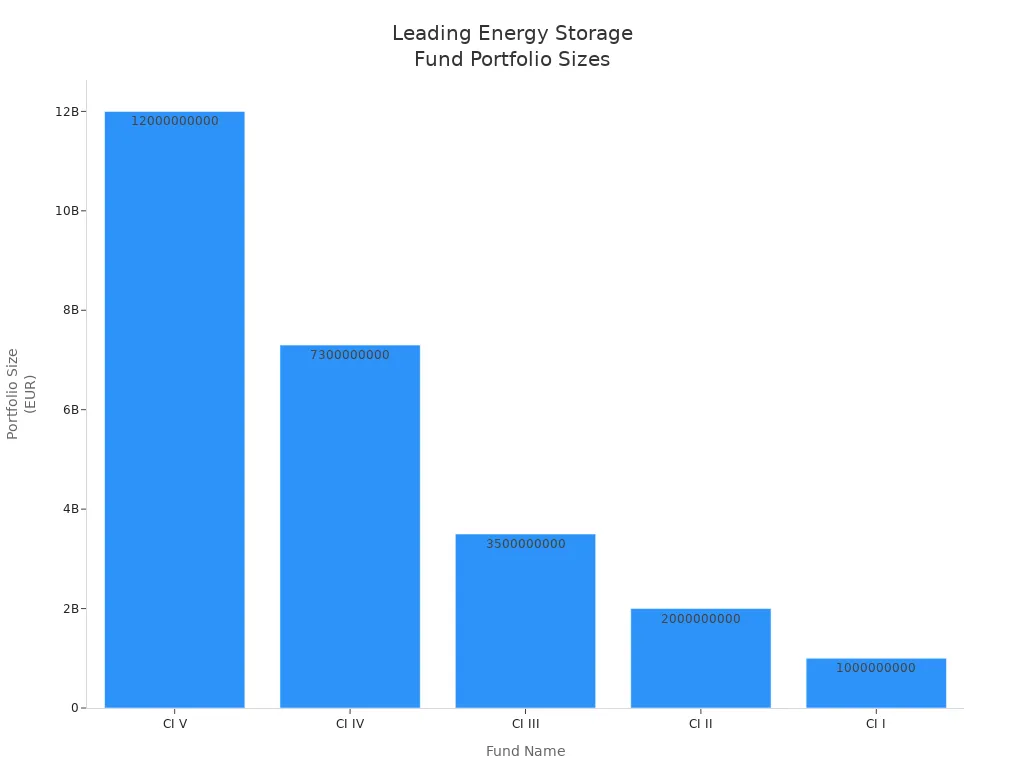
Leading investors and portfolios
Many clean energy ventures are making big changes in long-duration energy storage. These ventures invest in projects that help the grid and support renewable energy. Hydrostor and Baker Hughes work together to create new storage solutions. CleanCapital and Osaka Gas USA focus on energy storage projects in Japan. They use assets with 20-year fixed revenue contracts. This makes their portfolios stable and attractive.
Startups are important in this area. They help bring new ideas and help clean energy ventures grow. Investors want projects that last and give steady returns. They build portfolios that help the energy transition and make the grid stronger.
Clean energy ventures build portfolios with different technologies and locations. They focus on long-duration energy storage. This helps them meet future energy needs and reach decarbonization goals.
Strategic drivers for investment
There are several reasons why clean energy ventures choose long-duration energy storage. Reliable energy supply is a main reason. Ventures want the grid to stay strong even when solar and wind slow down. They also match their portfolios with policy priorities. This makes their investments safer and more attractive.
Grid reliability and resilience are very important. Clean energy ventures pick projects that help the grid use more renewable energy. They choose investments that fit local system needs, not just the cheapest ones. Political support and clear rules give these ventures a "certainty premium." This makes their portfolios more valuable.
Global events, like COP30, show the need for funding long-duration energy storage. The goal is to reach 1.5 TW of energy storage by 2030. This target helps decarbonization and moves the world closer to climate goals. Ventures know more investment is needed to reach these targets. They build portfolios that support the energy transition and help unlock new funding.
Tip: When you build a portfolio, pick projects that offer reliability, policy support, and steady returns. This helps you support the energy transition and build a strong future for clean energy.
Long-duration energy storage explained
Definition and importance
You may wonder how long-duration energy storage is different. The main difference is how long it can give power. Long-duration energy storage gives energy for 10 hours or more. Some systems last up to 168 hours. Short-duration storage works for less than 8 hours. These short systems help fix quick problems, like balancing the grid for a few hours. Long-duration energy storage helps when you need power for a long time, like during storms or cloudy weeks.
Here is a table to show the differences:
Type of Storage
Duration
Characteristics
Long-Duration Energy Storage (LDES)
10 to 168 hours
Gives power during long grid problems, helps with changes in renewable energy.
Short-Duration Energy Storage (SDES)
Up to 4 hours
Handles quick energy needs and keeps the grid steady.
Long-duration energy storage is important because it keeps the grid working when wind and solar slow down. You get backup power during long times of low energy or high use. This helps keep homes and businesses running. It also makes sure the grid always has enough power. Long-duration systems can help control the grid’s frequency, which fossil-fuel plants did before.
Role in the energy transition
You help the energy transition by learning how long-duration energy storage supports clean power. As more renewable energy is used, the grid faces new problems. Wind and solar are not always available. Sometimes, the sun does not shine or the wind stops. Long-duration energy storage gives steady energy for a long time. This helps balance the ups and downs of renewables.
Long-duration energy storage helps keep the grid steady as more renewables are added.
You can trust these systems to make renewables as reliable as old power plants.
Experts think the world will spend $1.5–3.0 trillion on long-duration energy storage by 2040 to reach net-zero goals.
You can see that how long energy is stored matters. The right storage time lets you save energy when it is cheap and use it when you need it most. This makes the energy transition easier and more dependable for everyone.
Long-duration energy storage technologies
Carbon-oxygen batteries
Carbon-oxygen batteries are a new way to store energy for a long time. They work like reversible fuel cells. These batteries split carbon dioxide into solid carbon and oxygen to store energy. When you need electricity, they combine carbon and oxygen again. NASA’s MOXIE experiment helped inspire this idea. It takes CO2 and turns it into oxygen, which makes battery production better for the environment. Noon Energy’s carbon-oxygen battery can last more than 100 hours. It has more energy density than lithium-ion batteries. Some types keep their power for 600 hours and can store up to 10 hours of electricity. The price could go down to $20 per kWh, making it cheaper for long-term storage.
Feature
Description
Function
Works as a reversible fuel cell, storing energy for very long times.
Duration
Can run for over 100 hours.
Innovations
Inspired by NASA’s MOXIE, eco-friendly, higher energy density, low cost.
Byproducts
Makes oxygen and hydrogen, with carbonate left over.
Flow batteries
Flow batteries are used for big energy storage needs. They use liquid electrolytes kept in tanks. You can make the tanks bigger to store more energy. Flow batteries give long discharge cycles and last a long time. Their design lets them be used for large projects. You probably won’t use them at home, but they help balance energy for big systems.
Advantages
Limitations
Long discharge cycles
Not good for home energy storage
Last a long time
Modular design for big projects
Can be scaled for storing energy for many days
Compressed air and thermal storage
Compressed air and thermal storage are reliable choices for new ldes technologies. Compressed air energy storage uses underground spaces or tanks. It stores energy by squeezing air and releases it to make electricity. Thermal energy storage keeps energy as heat or cold in things like molten salts. Both systems can give power for a long time and can be used for big grids.
Storage System Type
Efficiency
Scalability
Compressed Air Energy Storage (CAES)
Uses pressure and heat energy for long storage
Good for big grids with long discharge cycles
Thermal Energy Storage
Uses heat and mechanical energy for better efficiency
Can give power for longer and be used in big grids
Comparison with lithium-ion
Lithium-ion batteries are compared with new ldes technologies to see what works best. Lithium-ion batteries cost more if you need to store energy for a long time. Other options like thermal and compressed air storage are better for longer use. Flow batteries cost more but last longer. China is the leader in making these technologies cheaper. Other countries may pay more for these systems.
LDES technologies are getting better for longer storage.
Costs go down when more systems are used.
Lithium-ion batteries are best for short-term storage, but long-duration battery storage is good for storing energy for many days.
You pick the best technology based on how much energy you need, how long you want to store it, and the price.
Market trends and projects
Funding and deployment growth
The energy storage market is changing fast. In 2025, energy storage grew by 49%. The total amount reached about 15 GWh. Compressed air energy storage made up 45% of new systems. This means there are more ways to store energy for longer. But money for long-duration energy storage dropped by 30% from last year. Venture capital investments went down by 72%. This makes it harder to get money for new batteries and storage.
Europe, the Middle East, and South Asia lead in energy storage. These places have lower costs for big batteries, about $125 per kilowatt hour. Auctions and long-term contracts help get money and make projects better. In Sub-Saharan Africa, people need more energy fast. Solar power and storage work together to give steady electricity, even at night. The International Energy Agency says solar in Africa will grow by 25% each year until 2027. Long-duration energy storage is needed to help this growth and keep power steady.
Note: Watch for changes in money and new projects. These trends change how fast you can build new energy storage and help the energy transition.
Notable projects and partnerships
There are many important energy storage projects and partnerships. Google works with Salt River Project in Arizona to fund non-lithium batteries for long-duration energy storage. This partnership wants to make the grid stronger and better for the environment. In Minnesota, Google is building the world’s biggest battery storage system using Form Energy’s technology. This system can give power for up to 100 hours. It helps during bad weather or when many people need power.
The Minnesota battery system gives power for many days.
Google and Salt River Project use non-lithium batteries for better long-duration energy storage.
Form Energy’s technology lets the system give energy for 100 hours.
These projects lead the way in energy storage. They show how working together and new ideas help meet energy needs and make the energy market stronger.
Challenges and uncertainties
Technology and cost barriers
There are many problems with long-duration energy storage. It costs a lot of money to start new projects. You also have to pay for maintenance. Some batteries need materials like lithium and cobalt. These materials can be expensive and hard to get. Battery capacity goes down after many uses. This means batteries do not last as long or store as much energy.
Safety is another problem. Lithium-ion batteries can get too hot and catch fire. Mining and throwing away battery materials can hurt the environment. It can also cause ethical problems. Some batteries are big and heavy. This makes them hard to use in small spaces or crowded cities.
Advanced compressed air systems for long-duration energy storage are getting cheaper. Some big projects now cost as little as $120 per kWh.
Lithium-ion batteries are better for short-term storage. Advanced compressed air systems are good for storing energy longer.
Right now, these projects cost between $200 and $400 per kWh. Prices may go down more for systems that store energy for over 10 hours.
Competition and market risks
There is a lot of competition in energy storage. Long-duration energy storage needs a lot of money at the start. It costs 40-60% more than lithium-ion batteries for the same amount of energy. Many new technologies are not ready to sell yet. They are not made in big numbers, so they are risky for the market.
Cheaper short-term options, like lithium-ion batteries, make it hard for long-duration energy storage to grow.
Rules and policies can change and make things harder for companies. Trade rules can make prices go up and lower demand. New safety rules for batteries can slow down projects because of extra steps.
Note: You need to know about these problems and risks. They affect how fast you can build new energy storage and how reliable your power will be.
Future outlook for energy portfolios
Evolving role of LDES
Long-duration energy storage will change energy portfolios soon. New technology makes storage better for needs over eight hours. This helps give power at night or when there is no sun or wind. As prices go down, storage will keep grids strong and steady. This is very helpful in places with lots of renewable energy.
LDES will become a main part of the energy transition.
Grids will use less fossil fuel during busy times. This lowers costs and makes power more reliable.
Many experts think LDES will help renewable energy grow everywhere.
Insights for stakeholders
These ideas can help you make smart choices about energy and storage. Investors should check out new technology and work with others to handle high costs. Policy support can lower risks and make investments safer. Here is a table with key points for investors and policymakers:
Insight/Policy Category
Description
Market Growth
The LDES market was $15 billion in 2023. It could be over $100 billion by 2030.
Key Players
CATL, BYD, and EVE control more than half the market.
Emerging Technologies
Investors should look for new storage for long-duration needs.
Strategic Partnerships
Working together helps with high costs.
Policy Mechanisms
Government loans or guarantees can make money safer.
Market Arrangements
Changing electricity market rules can help LDES fit in better.
Tip: You can help the energy transition by picking projects that make the grid stronger and use new storage technology. Policymakers can help by making rules that make it easier to invest in LDES.
You have learned that clean energy ventures help long-duration storage grow. These systems give steady power and make grids work better.
You can help the energy transition by using storage to balance renewables and meet needs.
The next steps are to build strong investment plans and work with others to fix problems with starting new projects.
Long-duration storage will be even more important in the future.
FAQ
What is long-duration energy storage (LDES)?
LDES stores energy for at least 10 hours. It helps keep the lights on when wind or solar power is low. LDES makes the grid stronger and helps clean energy work better.
Why do clean energy ventures invest in LDES?
Ventures put money into LDES because it helps grids use more renewable energy. LDES gives steady money back and helps with climate goals. Investors like projects that last a long time and are reliable.
How does LDES differ from lithium-ion batteries?
Lithium-ion batteries are used for short times, usually up to 4 hours. LDES can store energy for much longer. This makes LDES better for balancing renewable energy for many days.
What are some examples of LDES technologies?
There are different types, like carbon-oxygen batteries, flow batteries, compressed air, and thermal storage. Each one stores energy in its own way and works for different grid needs.