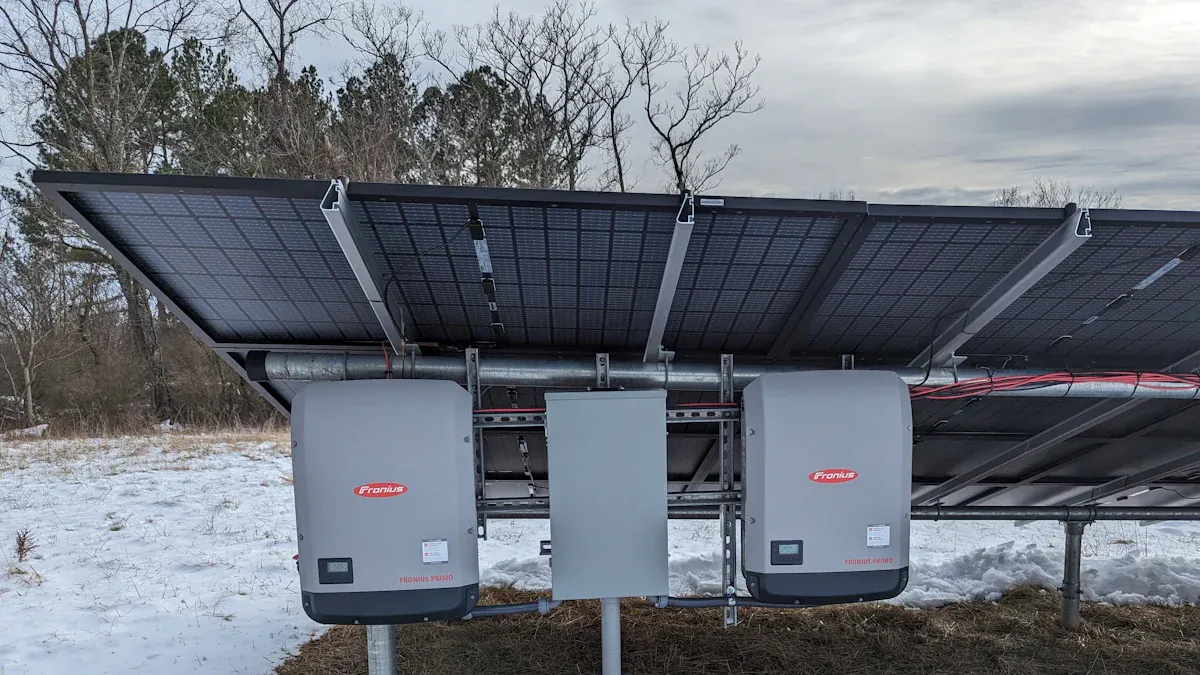
You need inverters to transform solar power into electricity you can use at home. Inverters switch the direct current from solar panels into alternating current. This matches the power your appliances use. AC power is important for sending electricity across the grid. It also makes changing voltage easier. If you want to use solar energy, you should know how inverters transform solar power. Think about efficiency, safety, and system setup when picking an inverter for daily solar use.
Tip: Knowing about inverters helps you use your solar system better and keeps it safe.
Key Takeaways
Inverters change direct current (DC) from solar panels into alternating current (AC) for homes.
Picking the right inverter can make your solar system work better and safer. You should think about system size and if it matches your setup.
New semiconductors in inverters help them work better and waste less power. This means you get more energy.
Checking your solar system often helps you find problems early. This keeps your system working well and saves energy.
Knowing about inverter types, like string inverters and microinverters, helps you pick the best one for your needs.

How Inverters Transform Solar Power
The Role of Inverters in Solar Power Systems
Inverters help make solar energy work in your house. Solar panels make direct current, but your home needs alternating current. Inverters change the electricity from solar panels so it matches your home’s wires. This lets you use solar energy for things like lights and fridges. Inverters also connect your solar system to the power grid. They make sure electricity moves safely and easily.
Note: The inverter is like a bridge between your solar panels and your house. It quickly switches the direction of DC input to make AC electricity. This uses smart electronics to give you clean and steady power that matches the grid.
If you want to know how inverters change solar power, remember they are very important in every solar system.
How Inverters Convert DC to AC Power
You must change dc power to ac power to use solar energy at home. Solar panels make direct current first. The inverter takes this current and turns it into alternating current. This happens in a few steps:
The input filter cleans the direct current before it goes to the inverter.
The inverter uses special pulses to change DC into AC.
The output filter removes extra signals from the AC wave.
The inverter turns a straight signal into a wave and tries not to waste power. It uses switches to turn direct current on and off, making an alternating signal. Transistors in a switching bridge move the current back and forth at a set speed to make alternating current. Electronics and diodes smooth the signal into a sine wave for your appliances.
Tip: Changing dc to ac is needed because homes and power grids use AC electricity. Without an inverter, you cannot use solar power for daily things.
You can see how inverters change solar power by following these steps:
Solar panels make DC electricity.
Inverters turn DC electricity into AC electricity.
The AC electricity powers things in your house.
Semiconductors in Solar Inverters
Semiconductors are inside every solar inverter. These small parts help control electricity and make the change work well. Different kinds of semiconductors work together in inverters:
Silicon Carbide (SiC): Makes less power loss and better efficiency.
Gallium Nitride (GaN): Switches faster and handles higher voltages.
IGBTs: Work with high voltage and current, good for changing power.
MOSFETs: Switch fast in lower power jobs.
BJTs: Help control small signals.
Diodes: Let current go one way and stop it from going backward.
You get better and more reliable solar inverters because of these semiconductors. SiC JFETs, for example, lose less power than old silicon IGBTs. Studies show using SiC JFETs instead of silicon IGBTs can make conversion better by 1.6%. SiC inverters also work better with higher DC input, so they stay cooler and last longer.
Tip: When picking a solar inverter, look for ones with advanced semiconductors. These parts help you get more power from your solar panels and keep your system working well.
Now you know how inverters change solar power by using semiconductors and smart electronics to turn dc into ac power. This lets you use solar energy safely and easily in your home.
Types of Solar Inverters
![Types of Solar Inverters]()
You have a few types of inverters to pick for your solar system. Each type works in its own way to help you use more solar energy.
String Inverters
String inverters link many solar panels together in a line. This is called a "string." The inverter changes energy from all the panels at once. It is easy to fix and take care of. If one panel has shade or breaks, the whole string can lose power. String inverters use maximum power point tracking to get more energy from your panels.
String inverters are good for homes with no shade and panels facing one way.
![String Inverters]()
Microinverters
Microinverters go on each solar panel. You have one inverter for every panel. Each panel works by itself. Shade or dirt on one panel does not hurt the others. Microinverters let you watch each panel and change your setup.
| Feature | Microinverters | String Inverters |
| Installation Location | Under each solar panel | On the wall or ground |
| Number of Inverters | One per panel | One per system |
| Shade Impact | Only shaded panel loses power | All panels lose power if one is shaded |
| Cost | Higher | Lower |
| Maintenance | Harder (roof access) | Easier (ground access) |
Microinverters cost more and are harder to put in, but they work better if you have shade.
Power Optimizers
Power optimizers work with string inverters. You put one on each solar panel. They help each panel do its best, even if some get shade or dirt. Power optimizers change voltage and make your system work better.
Let each panel work alone
Make more energy
Help your system work better
Help your system follow grid rules
You can get up to 25% more energy with power optimizers, especially if your roof has shade or panels face different ways.
Grid-Tie Inverters
Grid-tie inverters link your solar system to the power grid. They change direct current from your panels into alternating current for your house and the grid. You can send extra power to the grid and use grid power when your panels do not make enough.
Tip: Grid-tie inverters help you save money because you can share extra solar power with the grid.
Grid-tie inverters are important for homes that want to use solar and stay on the power grid.
Benefits of Solar Inverters
Optimizing Solar Power Output
You want your solar panels to work their best. Inverters help by controlling energy and storage. Hybrid inverters save extra energy in batteries. You can use this stored energy when there is no sun. This keeps your house powered and lowers your bills. Smart monitoring lets you see how much energy you make and use. You can check your solar power every day. Backup power helps your important appliances work during blackouts.
| Mechanism | Description |
| Energy Storage | Hybrid inverters save extra energy for later. |
| Backup Power | Stored energy keeps things running during blackouts. |
| Smart Monitoring | You watch energy production and use right away. |
| Self-Consumption | You use saved solar power when it is cloudy or dark. |
Solar inverter efficiency is important. Top brands have ratings from 96% to 99%. Higher efficiency means you get more energy and waste less.
Safety and System Protection
You need safety features to keep your solar system and home safe. New inverters have many protections:
Overvoltage and overcurrent protection stops damage from surges.
Anti-islanding protection keeps your system safe if the grid goes down.
Ground fault detection stops risks from wiring problems.
Reverse polarity protection makes sure wires are correct.
Thermal management and cooling keep your inverter from getting too hot.
Physical access protection uses strong cases.
Encrypted connections and closed ports protect against cyber threats.
Sensors inside the inverter check for strange voltage or current. The inverter can turn off or change power flow to stop damage. These features help keep your solar system safe and working well.
Monitoring and Performance Management
You can watch your solar system with advanced inverters. Real-time data shows how much energy your panels make. You can look at old data to find problems or patterns. Many inverters work with different brands for better monitoring.
| Feature | Description |
| Real-time data | You see solar panel output and system performance right away. |
| Historical metrics | You check past production to find problems and improve results. |
| Integration capabilities | Inverters work with many brands for better monitoring. |
Checking your system often helps you find problems early. You keep your energy high and your solar system healthy. Using inverters gives you better output, safety, and easy control.

Choosing Inverters for Solar Power
Key Factors (System Size, Compatibility)
You must pick an inverter that fits your solar system. First, write down all the devices in your house. Add up their wattages to see how much power you need. Your inverter should handle the total and highest wattage. Check both the steady and peak power ratings. Match the inverter voltage with your battery bank. This helps everything work together. Think about adding more panels or appliances later.
If your solar panels and inverter match, you get more power. If they do not match, your system may not work well.
Cost, Lifespan, and Maintenance
You want your inverter to last a long time. Most new inverters work for 10 to 15 years. The best ones can last up to 20 years with care. String inverters last about 12 years. Microinverters can last 25 years and often have long warranties. Central inverters for big systems last 10 to 15 years.
| Inverter Type | Maintenance Needs | Cost Impact | Warranty Period |
| Microinverters | Lower, independent units | Lower, single panel impact | Up to 25 years |
| Power Optimizers | Linked to central inverter | Higher if central fails | 10-12 years |
| String Inverters | Easy to diagnose | Higher if central fails | Shorter than micro |
Replacing microinverters or power optimizers on the roof costs more. This is because of extra labor. String inverters on the wall are easier to fix. If a microinverter fails, only one panel stops working. If a central inverter fails, the whole system stops.
Practical Selection Tips
You can choose the best inverter by following these tips:
Know how much electricity your home uses.
Check your roof’s shape and shade before picking an inverter.
Compare the first cost with savings and efficiency over time.
Pick an inverter that lets you add more panels later.
Look at the warranty. Longer warranties mean better quality.
Find warranties that pay for labor and shipping. This saves you money.
Tip: A strong warranty and good service help you avoid extra costs. They keep your solar system working well.
You get the most from your solar power system when you pick the right inverter.
You can see how inverters change solar power into electricity you use. Inverters work like the brain of your solar system. They help your home get safe and steady energy. Picking the right inverter makes your system work better and last longer. New inverters help solar power connect to the grid and keep things safe. If you want to know more, look at these resources:
| Organization | Description |
| SEIA | Research and facts for solar energy users. |
| U.S. Department of Energy | Official solar energy details. |
| ASES | Tips for solar performance and care. |
FAQ
What does a solar inverter do?
A solar inverter changes direct current from your solar panels into alternating current. You need alternating current for your home and the power grid. The inverter helps you use solar energy for lights, appliances, and electronics.
How long does a solar inverter last?
Most solar inverters work for 10 to 15 years. Microinverters can last up to 25 years. You should check the warranty and care for your inverter to help it last longer.
Can you use solar power without an inverter?
You cannot use solar power for your home without an inverter. Solar panels make direct current, but your home needs alternating current. The inverter makes solar energy safe and usable.
How do you know if your inverter is working?
You can check the display on your inverter. Many inverters show lights or numbers for power output. Some models let you use apps or websites to watch your system in real time.
What happens if your inverter fails?
If your inverter fails, your solar panels stop sending power to your home or the grid. You may need to fix or replace the inverter. Microinverters only affect one panel, but string inverters stop the whole system.