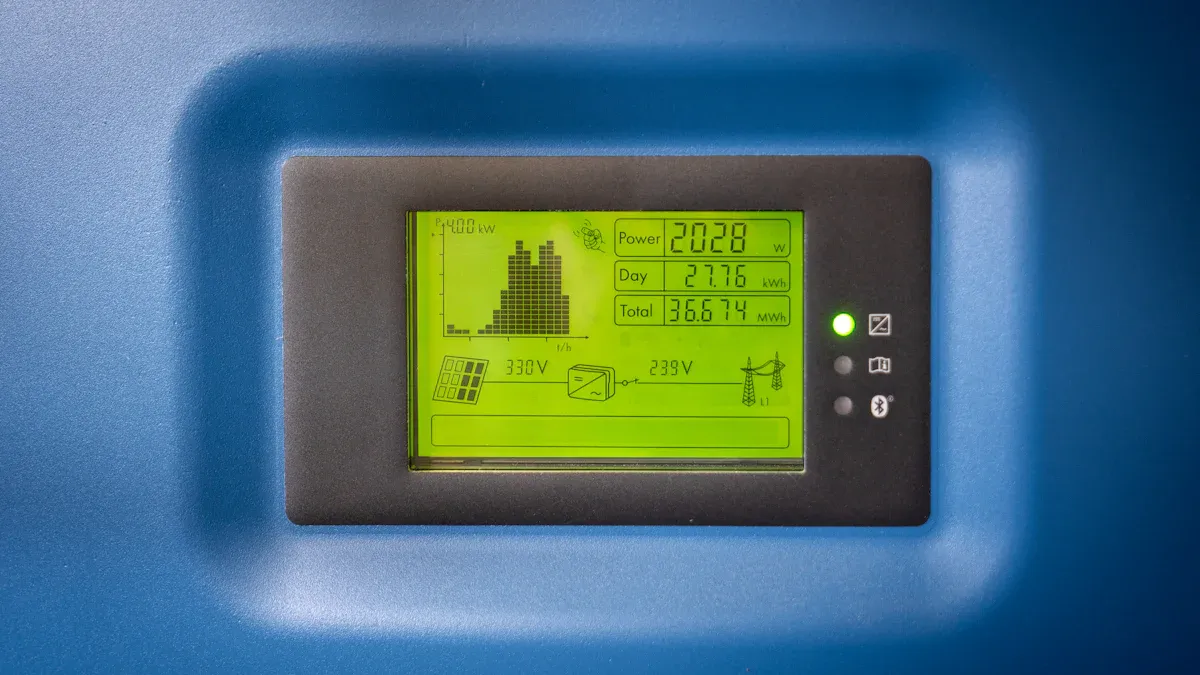
You use micro inverters’ communication method and monitoring to help your solar power system work well and stay dependable. These tools let you check power output, find problems early, and make smart choices. Real-time data and good connections show how each panel works. This helps you fix problems fast and keep your system working well.
You get quick updates on how things work.
You can spot panels that do not work well fast.
You help keep the grid steady and support smart energy use.
Key Takeaways
Microinverters let each solar panel work by itself. If one panel has shade or a problem, the whole system is not affected. Real-time monitoring helps you find and fix problems fast. This makes your solar power system work better and last longer. Picking the best communication method, like WiFi or RS485, helps send data and control your solar system. Mobile apps make it easy to see your solar data. You can check how your system works and get alerts if there are problems. Using new communication technology can help your solar system work its best. It also helps your system be ready for future energy needs.
Microinverter Technology Basics
Microinverter Overview
A microinverter changes DC from each solar panel into AC for your house or the grid. Each solar panel has its own microinverter. This means you can check and control every panel by itself. You can watch how each part of your solar system works right now.
Here is a table that lists the main parts of microinverter technology and what they do:
Component
Function
Flyback Converter
Changes DC from PV cells to AC and keeps PV cells apart from the grid
Maximum Power Point Tracking
Makes sure each module gives as much power as it can
Power Decoupling Circuit
Lowers power bumps and helps the system last longer
Microinverter technology helps each panel work its best. If one panel is shaded by a tree or building, only that panel loses power. The other panels keep working well.
You do not have the problem where one weak panel hurts the whole system. Microinverter technology lets each panel work alone.
If your roof has odd shapes or lots of shade, microinverter technology gives steady energy. You do not lose much power, even if some panels are shaded.
You get more energy from your system over time. Microinverter technology uses module-level maximum power point tracking, so each panel always works at its best.
You can find problems quickly. Microinverter technology lets you see how each panel is doing, so you can fix issues fast.
Your solar system lasts longer and works better, even in tough places.
Tip: Microinverter technology is a smart pick if your roof has shade or different angles. You get more power and better control.
The Need for Monitoring in PV Systems
Real-Time Module-Level Monitoring
Real-time monitoring helps you keep your solar panels working well. You can see how each panel works every second. This lets you spot problems quickly and fix them before they get worse. Sensors and data loggers check electrical values, so you notice changes fast. Real-time monitoring finds issues like microcracks or cell breakages early. You do not need to wait for a big drop in power. Tools like infrared thermography show heat patterns and help you catch faults soon.
Here are some common causes of performance loss that real-time monitoring can find:
Hardware failures like inverter malfunctions, connection failures, and module defects. These problems often cause sudden drops in power.
Performance loss from panel soiling, potential-induced degradation, and micro-cracks. These issues build up slowly and need real-time monitoring to spot them early.
Environmental factors such as shading from trees or buildings, weather changes, and seasonal sunlight shifts. Real-time monitoring helps you see these effects right away.
You get a clear view of how your system works. Real-time module-level monitoring lets you move from fixing problems after they happen to stopping them before they start. You can find faults fast and keep your solar system running smoothly.
Performance and Reliability Benefits
Real-time monitoring gives you strong benefits for performance and reliability. You can make each panel work better and fix problems faster. Real-time performance monitoring helps you find shading and panel failures quickly. You do not waste time looking for the cause.
A research study shows real-time monitoring with deep learning and sensors helps find and fix faults faster. You can use real-time monitoring to catch problems before they hurt your power output. This keeps your system efficient and steady.
Here is a table showing how real-time monitoring makes your system more reliable:
Aspect
Improvement
System Efficiency
15-30% increase
Energy Yield (String faults)
Up to 50% decrease
Production Loss (Shading)
20-25% decrease
System Availability
Improved to 99%
Maintenance Costs
Reduced by 25-35%
Note: Real-time monitoring helps you stay ahead in solar energy. You can keep your system healthy and spend less money.
Micro Inverters’ Communication Method
You need a good micro inverters’ communication method to keep your solar system working well. Each way helps you send data from your microinverters to your monitoring tools. You can pick different communication protocols for speed, distance, or how steady you want the connection.
WiFi Communication and Data Transmission
WiFi lets your microinverters send data right to your router. You can check your solar system from anywhere with a mobile app. This micro inverters’ communication method is easy to set up because you do not need extra wires or gateways. WiFi communication protocols help you watch your system in real time and control it from far away.
Component
Function
Micro Inverter
Connects to the router with WiFi to send data to the server.
Mobile App
Connects straight to the micro inverter to share data.
Wireless communication protocols let you check and control your system without wires.
You get updates right away and can make your system work better.
RS485 Wired Communication
RS485 uses cables for steady communication. This micro inverters’ communication method works well where there is a lot of interference. You need a data collector and more cables, but you get strong protection from interference and steady data. RS485 communication protocols let you control your system and work with other brands.
Advantages
Limitations
Steady communication
You need a data collector
Strong protection from interference
Extra cables cost more
Can support control functions
Works well with other systems
Power Line Communication (PLC)
PLC uses your power lines to send data. You do not need new wires. This micro inverters’ communication method makes setup easier and cheaper. PLC communication protocols let you check each panel and do remote checks without extra cables.
Note: PLC lets you track your solar panels using the same wires that carry power.
Sub-1G Wireless Communication
Sub-1G wireless communication works below 1 GHz. This micro inverters’ communication method lets you send data far and use little power. Sub-1G communication protocols help your system work even if panels are far apart or behind walls.
Feature
Description
Range
Sends data far, even through obstacles
Power Consumption
Uses little power, good for saving energy
Applications
Works for solar microinverters, trackers, smart grid, and IoT devices
Sub-1G communication protocols give you strong links and fast data for system checks.
Zigbee Wireless Communication
Zigbee uses mesh networking. This micro inverters’ communication method lets each device talk to others, making the network strong. Zigbee communication protocols work at 2.4 GHz and cover 10-100 meters for each device. You get flexible setups and lower costs, but you need to watch for interference and battery use.
Zigbee communication protocols make backup paths, so your data gets through even if one path breaks.
Communication Gateways and Protocols
You use communication gateways to connect your microinverters to the cloud. These gateways collect data and send it to your monitoring platform. Communication protocols keep your data safe and help your system work with other devices. You need safe channels and passwords to stop hackers. Good communication protocols help your system grow and work with the grid.
Microinverters use mesh networks and backup paths to send important data fast, even in emergencies.
Communication Method
Description
Independent Communication Gateway
A hub that connects the microinverter to the cloud and sends solar data.
Wi-Fi Integrated Microinverter
Connects to the internet without another gateway, making setup easy.
Wireless Network (2.4G and Sub-1G)
Lets the gateway connect wirelessly to the microinverter.
Power Line Communication (PLC)
Sends data over power lines, giving another way to connect.
You need the right micro inverters’ communication method and protocols to grow your system and follow grid rules. Good communication and strong protocols keep your solar system safe, working well, and ready for the future.
Monitoring Schemes and User Interfaces
Mobile App Monitoring
Mobile apps let you check your solar system anywhere. These apps show you updates right away. You can see how much energy you make each day. Many apps use data monitoring to help you track savings and find problems fast. Some apps use AI to give tips on when to use your appliances for the best results. You do not need to be a tech expert to use these tools. The apps have easy controls and clear screens. Some apps use games and challenges to make data monitoring fun. You can set goals and watch your progress, which makes managing your solar system more enjoyable.
Get alerts right away if a panel stops working.
See which panels make the most energy.
Use data monitoring to plan when to use big appliances.
Tip: Mobile apps with data monitoring help you stay in control and save more energy.
Data Analytics and System Health Checks
You need data monitoring to keep your solar system healthy. The system checks each panel and finds problems like shade or dirt. You can see trends in energy production and compare them to past months. Dashboards show if your system works as it should. Data monitoring lets you catch small issues before they get worse. Some platforms use machine learning to guess faults and suggest fixes. This helps your system last longer and lowers repair costs.
Track daily, weekly, and yearly energy data.
Use data monitoring to spot drops in performance.
Get reports that help you fix issues quickly.
Note: Data monitoring with smart analytics means less downtime and more power from your system.
User Interface Options
You have many ways to see your solar data. Web portals and mobile apps both use data monitoring to show clear graphs and color-coded screens. Some systems use a virtual map that highlights panels with low output. You can pick simple views for quick checks or detailed charts for deep analysis. User-friendly interfaces make it easy for anyone to use data monitoring, even without special training.
Interface Type
Features
Best For
Mobile App
Real-time alerts, easy controls, gamification
Daily checks, beginners
Web Portal
Detailed graphs, historical data, reports
In-depth analysis
Virtual Map
Color-coded panels, quick fault detection
Fast troubleshooting
You can choose the user interface that fits your needs and makes data monitoring simple.
Challenges and Innovations in Microinverter Communication
Interoperability and Cybersecurity
It is hard to connect micro inverter devices in smart pv systems. Different ways to talk can make it tough for devices to work together. Adding more micro inverter units can slow down how fast they talk. This delay is a problem when weather changes quickly or the grid needs fast action. If you use power line communication or wireless mesh networks, too much traffic can block data. This can make it hard to watch your system and find problems fast.
Making the network bigger is also tricky. Star or tree-shaped setups can get weak as you add more parts. Signals can get worse, and one broken part can stop the whole system. Big micro inverter setups can have these problems. Things like strong electric fields, walls, or bad weather can block signals. Some micro inverter units may not send data or get commands.
If data is not in sync, it is hard to join with the grid. Timing mistakes and lost data packets make it tough to watch and control your system. You need good timing to keep the grid safe. Cybersecurity is a big worry too. Weak spots in the main data lines and hackers can hurt your micro inverter network. You should use many layers of defense, split up the network, give only needed access, and use safe ways to talk to protect your smart pv systems.
You need to watch out for these problems to keep your micro inverter network safe and working well.
Industry Trends and Emerging Technologies
Micro inverter communication technology is growing fast. The market for micro inverter solutions in smart pv systems is getting bigger every year. Wireless communication technologies like Wi-Fi and Zigbee are growing the most. These ways make it easy to set up, move, and grow your system for the grid.
Aspect
Details
Market Size (2024)
USD 4.9 billion
Projected Market Size (2029)
USD 14.5 billion
CAGR (2023-2028)
24.1%
Key Growth Drivers
Increasing energy prices, rising energy demand
Segment with Highest Growth
Wireless communication technologies (Wi-Fi, Zigbee)
New technologies help micro inverter communication in smart pv systems. IoT and better ways to talk help you build smarter micro inverter networks. These tools help you use energy better and know when to fix things. Wired communication is still important for strong systems. Wireless solutions are needed for far away and real-time data. Safe ways to talk help your system join the grid and stay safe.
These new ideas give you more control, better system work, and safer grid joining in your smart pv systems.
You make your solar system better with good communication and monitoring. This helps your panels work well and lets you find problems early. Here are some best ways to do this:
Best Practice
Description
Optimize Communication Network Topology
Make simple paths for data to move and keep things steady.
Integrate Real-Time Performance Monitoring
Check each microinverter often for more control.
Adhere to Communication Standards
Use rules like IEEE 2030.5 and SunSpec for smooth running.
The future looks bright for solar power:
More people will use microinverters in their homes.
Smart tools and energy management will make systems better.
Module-level power electronics will give you more choices.
North America will grow fast with new technology.
Keep your system connected and watch it often to get the most from your solar panels.
FAQ
What is the best communication method for microinverters?
WiFi is simple to set up. RS485 uses wires and is very steady. PLC is good if you want less wiring. Sub-1G and Zigbee are strong wireless choices for big systems.
How do you monitor each solar panel’s performance?
You use real-time monitoring tools. Mobile apps and web portals show each panel’s data. You can find problems fast and fix them before they lower your energy.
Can you expand your solar system with microinverters?
Yes, you can add more panels and microinverters easily. Wireless ways like Zigbee and Sub-1G let you grow your system without lots of wires.
Are microinverter networks safe from hackers?
You keep your network safe with strong passwords and secure protocols. Gateways use encryption to protect your data. You should update your software often to stop threats.
What happens if one microinverter fails?
Only that panel stops making power. The rest of your system keeps working. Your monitoring app sends an alert so you can fix it fast.