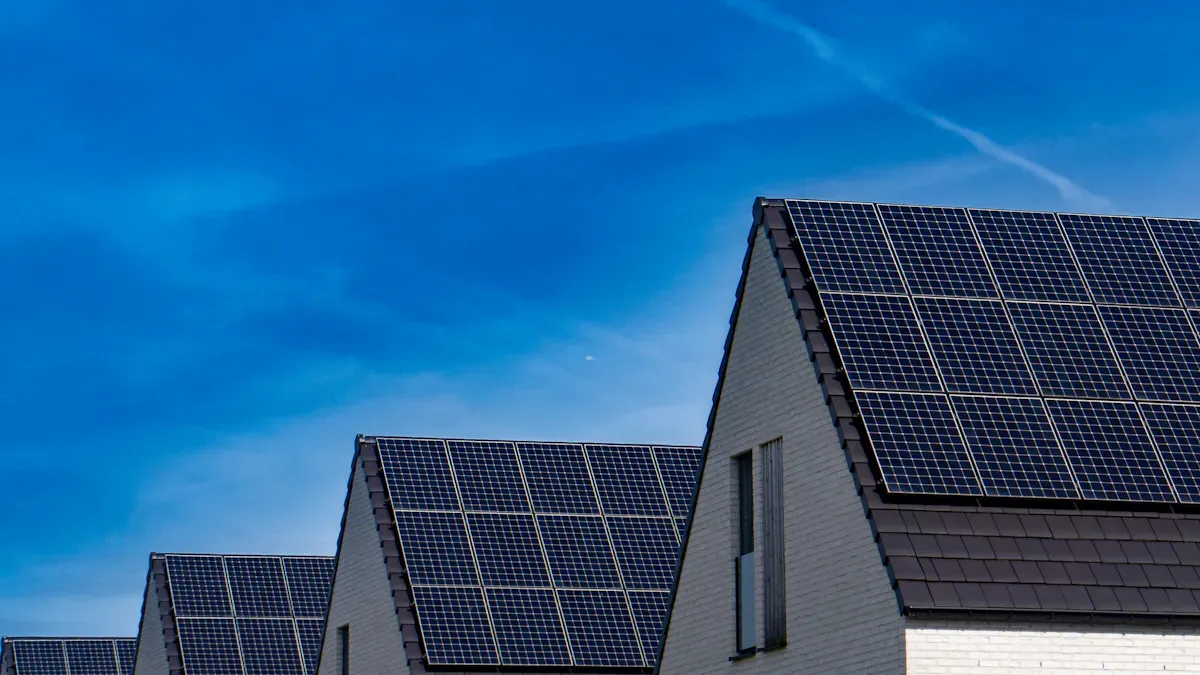
Photovoltaic optimizers help you get more power from solar panels. These devices connect to each solar panel. They make sure every panel works well, even if one gets shaded or dirty. When you use photovoltaic optimizers, you can see big changes:
Your solar system can make up to 30% more energy in shaded places.
Panels work on their own, so weak panels do not slow down the whole system.
You keep steady voltage, which helps your solar setup stay safe and reliable.
Studies show you can get up to 25% more energy by fixing panel mismatch.
Optimizers help your solar panels keep making energy, even when some sunlight is blocked.
Key Takeaways
Photovoltaic optimizers help make more energy, even in shade. They can increase energy by up to 30%. Each solar panel works its best with an optimizer. These devices stop weak panels from slowing down the whole system. This means the system works well, even if conditions change. Optimizers let you watch each panel in real time. You can find and fix problems fast. This helps keep energy production steady. Using optimizers can help solar panels last longer. They lower stress on the panels. This can save you money on repairs and replacements. If your roof has tricky angles or shade, optimizers help a lot. They are a good way to get more energy without spending too much.
What Are Photovoltaic Optimizers?
Definition and Core Function
Photovoltaic optimizers are small devices. They attach to the back of each solar panel. These devices help each panel work its best. They do this even if sunlight changes or some panels get shaded. You cannot see them because they are behind the panels. But they are very important for your solar system.
An optimiser is a small box called a DC-DC converter. It is put on the back of the panel, so you cannot see it. The solar panel optimiser uses Maximum Power Point Tracking (MPPT) technology. Every solar panel has a time in the day when it makes the most electricity. This is called the maximum power point. Things like weather and shade can change this point and make the panel less efficient. The optimiser helps the panel keep working at its best by following the maximum power point.
Photovoltaic optimizers use smart technology. They find the best point for each panel to make energy. Each panel works on its own. If one panel gets dirty or shaded, the others still work well. This helps your solar system stay strong and reliable.
Main Components and DC-DC Conversion
Solar power optimizers have a part called a DC-DC converter. This part changes the voltage and current from each panel. It matches what your system needs. The DC-DC converter helps each panel send out the most energy.
The solar power optimizer makes the whole system work better by using leakage inductance energy again.
It can change the voltage up to 10 times higher than what comes in, which helps control energy better.
A switch with low voltage rating and low-conduction resistance makes the system more efficient.
The incremental conductance method for MPPT helps track the best point very well, which is important for getting the most energy from your solar panels.
Maximum power point tracking (MPPT) technology lets each solar panel work at its best, even if some panels face different ways or get shaded.
The energy from each panel gets better before it goes to the inverter, so your whole system works better.
You get more energy because every panel can follow the sun and make the most power right away.
Photovoltaic optimizers make sure every panel in your solar system works hard. You get more energy, better performance, and a system that keeps working well, even when things change.
How Do Solar Power Optimizers Work?
Power Optimization
When you ask how solar optimizers work, you learn they use smart tools to help. Photovoltaic optimizers use Maximum Power Point Tracking (MPPT) for each panel. MPPT checks sunlight and temperature for every panel. It changes voltage and current so each panel works its best. This helps every panel make more energy, even if some get less sun. Old systems let one weak panel slow down the others. Optimizers stop this from happening. You get more energy and better results, even with shading or mismatch.
Functional Demonstration
You may wonder how solar optimizers work in real time. Optimizers watch each solar panel by itself. They collect data about voltage, current, and power. If a panel gets shaded or dirty, the optimizer changes its settings fast. This keeps your solar system working well. The optimizer tracks all day, so panels always do their best. You do not lose much energy, even when some panels have problems. Optimizers also fix mismatch, so every panel gives its best.
Optimizers:
Check each panel’s work.
Change voltage and current right away.
Keep finding the best power point.
Fix mismatch problems quickly.
Stop your system from losing energy.
Optimizer Case Study
Impact of Shading Without Optimizer
Partial shading can lower your solar system’s power. If you do not use optimizers, one shaded panel can hurt the whole string. The table below shows how shading changes power and tracking:
Scenario
Maximum Power (W)
Tracking Efficiency (%)
Convergence Time (s)
PSC-1
133
99.84
1.05
PSC-2
151
99.93
1.1
PSC-3
254
100
0.7
PSC-4
100
100
0.65
Power Optimization with Optimizer
With photovoltaic optimizers, you get much better efficiency. Optimizers keep tracking the best power point for every panel, even with shading. You get more energy, lose less, and your system stays strong. Real results show optimizers help with forecasting, lower costs, and keep the grid steady. Using a solar panel optimizer fixes mismatch and keeps your system working well.
Tip: If you use optimizers, your solar panels keep making energy, even when some get shaded or have other problems.
Photovoltaic Optimizers vs. Inverters
String Inverters Comparison
Many solar systems use string inverters. These connect several panels together in a group. If one panel gets shade, the whole group loses power. String inverters work best when all panels get the same sunlight. Big solar setups with flat, sunny roofs often use string inverters. They are simple and do not cost much. You also spend less on repairs and parts.
Here is a table that shows how photovoltaic optimizers and string inverters are different:
Feature
Photovoltaic Optimizers
String Inverters
Power Management
Operate at individual panel level
Operate at string level
Shading Impact
Shading on one panel does not affect others
Shading on one panel affects the whole string
Efficiency in Varying Conditions
More efficient in shaded conditions
Less efficient in shaded conditions
Installation Complexity
Moderate complexity due to additional hardware
Generally simpler installation
Maintenance Considerations
May require more maintenance due to extra components
Typically lower maintenance needs
In places where sunlight is even, string inverters can work better than optimizers. You get good power and spend less money.
Microinverters Comparison
Microinverters are not like string inverters. Each solar panel gets its own microinverter. This means every panel can make power by itself. Microinverters are good for roofs with shade or many angles. They give you more choices, but they cost more at first.
Here is a table that compares microinverters and power optimizers:
Feature
Microinverters
Power Optimizers
Performance in Shade
Better performance in shaded conditions
Adjusts output of individual panels to mitigate shading
System Flexibility
Greater flexibility in complex roof layouts
More cost-effective, suitable for budget constraints
Maintenance
Lower maintenance requirements, durable
Cost-effective but may require more maintenance
Upfront Cost
Higher upfront cost
Lower initial expenses
You might pick microinverters if your roof has lots of angles or some shade. Power optimizers give you almost the same energy as microinverters, but they cost less. Both help your solar panels make more power when sunlight changes.
Tip: If you want to get more energy and save money, power optimizers are good for homes with some shade. Microinverters are best for roofs with lots of directions or heavy shade.
Benefits of Solar Panel Optimizer Technology
Increased Energy Output and Monitoring
Solar panel optimizers help your system make more energy. They help get back power lost from shade. Studies show optimizers can recover up to 40% of lost power. Real data shows systems with optimizers make about 6.6% more energy. If you have a 10-kilowatt system, you get about 1,156 kWh more each year. This means you get more value from your solar panels.
Optimizers also make it easier to watch your panels. You get live data for each panel. This helps you find problems fast. Here are some ways monitoring helps:
Each optimizer checks its own panel.
You see live data on voltage, current, and energy.
You can act fast if something changes.
The system sends alerts if energy drops.
You can fix problems quickly and keep your system strong.
You see how each panel works, so you can make smart choices.
Good monitoring lets you watch energy and fix issues early. Your solar panels keep working their best.
Feature
Benefit
Individual Panel Monitoring
Lets you see how each panel is doing, so you can find problems.
Real-Time Tracking
Helps you act fast if something changes, so you get more energy.
System Longevity and Complex Roofs
Solar panel optimizers help your system last longer. They lower stress on each panel, so panels do not wear out fast. Optimizers can help panels last up to 25% longer. You spend less money fixing or replacing panels. Most optimizers last as long as the panels, often 25 years or more.
Smart optimizers help you save on repairs.
They keep your solar system working for many years.
Sealed units with no moving parts mean less work for you.
Optimizers also help with tricky roofs. If your roof has many angles, optimizers let each panel work alone. You get more energy, even if panels face different ways or get shade. For example, a home in Massachusetts used optimizers and got 19% more energy than a regular system.
Benefit
Description
Extended Lifespan
Optimizers help panels last up to 25% longer by lowering stress.
Reduced Maintenance Costs
Panels work better, so you fix them less and save money.
Optimizers let panels work by themselves.
You get more energy from panels in hard spots.
Your solar system stays strong, even with a tricky roof.
Optimizers make your solar system stronger and more flexible. You get more energy, better monitoring, and a system that lasts longer.
You can make your solar system give more energy with photovoltaic optimizers. These devices help each solar panel do its best job, even if there is shade or dirt. You lose less power and get more energy every year. Optimizers work in bad weather and keep your solar panels safe.
Photovoltaic optimizers lower power loss from shade from 62% to 3.5%.
You might get up to 153% more money from your solar energy each year.
Optimizers help your solar system work well on roofs with lots of angles or shade.
Benefit Type
Description
Performance Gains
Optimizers can get back up to 40% of energy lost from shade, so your solar panels make more power.
ROI Scenarios
Homes with shade can get better results when they use optimizers for solar energy.
Technical Function
Optimizers change voltage and current for each solar panel.
If you want to know more about solar energy and how to get the most from your system, look at guides about dynamic MPPT and solar panel optimization. Think about your roof, shade, and how much energy you need before you pick your solar setup.
FAQ
What does a solar optimizer do?
A solar optimizer helps each panel make more energy. It makes your solar system work better. The optimizer changes voltage and current so panels keep working well. This happens even if some panels get shade.
Can you use solar optimizers with any panel?
You can use solar optimizers with most panels. You should check if your panel works with an optimizer before you install it. Optimizers help you get more energy, especially if your roof has shade.
How do solar optimizers improve energy output?
Solar optimizers find the best point for each panel. You get more energy because shade or dirt does not slow down the other panels. The optimizer keeps your solar system strong and working well.
Do solar optimizers help with monitoring?
You can watch each panel with a solar optimizer. You see live energy data. If a panel loses power, you get an alert. This helps you fix problems fast and keep your system working well.
Are solar optimizers worth the cost?
Solar optimizers help you get back lost energy and make your system worth more. You spend less money fixing things and get more power every year. Many people see a big return from their solar investment.