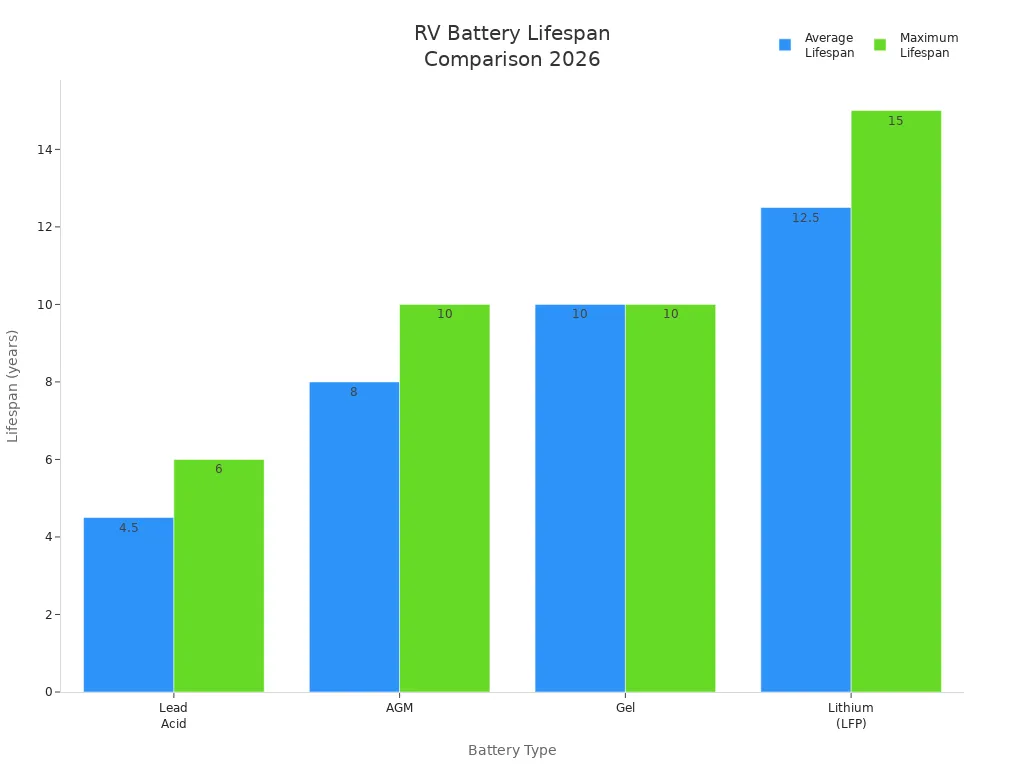
You want to know how long your rv battery will last. Lifespan depends on the battery type and how you use and care for it. See the table below for current averages:
Pick lithium RV batteries if you want them to last longer. They can last up to 15 years if you take care of them.
Check your battery often and keep it in good shape. This helps stop problems and makes it last longer.
Use the right charger for your battery. Do not charge it too much. This keeps your battery working well and strong.
How Long Do RV Batteries Last
RV Battery Lifespan by Type
When you plan a trip, you might ask how long rv batteries last. The answer depends on which rv battery you pick. Each type has its own average and maximum lifespan. The table below shows the newest numbers for 2026:
Battery Type
Average Lifespan
Maximum Lifespan
Lead Acid
3 – 6 years
6 years
AGM
6 – 10 years
10 years
Gel
~10 years
10 years
Lithium (LFP)
10 – 15 years
15 years
Lead-acid rv batteries usually last from 2 to 6 years. AGM batteries can work for 4 to 10 years. Lithium rv batteries last the longest, from 10 to 15 years. Some lithium batteries can even last 20 years if you take care of them. Gel batteries also last a long time, often up to 10 years.
How many times you charge and use your battery matters too. Lead-acid rv batteries can be charged and used hundreds of times. AGM batteries do a bit better. Lithium rv batteries can be charged and used thousands of times, sometimes up to 5000. This means you will not need to buy new lithium batteries as often as other types.
Tip: If you want a battery that lasts the longest, pick lithium rv batteries. They cost more at first but save you money and trouble later.
Factors Affecting Battery Lifespan
How you use and care for your rv battery changes how long it lasts. Many things can affect rv batteries:
Usage Habits: If you use up all the power in lead-acid and AGM rv batteries often, they will not last as long. Try not to let these batteries go below half power. Lithium rv batteries can handle being used more and still last a long time.
Charging Practices: Charging the wrong way can make batteries die early. Always use the right charger for your rv battery. Charging too much or too little makes batteries wear out faster. Many lithium rv batteries, like Terli, have built-in safety to stop overcharging or using up too much power.
Temperature:Hot weather makes rv batteries wear out faster. Cold weather makes them work less well. Keep your rv batteries in a cool, dry place and out of the sun. Try to keep the air less humid than 50% for best results.
Quality: Good rv batteries last longer because they are made better. Cheap batteries might stop working sooner.
Maintenance: Checking and cleaning your battery helps it last longer. Keep the ends clean and look for rust. Lithium rv batteries do not need as much care as other types.
Note: Using up too much power and charging the wrong way makes your rv battery not last as long. Always do what the maker says.
You can make your rv batteries last longer by following these tips. Pick the right battery, charge it the right way, and store it well. This helps you have power for many years.
Types of RV Batteries
You can pick from a few rv battery types. Each one has its own good and bad points. Knowing these differences helps you choose the best battery for your rv.
Lead-Acid RV Batteries
Lead-acid batteries have liquid inside and open cells. They cost less than other batteries. You can find them almost anywhere. You need to check the water and clean the ends often. Most lead-acid batteries last 2 to 7 years. How long they last depends on how well you take care of them.
Pros
Cons
Low price
Very heavy
Easy to find
Needs lots of care
Can last 5-7 years
Not very efficient
Many people buy lead-acid batteries because they are cheap, but you must spend time taking care of them.
AGM RV Batteries
AGM batteries use a glass mat to hold the liquid. They are sealed and do not need care. You can put them in any spot. AGM batteries do not break from bumps or shaking. They work well in cold weather. They last about 4 to 10 years.
No need to check or clean
Works well in hot or cold
Costs more than lead-acid
Charging too much can make them die sooner
AGM batteries are good for people who want less work and stronger batteries.
Lithium RV Batteries
Lithium batteries, like Terli LiFePO4, use new technology and a smart system. They are light and work well. They can last up to 15 years. You can use most of their power without hurting them. Terli lithium batteries are safe, charge fast, and give steady power. You can use them in rvs, golf carts, solar power, and more.
Feature
Benefit
Light weight
Easy to put in
Lasts a long time
Up to 15 years
Charges quickly
Saves you time
Safety features
Stops overheating
If you travel a lot or need strong power, lithium batteries are the best kind of rv battery.
Signs Your RV Battery Needs Replacing
Performance Issues
Your RV battery might not last as long as before. Lights may look dim. Water pumps can run slow. You might have trouble starting your RV. If you charge your battery more often, it may not hold power well. These problems mean your battery is getting weaker. You can check your battery with a voltage meter. A healthy battery should show about 12.6 volts when fully charged. If the voltage drops below 10.0 volts while using it, you should get a new RV battery.
Physical signs help you know when to get a new RV battery. Look for swelling or bulging in the battery case. White crust on the ends or a weird smell means the battery is breaking down. Warping, cracks, or gaps in the case are clear signs you need a new RV battery. If you see these problems, do not wait. Getting a new RV battery right away keeps your RV safe and protects its electrical system.
How old your battery is affects how long it lasts. Lead-acid batteries last about 3 to 5 years. Lithium batteries, like Terli LiFePO4, can last up to 15 years if you take care of them. If your battery is old or does not hold power, you should get a new RV battery. Check your battery every month if you use your RV a lot. Finding problems early stops power loss during trips and lets you use your RV longer. Getting a new RV battery before it stops working gives you steady power and better battery life.
Tip: If you see any signs, check your battery’s voltage and condition. Getting a new RV battery at the right time keeps your RV running longer and helps your battery last more years.
Extending RV Battery Life
Charging Best Practices
You can make your rv battery last longer by charging it the right way. Use a multistage charger so you do not overcharge or undercharge. Always choose the correct charger for your battery type. Charge your battery when the temperature is right. Check the voltage with a multimeter often. For lithium batteries, keep the charge between 20% and 80%. Smart chargers change how fast they charge and stop when the battery is full. This helps keep the battery cool and less stressed.
Feature
Standard Charging
Smart Charging
Impact on Battery Aging
SoC Range
0% to 100%
20% to 80%
Less chemical stress
Charging Rate
Maximum rate
Adjusted
Less heat and strain
Temperature Management
Passive
Proactive
Prevents overheating
Cycle Depth
Deep cycles
Shallow cycles
Increases total cycle life
Tip: A smart charger is best for your battery and helps it last longer.
Storage Tips
Keep your RV battery in a cool and dry spot. Heated basements or garages are good places. Do not put batteries right on concrete; use wood or cardboard under them. For lithium batteries, keep them between 50°F and 70°F. Lead-acid batteries should stay above 40°F. Charge your battery fully before you store it and disconnect it from your RV. Check the voltage every month or so. If it drops below 12.4 volts, charge it again.
Clean the ends with baking soda and water.
Take batteries inside if you can.
Use a battery maintainer to keep the voltage steady.
Maintenance Routine
Look at your battery every month. Check for cracks, leaks, or bulges. Clean the ends to stop rust. Always take off the negative cable first. Add distilled water to flooded batteries if needed. Use a multimeter to check the voltage. Disconnect the battery if you will not use it for a long time. These steps help your battery work better and last longer.
Taking care of your RV battery helps it stay strong and ready for trips.
You can make your RV battery last longer if you pick the right kind and take care of it. Checking your battery often and charging it the smart way helps it work better for more years.
Watch how you charge and store your battery
Try not to let your battery run out of power
Pick lithium batteries like Terli because they are safe and last a long time
If you take good care of your battery, you can travel more and worry less.
FAQ
How are house batteries and coach batteries different in an RV?
House batteries give power to lights and appliances. Coach batteries help start the engine and run the RV’s systems. You need both types for your RV to work well.
When should you get new house batteries and coach batteries?
Check both house and coach batteries once a year. House batteries usually last 5 to 7 years. Coach batteries can last 4 to 6 years if you take care of them.
Can you switch house batteries and coach batteries to lithium models like Terli?
You can change both house and coach batteries to lithium models. Terli lithium batteries last longer, weigh less, and have safety features for your RV.