You can improve solar inverters by using new cooling systems, like hybrid cooling and phase transition technology. These systems help keep your solar inverter at a safe temperature, which makes it work better and last longer. Good heat control stops overheating and lowers stress on key parts. You should act fast to manage heat and also plan regular check-ups to keep your inverter working well.
Use special cooling ways like forced air or hybrid systems. These stop the inverter from getting too hot.
Clean and check the inverter often. This helps find problems early and keeps it working well.
Pick materials that move heat well, like aluminum and copper. These help the inverter lose heat faster.
Put the inverter in a shady spot with enough air moving around. This keeps it out of the sun and stops it from getting too hot.
Why Heat Dissipation Efficiency Matters
Effects on Solar Inverter Performance
It is important to watch how well heat leaves your solar inverter. If the temperature gets too high, your solar inverter can get too hot. This makes it work less well and might even make it stop working. When the inverter gets very hot, the parts inside can start to break. The inverter then has to work harder and cannot move as much energy.
Here is a table that shows how temperature changes performance:
Evidence Description
Impact on Efficiency
High temperatures lead to overheating, which can degrade materials within the inverter, causing a gradual drop in efficiency and potential total breakdown.
Reduced efficiency and risk of failure due to material degradation.
Extremely high temperatures increase internal resistance, which reduces efficiency as the inverter works harder to cool itself.
Decreased energy transfer efficiency and accelerated wear of components.
Inverters are designed with a derating feature to manage heat production under unfavorable temperatures, which can limit output to prevent overheating.
Automatic reduction in efficiency to protect the inverter from damage.
Thermal derating happens if the inverter gets too hot. The power it gives goes down. You can lose up to 3% of your solar energy for each degree Celsius above the best temperature. This means you get less electricity and lose more money over time.
Impact on Longevity and Reliability
If you do not use good ways to handle heat, your solar inverter will not last as long. Bad heat control can make your inverter break sooner, especially where there is a lot of sunlight. Overheated microinverters might lose 5–10% of their energy each year. Even the best solar systems can stop working early if you do not manage heat.
The table below shows how higher temperatures change inverter reliability:
Temperature Increase (°C)
Failure Rate Change
Energy Yield Loss (%)
0
Baseline
0
+10
Doubles
5-10
+20
Quadruples
10-20
Tip: If you lower the temperature by just 10°C, your inverter can last up to 50% longer. Good heat control helps your solar system work well and keeps your money safe.
You should always try to make your solar inverter better by focusing on heat leaving the system. This will help your solar energy system work well for many years.
Methods to Improve Solar Inverters Heat Dissipation
Natural and Forced Air Cooling
You can make solar inverters cooler by using air. Natural cooling lets heat leave on its own. This works well for small systems or cool places. Forced air cooling uses fans to blow air and take away heat. This is good for big inverters or hot areas.
Here are the main things about each cooling type:
Feature
Natural Convection (Passive)
Forced Air (Active)
Effectiveness
Low to Moderate
High
Power Density
Low
Medium to High
Maintenance
Minimal
Moderate
Parasitic Power Loss
None
Low
Noise Level
Silent
Audible
Put your inverter in a cool or shady spot. This helps it get rid of heat better. Leave space around the inverter for air to move. If you use fans, check they work and are not dusty.
Tip: Most homes only need natural cooling. Bigger or business systems do better with forced air cooling.
Advanced Materials and Coatings
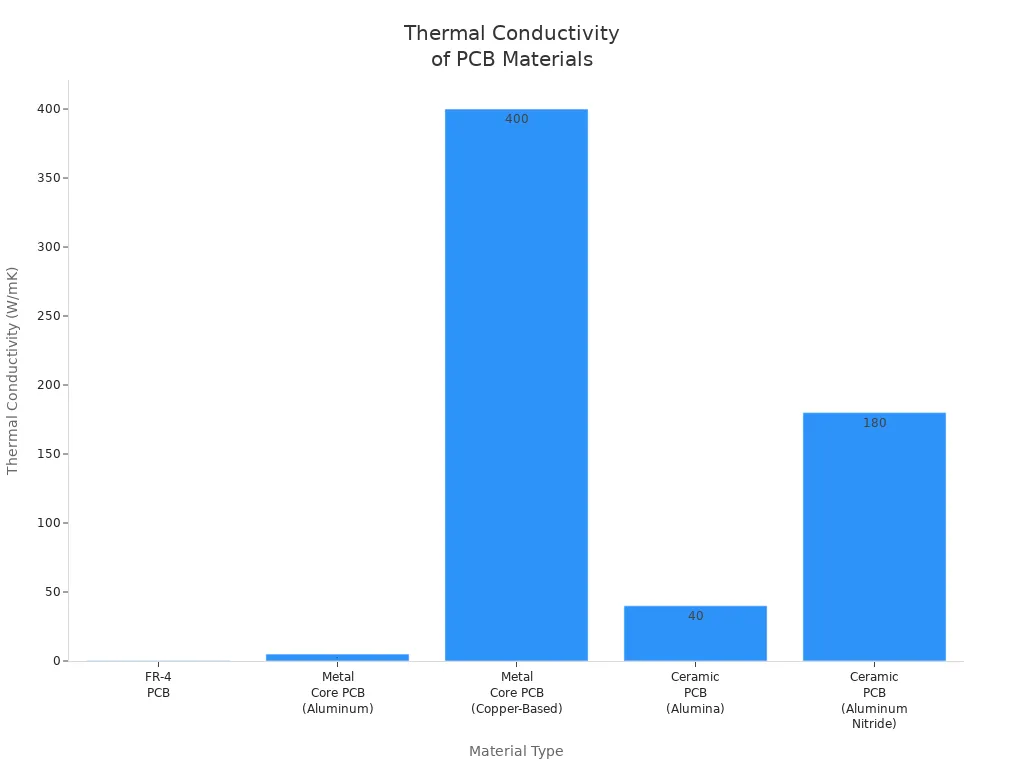
You can help your inverter by picking special materials and coatings. These move heat away fast. Metal core PCBs made from aluminum or copper help with lots of heat. Ceramic PCBs, like alumina or aluminum nitride, are good for important jobs.
Here is a table that shows how materials compare:
Material Type
Thermal Conductivity (W/mK)
Application Context
FR-4 PCB
0.3-0.4
Low to medium heat dissipation needs
Metal Core PCB (Aluminum)
1-5
Moderate to high heat dissipation in larger inverters
Metal Core PCB (Copper-Based)
Up to 400
Extreme thermal management for high-performance systems
Ceramic PCB (Alumina)
30-40
Superior heat transfer for demanding applications
Ceramic PCB (Aluminum Nitride)
150-180
Top-tier performance for critical systems
New alloys and mixes can also help with heat. Aluminum 6061-T6 is light and does not rust. Copper C10100 moves heat very well. Some inverters use both aluminum and copper for better cooling.
Alloy/Composite
Thermal Conductivity (W/m·K)
Weight Reduction
Corrosion Resistance
Thermal Resistance Reduction
Aluminum 6061-T6
167-200
30-50% lighter
Yes
Yes
Copper C10100/C11000
391
N/A
N/A
50%
Aluminum-Copper
High (combines both)
N/A
N/A
N/A
High-albedo coatings bounce sunlight away and keep things cool. Special silicones fill spaces and help heat move out. These choices help your inverter last longer and work better.
Regular Maintenance and Monitoring
You should keep your inverter clean and check it often. Dust and dirt stop air from moving and make it hot. Clean air filters and heat sinks with a soft brush or air. Take off all dust from the unit. If it is humid, keep the inverter dry so water does not block heat.
Here are some steps you can follow:
Make a plan to clean your inverter and heat sink.
Check that nothing blocks the heat paths.
Use a thermal camera to look for hot spots.
Watch the inverter’s output to find problems early.
You should use a system to watch the inverter. Put temperature sensors on important parts. Connect these sensors to a control box. This can change fan speed or coolant if it gets too hot. If there is a problem, it can make a sound or turn off the inverter to stop damage.
Note: Cleaning and checking your inverter often helps you find problems early. This keeps your solar inverter working its best.
Installation Best Practices for Efficiency
Optimal Placement and Spacing
Put your solar inverter in a shady spot. Walls are cooler than rooftops. Walls do not get as much sun. Shade keeps the inverter safe and cool. Leave space around the inverter. Twelve to twenty-four inches is best. This space helps air move and stops heat.
Here is a simple table for spacing guidelines:
Location
Recommended Clearance
Sides
12-24 inches
Above/Below
Extra clearance
Tip: Shady and airy places help cooling and protect your inverter.
Ensuring Adequate Airflow
Airflow helps keep the inverter cool. Do not put it in tight cabinets. Closed spaces block air and trap heat. Good ventilation lets heat leave. If you have more than one inverter, keep them apart. This stops them from getting too hot. Sometimes, natural airflow is not enough. You can use fans or vents to help. Aluminum and copper move heat away fast.
Put the inverter where air can move.
Keep at least six inches of space around it.
Add fans if it gets hot or air is low.
Clean dust from vents to help cooling.
Note: Good airflow stops overheating and helps your solar system last longer.
Avoiding Direct Sunlight
Sunlight makes the inverter hot. This lowers how well it works. Too much sun can shut it down. Sun can also void the warranty. Use a cover that resists heat and lets air move. Always put the inverter in a cool, shady place.
Do not put the inverter on sunny rooftops.
Use a strong cover to protect it and its warranty.
Make sure the cover lets air move.
Callout: Keeping your inverter out of the sun helps cooling and keeps your solar system working well.
Troubleshooting Overheating Issues
Signs of Overheating
You should look for signs of overheating early. This keeps your inverter and solar power generation system safe. Here are the most common signs:
The inverter casing feels very hot.
The inverter turns off or restarts a lot.
You see warning lights or error messages.
The energy output drops for no clear reason.
You hear strange sounds from the unit.
Tip: If you see any of these signs, act fast. Overheating can hurt your photovoltaic inverters and make your photovoltaic system not last as long.
Temperature Monitoring Tools
There are tools to help you check for overheating. Temperature sensors and thermal imaging can show heat levels. These tools help you find hot spots and watch for changes. Some sensors can check different parts and send data right away to a main system. This helps keep your solar power generation system safe and working well.
Use temperature sensors to watch heat all the time.
Try thermal imaging to find hot spots.
Watch IGBT temperature to stop sudden shutdowns.
Set up alerts for high temperatures.
Use diagnostics to check cooling and turn on safety steps.
Here is a table that shows how these tools help:
Benefit Area
Impact
Performance optimization
Find and fix heat problems
Early fault detection
Catch bad panels before they fail
Maintenance planning
Plan cleaning and service when needed
When to Upgrade Cooling Systems
Sometimes, basic cooling is not enough. You can make your inverter cooler by:
Picking a spot with good air flow and adding sunshades.
Matching the load of your photovoltaic inverters to stop overload.
Using smart monitoring to control the system load.
Checking and upgrading cooling parts, like thermal interface materials.
Choosing inverters with better cooling or new technology, like liquid cooling.
Note: Upgrading your cooling system helps your solar power generation system last longer and work better. Regular checks and smart upgrades keep your inverter safe and working well.
You can help your solar inverter stay cool by doing a few things. First, know why heat control is important for how well your inverter works and how long it lasts. Next, choose the best way to cool it, like using air or adding a fan. Make sure your inverter has enough space and is not in the sun.
Method
Benefit
Advanced Cooling Systems
Keep parts cool and lower stress
Advanced Materials
Help your inverter last longer in hard places
Predictive Maintenance
Find problems early and stop breakdowns
Watching your system often helps you find small problems before they get big. This keeps your solar system working well and keeps your money safe.
FAQ
What happens if my solar inverter overheats?
If your inverter gets too hot, it might turn off or work less. You could see warning lights or error messages. Overheating can make your inverter not last as long. It also lowers how much solar energy you get.
How often should I clean my solar inverter?
You should look at and clean your inverter every three to six months. Dust and dirt stop air from moving and make it hot. Use a soft brush or air blower to clean it well.
Can I install my inverter outside?
Yes, you can put your inverter outside. Pick a shady spot with good air flow. Do not put it in direct sunlight. Use a cover that keeps out weather but lets air move.
What materials help with inverter cooling?
Metal core PCBs, aluminum, and copper take heat away fast. High-albedo coatings bounce sunlight and keep the inverter cool. These materials help your inverter last longer.
How do I know if my inverter needs better cooling?
The inverter turns off a lot.
It feels very hot.
You see error codes about temperature.
Energy drops on hot days.
If you notice these signs, try to cool your inverter more or ask a professional for help.