Choosing between solar roof tiles and solar panels depends on what you care about most. If you want your roof to look smooth, solar roof tiles fit in well. Solar panels are easier to see but work better and usually cost less. Here is a quick comparison:
Factor | Solar Roof Tiles | Solar Panels |
Appearance | Seamless | Noticeable |
Efficiency | Lower | Higher |
Cost | Higher upfront | Lower upfront |
Installation | Integrated | Mounted |
Durability | Very high | Proven, but varies |
Think about your money, how much energy you need, and how you want your house to look before you choose.
Key Takeaways
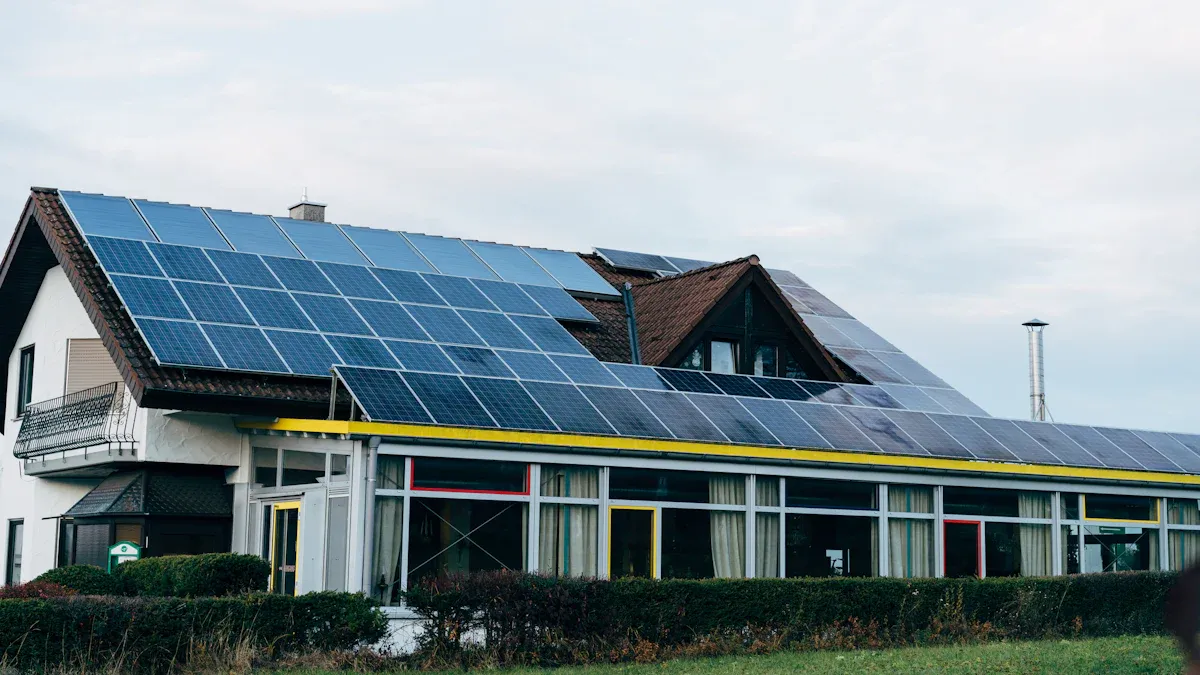
Solar roof tiles mix in well with your house. They give a new and stylish look. Solar panels are easier to see but work better most of the time. Solar panels usually cost less at first. They also save more energy, so you can save more money on bills. Think about your roof shape and style before picking. Solar roof tiles look best on fancy homes. Solar panels can go on many roof types. Both solar roof tiles and solar panels can make your house worth more. Homes with solar sell for higher prices. They also attract people who like clean energy. Think about what matters most to you. If looks are most important, pick solar roof tiles. If saving energy and money is most important, pick solar panels.
Solar Panels Overview
![Solar Panels Overview]()
How Solar Panels Work
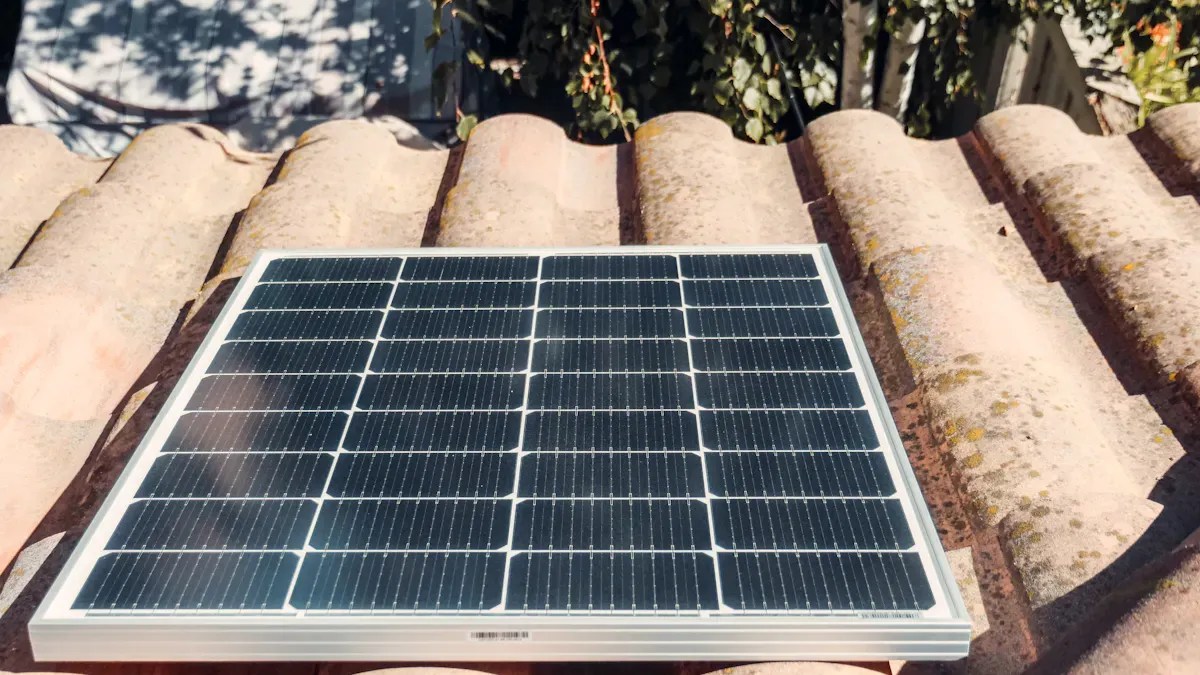
Solar panels change sunlight into electricity. Each panel has many photovoltaic cells made from silicon. Sunlight hits these cells and some photons are absorbed. This energy makes electrons move and creates an electric current. More sunlight means more power from your panels. Efficiency shows how much sunlight becomes electricity you can use. Most solar panels for homes are between 20% and 22% efficient. Some premium models can be even better.
Installation Process
Putting solar panels on your roof takes several steps. First, a team checks if your house is good for solar. Next, you get permits for the work. Then, you pick the panels and equipment you want. The crew comes and sets up safety gear. They mount racks on your roof. After that, they attach the solar panels to the racks. They run wires to your electrical panel. After a final check, your system connects to the grid. Most jobs finish in a few days.
Pros and Cons
Solar panels have many good points, but there are some downsides.
Advantages of Solar Panels | Disadvantages of Solar Panels |
Lower or remove electric bills, saving lots of money | Not every roof works for solar panels |
Raise home value by 5-10% | Takes years to break even if you move soon |
Reduce carbon emissions | Savings are less if your electricity is already cheap |
Protect against rising energy costs | Upfront costs need careful planning |
Need little maintenance after installation | Installation can be hard on some roof types |
Solar panels last about 25 to 30 years. Some keep working for 40 years or more, but make less power as they get older. In the U.S., solar panels cost about $2.58 per watt before incentives. For an 8kW system, you may pay $20,000 to $25,600 upfront. Solar panels can go in many places and work well on most roofs.
Solar Roof Tiles Overview
![Solar Roof Tiles Overview]()
How Solar Roof Tiles Work
Solar roof tiles look like regular roofing materials, but they make electricity from sunlight. You can use them to replace your old roof or add them when you build a new house. Each tile has small solar cells inside. When the sun shines, these cells turn sunlight into power for your home. The tiles connect together to form a solar roof tile system. You can link this system to batteries or smart energy tools. This lets you store extra energy or use it when you need it most.
Here’s how solar roof tiles compare to traditional solar panels on efficiency:
Traditional solar panels: 20-22% efficiency, with top models above 24%
Most solar roof tiles: 15-20% efficiency, with the best reaching up to 23%
Solar panels usually work better because air flows under them and keeps them cool
Installation Process
You will need a team of experts for solar roof tiles installation. The process starts with a home checkup. A specialist looks at your roof and makes a custom plan. The company handles all the paperwork and permits. Next, workers remove your old roof. They put down a waterproof layer to keep your house dry. Then, they lay the solar and regular tiles in the right spots. Electricians connect the tiles and set up the inverter. After a final check, your solar roof tile system connects to the power grid. The whole job can take longer than regular solar panels, but you get a brand-new roof.
Pros and Cons
Let’s look at the good and bad sides of solar roof tiles:
Benefits | Drawbacks |
Aesthetically Pleasing | High Cost |
Energy-bill Savings | Lower Efficiency |
Durability | Hard to Move |
Long Warranty | ROI Depends on Location |
Solar roof tiles make your roof look modern and smooth.
You can save 40% to 70% on your energy bills.
These tiles last a long time and handle tough weather.
Many brands offer warranties over 20 years.
The cost is high. Prices range from $55,000 to over $270,000, depending on your roof and the brand you pick.
Solar roof tiles do not make as much power as regular solar panels.
Once installed, you cannot move them easily.
Your return on investment changes based on where you live and how much sun you get.
Tip: If you care about how your roof looks and want a long-lasting solution, solar roof tiles might be a great fit.
Solar Roof Tiles vs Solar Panels: Key Differences
Appearance
Most people care about how their roof looks. Solar roof tiles blend in with your house. They look like fancy shingles or slate tiles. The roof looks smooth and neat. This makes your home look nicer from the street. Many homeowners like how these tiles match their house. Traditional panels sit on top of the roof. They change how the roof looks and stand out more. Some people think panels look big and not as nice.
Feature | Solar Roof Tiles | Solar Panels |
Visual Integration | Blends in, looks like fancy shingles or slate tiles | Sits on top, stands out more |
Curb Appeal | Makes the house look better and neat | Can look bulky and less attractive |
If you care about looks, solar roof tiles may be best.
Efficiency
You want your solar system to make lots of power. Efficiency shows how well sunlight turns into electricity. Solar panels usually have higher efficiency. Most panels reach 20% to 23%. Solar roof tiles range from 14% to 23%, but many are lower. Panels work better because air moves under them and keeps them cool. Tiles sit flat on the roof, so they get hotter and lose some power.
Type | Efficiency Range |
Solar Roof Tiles | 14% to 23% |
Traditional Panels | 20% to 23% |
Type | Efficiency Rating | Surface Area | Installation Angle |
Solar Panels | 15% to 22% | Bigger | Best angle |
Solar Tiles | 10% to 20% | Smaller | Flat with roof |
If you want the most power, panels are the better choice.
Cost
Solar panels cost less than solar roof tiles. You pay less at first for panels. For a normal house, panels cost $2.50–$4.50 per watt. A 6 kW system costs $15,000–$27,000. Solar roof tiles cost more, from $4.50–$8.00 per watt. The same 6 kW system can cost $27,000–$48,000. If you need a new roof, tiles can cost $42,000–$80,000. After the federal tax credit, panels cost $10,500–$21,000. Tiles cost $18,900–$56,000.
Cost Metric | Solar Panels | Solar Shingles |
Cost per watt (installed) | $2.50–$4.50/W | $4.50–$8.00/W |
Typical 6 kW system cost | $15,000–$27,000 | $27,000–$48,000 |
Typical 8 kW system cost | $20,000–$36,000 | $36,000–$64,000 |
Full roof replacement cost | $18,000–$30,000 | $42,000–$80,000 |
Cost after 30% federal tax credit | $10,500–$21,000 | $18,900–$56,000 |
Panels save money, but tiles give you a new roof and a modern look.
Installation
Solar panels are easier to put on your roof. Workers mount them on racks above your roof. This takes a few days and does not cause much trouble. Solar roof tiles need more work. The team removes your old roof and adds a waterproof layer. Then they install the tiles. This job takes longer and needs skilled workers. You pay more for installation because it is harder.
Solar panels: Easy to install, mounted on racks, finished in days.
Solar roof tiles: Harder to install, old roof removed, takes longer.
Labor intensity: Tiles need more skilled workers and careful planning.
Time requirement: Tiles take a week or more, panels take a few days.
Installation complexity: Tiles are both roof and energy system, need checks.
Cost implications: More work and time means tiles cost more to install.
If you want fast and easy installation, panels are better.
Durability
Both solar roof tiles and panels last a long time. Panels usually last 25–30 years. Tiles last about 20–25 years. Panels may last longer in normal weather. Both can handle tough weather. Solar roof tiles have a Class 4 hail rating and strong wind resistance. Panels use strong glass and can handle wind up to 140 mph.
Feature | Solar Panels | Solar Shingles |
Average Lifespan | 25–30 years | 20–25 years |
Feature | Solar Roof Tiles | Solar Panels |
Hail Resistance | Class 4 rating, handles big impacts | Tested for hailstones up to 3 inches at 80 mph |
Wind Resistance | Interlocking design, strong against wind | Mounting hardware handles wind up to 140 mph |
Fire Rating | Class A under safety standards | N/A |
Panels are easier to fix. If one panel breaks, you can replace just that one. With tiles, fixing one tile may mean removing others. Repairs cost more and take longer. Tiles are part of your roof, so you need special care.
Note: Both solar roof tiles and panels are strong and handle bad weather, but panels are easier to fix and keep up.
Summary Table
Key Difference | Solar Roof Tiles | Solar Panels |
Appearance | Smooth, neat, high curb appeal | Easy to see, changes roof shape |
Efficiency | Lower, 14–23% | Higher, 20–23% |
Cost | Higher upfront, includes new roof | Lower upfront, saves money |
Installation | Harder, takes longer, needs skilled workers | Easier, faster, less trouble |
Durability | 20–25 years, hard to fix | 25–30 years, easy to fix |
Panels are more efficient and cost less. Tiles look better and fit in more, but cost more and are less efficient. Think about what matters most to you—looks, power, price, or repairs—before you choose.
Choosing the Right Option
Home Type
Your home’s style and roof shape play a big role in picking the right solar solution. If you live in a high-end home or you plan to build new, solar roof tiles can blend in with Mediterranean or Spanish designs. These tiles look smooth and match fancy shingles. For traditional or modern homes, solar panels work well. You can add them to almost any roof, even if you want to retrofit an older house. Check out this table to see which option fits your home:
Feature | Solar Roof Tiles | Solar Panels |
Best Suited For | High-end, new builds, Mediterranean/Spanish styles | Traditional, modern, retrofit projects |
Aesthetic Integration | Blends beautifully with certain styles | Versatile, suits many home types |
Installation Complexity | More complex, needs structural check | Easier, ideal for retrofits |
Roof direction matters, too. South-facing roofs get the most sunlight. Steeper roofs help rain wash away dirt, keeping your solar system clean.
Budget
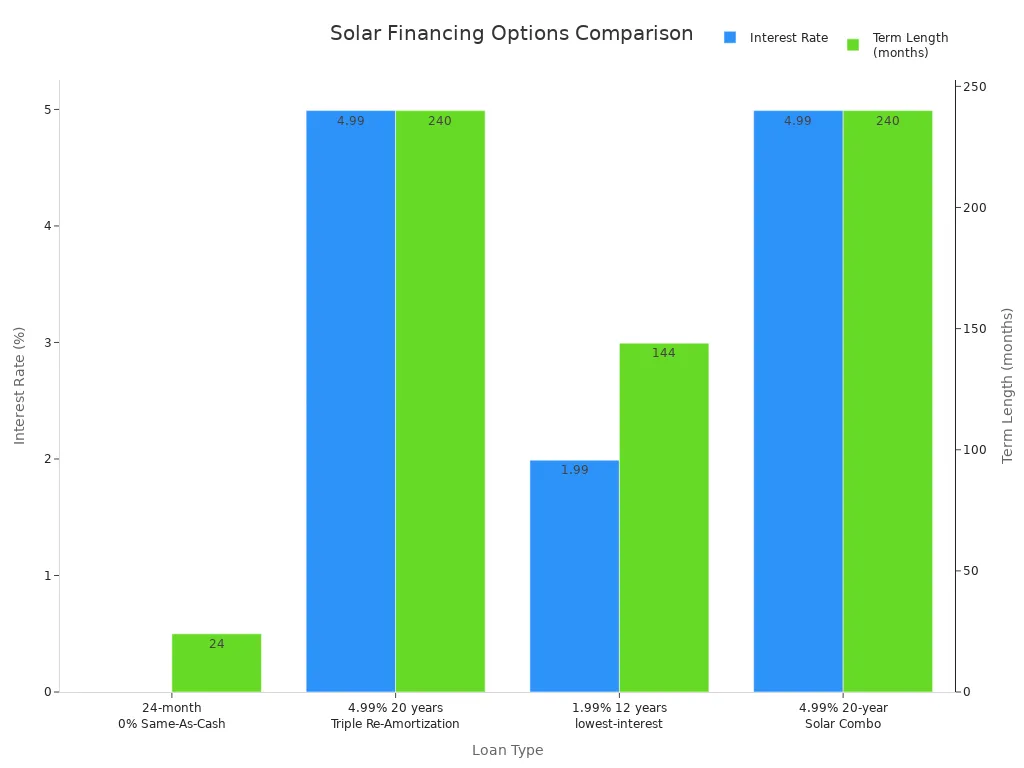
Solar panels cost less upfront. You can choose from several financing options. Some loans offer 0% interest for 24 months. Others stretch payments over 20 years with low rates. Here’s a quick look at popular choices:
Loan Type | Interest Rate | Term Length | Key Features |
24-month 0% interest Same-As-Cash | 0% | 24 months | No payments for 23 months; interest forgiven after loan is paid off. |
4.99% 20 years Triple Re-Amortization | 4.99% | 20 years | No payments for 18 months; designed to be cash-positive from the first month. |
1.99% 12 years lowest-interest | 1.99% | 12 years | Higher monthly payments but lower net value. |
4.99% 20-year Solar Combo | 4.99% | 20 years | Interest-only payments for the first 18 months; uses solar tax benefits to reduce principal. |
![Bar chart comparing interest rates and term lengths for four solar financing options]()
Both solar roof tiles and panels qualify for a 30% federal tax credit. State incentives may help lower your costs even more.
Priorities
Ask yourself what matters most. Do you want your roof to look sleek? Solar roof tiles give you a modern style. If you care more about saving money and getting the most energy, solar panels are the way to go. Panels work better and cost less. Tiles last a long time and handle tough weather, but they cost more.
Tip: Make a list of your top needs. Think about looks, energy savings, and how much you want to spend.
Long-Term Value
Solar systems boost your home’s value. Homes with solar can sell for $4,000 to $6,000 more per kilowatt. A 6-kilowatt system adds $24,000 to $36,000 in value. Solar homes sell faster and for higher prices. Buyers like homes with lower energy bills and clean power.
Solar panels and tiles both raise resale value.
Solar-equipped homes sell for 4% to 10% more.
You attract buyers who want renewable energy.
If you plan to stay in your home for years, solar pays off. You save money, help the planet, and make your house more attractive.
You have two great choices for your roof. If you want a sleek look, solar roof tiles fit right in. If you want more power and lower costs, solar panels work best. Your needs and style matter most. Talk with a solar expert before you decide. No matter what you pick, you help the planet and save money with solar energy. Going solar is a smart move!
FAQ
Do solar panels or tiles work on all roof types?
You can use solar panels on most roofs. Solar tiles work best on new roofs or full replacements. Some roof shapes or materials may not fit either option. Ask a solar expert to check your roof first.
Can I add solar roof tiles to my existing roof?
You usually need a new roof for solar tiles. These tiles replace your old shingles. If your roof is new, you may not need tiles yet. Panels can go on top of your current roof.
How long does installation take?
Solar panels take a few days to install. Solar roof tiles need more time. You may wait one to two weeks for a full tile roof. Weather and roof size can change the timeline.
Will solar panels or tiles increase my home’s value?
Yes! Both options can boost your home’s value. Buyers like lower energy bills and clean energy. Solar homes often sell faster and for more money.
Tip: Keep your paperwork and warranties. These help show buyers the value of your solar system.